I really really want a new D&D setting ... that doesnt shove polytheistic gods down your throat. Im so sick of it.
I want religious diversity in my campaign settings.
"Build one."
"For a slightly more complex answer, it's a niche market, polytheism is a theme that goes hand-in-hand with divine power, fantasy, and Dungeons and Dragons as a whole. WotC isn't going to cater an entire campaign setting just because you want monotheism in your world, and if they make a monotheistic setting ever, it'll be after they release their time-tested settings with large fanbases. So start working on your own."
Edit: "Though if I were one of your player's, I'd give you a similar response of, 'I don't want your one divine being shoved down my throat, I want diversity'."
I agree, I don't like the all these gods, so I did create my own. I basically combined all the WotC gods into 6 different gods. I probably could have gone down to 5, but I chose 6 to add another choice for the players.
The six gods?
- God of Light
- God of Darkness
- God of Magic
- God of Nature
- God of Death
- God of Luck
I allow players to choose any feat, paragon path, or powers from any of the WotC gods that fall under the combined god's power. This gives the players more choices per god and allows me to use all the feats, paragon paths, or powers from any WotC source without me feeling like I wasted money on a campaign specific player's book filled with god stuff.
I really really want a new D&D setting ... that doesnt shove polytheistic gods down your throat. Im so sick of it.I want religious diversity in my campaign settings.
That doesn't seem to difficult ... Religion in DnD has not much of an impact on the game.
Either way, what exaclty do you want? multiple partheons (ref to Fearun - a partheon for orcs, a partheon for elves , ...), or multiple monotheistic religions, or actual mutliple religions (like here on earth) with polytheisms, monotheisms, and other -isms (I'm thinking instead of gods, belief in animal spirits, ancesters, ...)
"Wait, Religion doesn't have much impact on the game? When one-fourth of the core classes so far (not counting Swordmage or Artificer, since they aren't 'core' per se) get their power from the gods? When Epic tier is encouraged to lead the players into epic conflicts with the gods themselves?"
"If what he wants is to have the option of 'monotheism', technically you have no need to be a polytheistic character. If the problem is that other gods exist so you can't justify not acknowledging them, then none of the options Qube listed will work, so, we go back to my post."
"Now, if your problem is the former, just rearrange the core deities in such a way that they are not related or aligned, or so that one god acts alone, insisting that his worshippers not take up worship of another deity. In fact, there are a few religions that aren't polytheistic in Eberron (some that worship Khyber or the Blood of Vol, or even the Silver Flame). If you want spiritualism, don't play a divine character, be a shaman or a wizard who believes the gods are not worth revering, as they are just powerful beings, like dragons."
Arduin, another game I play in has multiple pantheons and the Judeo-Christian-Islamic monotheist God. Adherers to the faith refuse to believe in the other religions and some actively reform the heathens. Just go with one god that does whatever you want it to do and pick divine class powers that work for you.
Bel
First, this is a relatively silly subject. If you don't like some of the fluff about a world, change it. Most people wouldn't be playing this game anyway if they didn't have some creativity.
Second, as someone mentioned: try Eberron. Not only are there many, many pantheons to choose from (Sovereign Host, Specific Gods within, Blood of Vol, Silver Flame, etc, etc), the Silver Flame is the closest I've seen in a D&D campaign to a monotheistic religion.
You could also decide to worship "He who was"- the super benevolent god that Asmodeus dispatched during his ascension (obviously you set your campaign that he's either still Alive or he Resurrected)- not only does he sound Christian, by his name is an allusion to "I am who is"- YHWH- Yahweh.
To finish the job, demote all other gods in the setting to the status of his Saints or Angels, with their separate sects being "parishes" of the larger religion (i.e. the Church of Saint Erathis, or the Meloran order of nature loving monks).
People here have already touched on it, but the easiest thing to do if you want one or just a handful of gods is to demote all the other gods to sort of 'sub-gods'. People may still worship them and they may still give power to their followers, but they are not the true gods.
Easy peasy.
I really really want a new D&D setting ... that doesnt shove polytheistic gods down your throat. Im so sick of it.
I want religious diversity in my campaign settings.
K, so you want Diversity without Polytheism?
Do you want multiple Monotheist Dieties?
Or are you just looking for something other than BaseLine Diety groupings that we have so far?
Prior Editions have released Real World Historic Dieties (Egyptian, Norse, Chinese, Indian, Native American, etc). Is this what you are looking for?
Please give us some idea of what you are thinking of. Diversity of 1 God Just doesn't sound right, so I can't gauge what you are truely seeking.
I really really want a new D&D setting ... that doesnt shove polytheistic gods down your throat.
Two words: Dark Sun.

one of my friends made a setting back in 2e that we didn't get to play in until he moddfied it to 3e and I think you would like it.
There was 1 God, and a devil. I can't remember there names, but they both had Divine rank 20 on 3e terms, in 4e I would say 'unstated level 38-40'. However there were 5 religons 3 that worshiped the god, and 2 that worshiped the devil. each religion was more of a vairant on the others, but had alot of simalarties.
Now most priest were not spell casters. When you were a spell caster (cleric, or paliden) you chose eaither a Arch angle or gaurdian angle to channel...they each had domains/spheres...or a devil lord to sell your soul/ plege your soul to and as above they had domains/spheres. Now for the kicker...it was set up like the crusades. where one good aligned religon was fighting one good aligned religon, and the 3rd was trying to remain neutral. Meanwhile both evil religons were driven underground and were at war with one another as well as all 3 good ones.
so we had clerics of the same god, channeling the same angel fighting against one another.
Now here comes the really fun parts...
Psi characters were basiclt like jedi/buttist were they 'transended' religon and worked to perfect mind/body/soul...but some extremist in each religons saw it as a threat.
Arcane characters regardless of alignment were seen as devil worshipers and there were inqastions/ witch hunts
there were a group of 'enlightened' that met in secret and had a quasi religon based on the masons in real life, and the technocracy in OWoD...they had low renasaince level tech, including basic firearms
I think revisiting this setting could be cool. All and all it was very political, and with all the new stuff we could have some real fun...artaficers, warlocks, Avengers all fit very wwell in here
Haldrik: To be clear, I dont want the absence of polytheism. I just want the presence of other kinds of spirituality.
Including monotheism (similar to Judaism, Christianity, Islam, Zoroastrianism, etc.), transcendent mysticism (similar to the more abstract traditions within monotheism, Buddhism and Hinduism, which could be covered well with a Psionic-Divine power source coupling), as well as non-theistic forms of spirituality, such as animism (similar to nature-revering cultures, albeit already covered well by the Primal-Divine power source coupling), and secularity (making sense of a diversity of spiritual traditions).
I want freedom of religion in the D&D campaign settings.
Qube: What exactly do you want? Actual mutliple religions (like here on earth) with polytheisms, monotheisms, and other -isms.
Haldrik: Yes, actual multiple 'isms', like here in reallife.
Qube: Religion in DnD has not much of an impact on the game.
Haldrik: To the contrary, religion saturates D&D setting flavor. So, the polytheism-only flavor suffocates alternative forms of spirituality.
Each 'point-of-light' within the Core setting can have its own specific dominant religious tradition. But Core as a whole must acknowledge the existence of non-polytheistic spiritualities, and have other 'points-of-light' where they flourish.
Ryukatana: Wait, "Religion doesn't have much impact on the game"?! When one-fourth of the core classes so far (not counting Swordmage or Artificer, since they aren't 'core' per se) get their power from the gods? When Epic tier is encouraged to lead the players into epic conflicts with the gods themselves?
Haldrik: Thank you, Ryu. Exactly.
King Nate:
- God of Light
- God of Darkness
- God of Magic
- God of Nature
- God of Death
- God of Luck
Haldrik: Thats a good way to handle the mechanics of the Divine power source. Tho Id certainly add 'Divinity of Healing' or rather 'Divinity of Immortality'. Different spiritual traditions do emphasize different aspects of life, so these traditions work well with the D&D Domains. But you dont have to personify the Domain as a polytheistic god. You can just as easily engage the 'Divinity of Nature' as Infinite Light for a Psionic mystical approach, or as a favor from a neighboring Primal nature spirit for an animistic approach.
Monotheistic Divine flavor shares Psionic flavor because it focuses on consciousness/mind/soul. The Star-Wars spirituality of the Force suits monotheism comfortably, but it can suit any transcendent mystical tradition, including Buddhism.
Interestingly, Hinduism is monotheistic despite the myriad gods. Hindu philosophy explains there is ultimately only Divine Oneness. The multiple gods are really, sotospeak, the one infinite God incarnating into the mulifarious finite aspects of creation.
In D&D terms, the Astral Sea itself is a source (or conduit?) of Radiance, which easily corresponds to spiritual concepts of Divine Light. Mystically speaking, the word 'Light' really means consciousness itself, and only afterward means the energy that the universe is made out of.
D&D has lots of room for spiritual diversity. The polytheistic monopoly has got to go.
Haldrik: To be clear, I dont want the absence of polytheism. I just want the presence of other kinds of spirituality.
Including monotheism (similar to Judaism, Christianity, Islam, Zoroastrianism, etc.), transcendent mysticism (similar to the more abstract traditions within monotheism, Buddhism and Hinduism, which could be covered well with a Psionic-Divine power source coupling), as well as non-theistic forms of spirituality, such as animism (similar to nature-revering cultures, albeit already covered well by the Primal-Divine power source coupling), and secularity (making sense of a diversity of spiritual traditions).
I want freedom of religion in the D&D campaign settings.
Qube: Religion in DnD has not much of an impact on the game.
Haldrik: To the contrary, religion saturates D&D setting flavor. So, the polytheism-only flavor suffocates alternative forms of spirituality.
Each 'point-of-light' within the Core setting can have its own specific dominant religious tradition. But Core as a whole must acknowledge the existence of non-polytheistic spiritualities, and have other 'points-of-light' where they flourish.
King Nate:
- God of Light
- God of Darkness
- God of Magic
- God of Nature
- God of Death
- God of Luck
Haldrik: Thats a good way to handle the mechanics of the Divine power source. Tho Id certainly add 'Divinity of Healing or rather Divinity of Immortality'. Different spiritual traditions do emphasize different aspects of life, so this works well with the D&D Domains. But you dont have to personify the Domain as a polytheistic god. You can just as easily engage the 'Divinity of Nature' as Infinite Light for a Psionic mystical approach, or as a favor from a neighboring Primal nature spirit for an animistic approach.
I'm failing to see how you can't just add/alter deities and religions to your own game as you wish. You know what you want and all you need to do to create a religion is think up domains that suit it and pick a channel divinity feat power you think works and reflavour it.
An example from my own setting is The Order of Eternal Truth. These are a fairly extremeist religion (not available to players by default on account of being borderline evil but a similar religion could be done without the over-zealous vibe) who believe the Gods have subtley enslaved the mortal races and decry them as "evil". Not polythiestic (or even theistic) at all but still a religion. If I need domains for them I'll use Justice (or possibly Tyranny), Knowledge and War.
You also mentioned Animism being covered by a Divine-Primal coupling. I kinda figured the Primal power source was covered it on it's own as it's simply a fantasy version of animism. That's how I present it in my campaign. My group even contains a Feylock who lists his religion as "The Old Faith" (i.e. animism).
Kami: I'm failing to see how you can't just add/alter deities and religions to your own game as you wish.
Haldrik: I dont want homebrew. I want to be able to buy and use official material without suffocating in polytheism.
Kami: An example from my own setting is The Order of Eternal Truth. These are a fairly extremeist religion (not available to players by default on account of being borderline evil but a similar religion could be done without the over-zealous vibe) who believe the Gods have subtley enslaved the mortal races and decry them as "evil". Not polythiestic (or even theistic) at all but still a religion.
Haldrik: Your homebrew nontheistic religion makes sense within D&D. Its cool, and its just as easy for Good aligned characters to adhere to it. It resembles the spirituality of Buddha who said the gods lack enlightenment and are irrelevant, and that of Plato who said the gods conflict with eachother and its irrational to serve them, since pleasing one god means angering a rival god.
In D&D, the Astral Sea is an other plane, why should beings there have a right to oppess beings in the Natural World? It is exploitation, and Good characters can strive for a more mutually beneficial relationship among all the beings of all planes.
Wizards will probably not do a monotheistic campaign setting (removed)
A polytheistic, multiverse campaign setting can be easily accepted by the right-wing crowd as pure fantasy, while a monotheistic campaign setting will be seen by one faction or another as being heavily biased in favor of one sect over another sect.
(removed)
Arnvid: Wizards will probably not do a monotheistic campaign setting for the simple reason of not freaking out the 'real world' right-wing fanatics.
Haldrik: D&D is fantasy. LOL! (removed) But its still possible for D&D to have a monotheistic Divinity as a concept, without importing reallife religions. Monotheism is an abstract concept. How relevant this concept is would depend on the local spiritual traditions in the point-of-light.
For example, in Star Wars, the Force is a spirituality that involves transcendent mysticsm that is very popular and doesnt provoke much resentment from reallife religionists. I would welcome adding the Force to D&D as one of the many spiritual traditions. In D&D terms, it could be understood as the 'grand unification' from which all the various power sources flow. Psionicists generally, Divinists who focus on Radiant energy and healing rather than on Immortal creatures, and perhaps Arcanists who are scholars and sages would be the most interested in this more abstract form of spirituality. Mystically speaking, the Force isnt 'conscious', but rather is consciousness itself.
> Yes, actual multiple 'isms', like here in reallife.
> I dont want homebrew. I want to be able to buy and use official material without suffocating in polytheism.
Fearun does it IIRC. each race has its own partheon. Drow can be seen as monotheistic: woreshiping Loth.
Admittedly I am not a theologist, but I have no idea what the OP is asking for. We've given examples of Eberron, which has as its divine sources a pantheon, a mystical benevolent flame, a path of light, a religion that worships the life force of blood, ancestor worship, as well as a myriad of cults and druidic traditions and this is not sufficient. Because it contains a pantheon it is too limiting?
Wizards, please do not produce a setting with a monotheistic religion because from what I have read thus far it would be boring as hell.
Haldrik: D&D is fantasy. LOL! (removed) But its still possible for D&D to have a monotheistic Divinity as a concept, without importing reallife religions. Monotheism is an abstract concept.
(removed)
You can declare that D&D to be pure fantasy and you will still find people who demand that your 'fantasy' conform to they consider to be 'proper' fantasy.
Qube: Fearun does it IIRC. each race has its own partheon. Drow can be seen as monotheistic: woreshiping Loth.
Haldrik: Thats called 'henotheism'. Monotheism is different. Henotheism is a form of polytheism where many gods exist, but an adherent only remains loyal to one of them. So, Lolth is a henotheistic form of spirituality, albeit explicitly malevolent.
Where polytheistic spirituality focuses on the personification of various experiences of life (sex, wealth, health, nature, etc.), monotheistic spirituality transcends these finite apsects of life, to focus on consciousness itself. Monotheism tends to care more about internal existential aspects (desires, compassion, self-control, idealism, rationality, etc.) rather than physical experiences. Polytheism and monotheism are different kinds of spirituaity, not different flavors of gods.
To several of you, I appreciate you calling attention to the Eberron setting.
EPG: The Silver Flame espouses purity, steadfastness, charity, and, above all, the destruction of evil. The Silver Flame is an abstraction, not a deity. It represents powerful forces of good and selfsacrifice that keep evil locked away.
In ages long past, a female human named Tira Miron transcended her humanity to become the immortal Voice of the Flame. She serves as the intermediary between the sacred Flame and the vast majority of mortals who havent attained the purity necessary to communicate directly with the divine force.
The Church of the Silver Flame is much more organized than the hierarchy of the Sovereign Host. The Church has a definite chain of command , and its members arent afraid to wield their power in secular affairs. Flamekeep, in Thrane, is the Church's capital and home to its leader, the Keeper of the Flame.
This is definitely an example of a transcendent spiritual tradition. Here, Tira Miron functions like a prophet/messiah/boddhisatva who attained enlightenment, but chooses to remain active in the Natural World to help others who havent achieved enlightenment yet.
Presumably, there are many enlightened souls, not just Tira Miron, who have different philosophical and ethical traditions, but its fine for a particular organization to devote themselves to the teachings of a particular soul.
The Silver Flame proves that spiritual diversity can work in a D&D setting. And work well. Monotheism, polytheism, animism, etc. all coexist and interact in reallife, and can do so in D&D too.
The problem is, what you are basically asking for falls under two fields.
1) Things already in the game. Animalism? We call it the Primal power source. Transcendent spirituality? Divine character without a god, a deva, or any character in the books simply with different beliefs. Monotheism? Preach one god, or deny all of them in favor of a higher concept. See, most of the gods actually have a tie to the world. You could easily say that the gods of DnD are just Really Powerful Beings, but they still fit in with the world; divine characters get their powers from them, different gods have different symbols, channeling divinity feats, and relics. Ergo, when we say the gods of DnD, we are talking about concepts that have a root in the system. You don't have to have them be gods at face value, but it is assumed that there are powers of life and death, law and chaos, civilization and nature, freedom and tyranny that are fundamental to the world, and are part of character creation. Likewise, things like enlightenment and harmony with nature spirits are already segments of the game through various classes, paragon paths, and epic destinies.
So it is true that these forces are part of DnD. But it is a mistake to see it as saying There Is One Pantheon, One Way. The divine source can mean anything you want it to. The gods could be saints, they could be proxies, they could be Incarnations of various universal fundamentals who are subserviant to, distinct from, or completely unrelated to whatever higher power might exist.
2) Pure fluff. That's setting material. The books are mostly about rules, they don't need to describe a town that worships a One True God just to make it clear that DMs can play a game with monotheism. In a campaign setting, that stuff is important, and already there; see the Silver Flame example.
But in your own world, you create the rules and lay down the law. In a homebrew, the gods are whatever the DM says they are. You don't need the DMG to tell you that you can make a monotheistic world or a transdendent one, you've had that ability from the start.
Sure, you'll have to think about what it means for the divine power source, but that is still fluff, and fluff alone. And fluff is completely under the DM's control.
I think the OP's point was that he wanted a published setting that contained diverse/monotheistic elements, not the ability to create a setting that contained those elements.
I think the OP's point was that he wanted a published setting that contained diverse/monotheistic elements, not the ability to create a setting that contained those elements.
..................*rereads OP*
"I really really want a new D&D setting "
.......Well, that's a mighty bit embarassing. Reading comprehension, I has critically fumbled it.
I really really want a new D&D setting ... that doesnt shove polytheistic gods down your throat. Im so sick of it.
I want religious diversity in my campaign settings.
Try this

A review by Jack 99 at 4eultrashortreviews.blogspot.com/2009/04... (no idea how to tidy that on the new board).
The setting has a nice take on monotheism whilst still giving a nod to older belief systems.
(removed)
They never did a (removed) campaign per se but the folowing hisorical ref books mention that faith
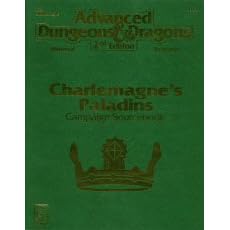
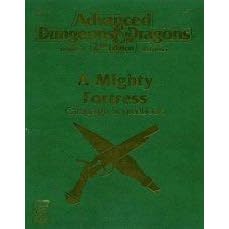
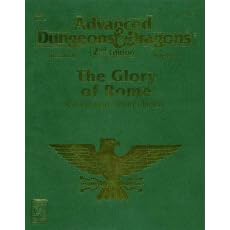
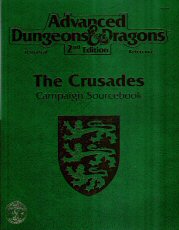
Not sure if the others do as I haven't read them in years but the above definitely do.
My first campaign used One God. All races were the same someday, then splitted. God is distant, like in our world. Races take different views of him.
Humans see God much as we do, with some cultural variations.
Dwarves believe in a Patriarch god.
Elves believe in a idea that Gog IS everything, not a single individual.
You get the idea.
The problem with monotheism in a D&D setting is that each deity has angels, divine PCs, and a homebase on an Outer plane which can be visited by anyone trying to prove or disprove their existence. When Divine is a power source, it's easy to favour one deity, but hard to dismiss the existence of the rest.
My post was edited?!?!?
Seriously since when was Cword something to remove, particularly when not being used to discuss real world politics or beliefs but to actually describe the contents of books the Cword faith can be found detailed/touched upon in? In relation to gaming!
Now apparently those books contain info on .
I realise that people are thin skinned so we err on the side of not offending but c'mon.
Discussion of real world religion is not allowed on these forums. It has been allowed in the past, but it's not right now. I understand the need to discuss this topic as it relates to D&D, but please leave all references to real-world religions out of this conversation completely.
We appreciate your understanding and compliance with this.
ORC_Chaos
Sorry, I meant to post an explanation of the moderation, but my computer picked that moment to bug out on me. Discussion of real world religion is not allowed on these forums. It has been allowed in the past, but it's not right now. I understand the need to discuss this topic as it relates to D&D, but please leave all references to real-world religions out of this conversation completely. We appreciate your understanding and compliance with this. ORC_Chaos
Seems silly in
 this context as it makes it difficult to reference parts of the books I was highlighting for the OP and quoted poster.
However thanks for letting me know why, if dems the rules so be it. 
My post was edited?!?!?
Seriously since when was Cword something to remove, particularly when not being used to discuss real world politics or beliefs but to actually describe the contents of books the Cword faith can be found detailed/touched upon in? In relation to gaming!
Now apparently those books contain info on .
I realise that people are thin skinned so we err on the side of not offending but c'mon.
My post was completely erased, I guess people did complain about "IT" after all. Lets see if this one gets erased now.
Haldrik, I agree with your post.
I think that Eberron does a good job of providing a greater amount of options, but the dominant faith (i.e. the one that is mostly down your throat) is polytheistic. Some of said that such settings are difficult since deities have astral domains, but obviously it is more than possible to make them as elusive as they are in Eberron. Dark Sun also provides another interesting case in that religion is practically dead apart from clerics aiding elementals, druids aiding nature, and the worship of the sorcerer-kings.
It would not be too hard to have a plethora of options without polytheism on the forefront: ancestor and nature spirit veneration, philosophical pseudo-religions, a religion built around teachings of the angels/devils of order vs. the demons of chaos, monotheism, gnostic cults of hidden secrets, religions of immortal ascension, cults worshipping old ancient/dead pantheons, or religious cults built around mystical phenomenon (e.g. dragonmarks).
You want religious diversity? Eberron has got that.
Or did you mean that you want a setting with only one religion, and that to be non-polytheistic?
EDIT: I didn't read this entire thread. It's kind of a hassle to do so on the current forums. Sorry...
EDIT: I didn't read this entire thread. It's kind of a hassle to do so on the current forums. Sorry...
No kidding! What a step backward this was. On the plus side, now I can insert a photo or video of how frustrated I am.
Since the fact that Astral Domains exist (and so do beings that live there and call themselves gods) has been advanced as a difficulty when trying to develop a multi-faceted faith landscape, I'd like to give a mention to the old "Planescape" setting. Despite this being a 'game world' that was set where the gods themselves live, it sported a whole faction of folk (the Athar) dedicated to denying that this meant anything at all!
All that the existence of a Divine power source proves is that there is some source of power that drives what Clerics, Invokers etc. do; all that the existence of beings that call themselves 'gods' proves is that there are some arrogant beings around .
If I understand the OP correctly, what is desired here is some diversity in the world's societies' metaphysical and spiritual beliefs, not a reduction in the number of 'really big monsters' that might abide in remote places. As already mentioned, Eberron has this - as do Planescape (if you are prepared to use fluff from old settings and adjust for the new edition), Dark Sun (coming soon - hooray!) and Birthright (which was kinda polytheistic at base, but with some interesting angles).
Balesir: If I understand the OP correctly, what is desired here is some diversity in the world's societies' metaphysical and spiritual beliefs, not a reduction in the number of 'really big monsters' that might abide in remote places.
Haldrik: Exactly. I dont mind if there are 'creatures with an Immortal origin' that live in the Astral Sea. Theres just no need to worship them. Its just as easy to bypass these creatures and connect with the Divine power source directly. Its same resource that these creatures themselves use.
For me, the Astral Sea is the realm of ideals, where hopes and fears take on a life of their own. Astral Sea creatures are interesting because they behave as if poetic symbols, personifying various experiences of life, in a dreamlike way. Thats it. No big deal. The Astral Sea is a big place, and there are enough 'dominions' there to portray the spiritual ideals of every single culture - even every single creature. There is so much room there for diversity and individuality. The various ideals may or may not include objects of worship.
Spirituality is deeply important. It makes an individual larger than life. It constructs an identity that transcends physical limitations, and makes freedom of choice possible beyond reflexive reactions to finite accidents.
There are many different kinds of spirituality. I like the fact D&D emphasizes spirituality, but I want it to be part of the characters freely-chosen personal background. Not a way to railroad a campaign.
Im dissatisfied with the description of the Cleric in the Players Handbook, because polytheism is so monopolizing. I want Wizards to errata it, to open the Cleric class description to list non-polytheistic spiritual traditions as options, notably monotheism (transcendent abstract divinity, especially mysticism) and animism. For each kind of spirituality, its helpful to describe specific traditions and organizations that belong to the Core setting. Just make it clear these arent the only options. I feel the Players Handbook needs the rewrite because it is the foundation of all D&D. Spiritual diversity, like that which exists in Eberron, should be the norm, not the exception to the rule.
By basic rules, Divine characters revere one god over the others (even if it doesn't make sense for invokers). Serve one of the pantheon and believe he has total dominion over everything and you are done really- Monotheism is easy, Wizards doesn't have to go out of their way to support it.
Animism is already covered by the Primal Power source, just mark the God as Melora for mechanics purposes.
I really really want a new D&D setting ... that doesnt shove polytheistic gods down your throat. Im so sick of it.
D&D has gone for a classics/mythology sort of polytheism for it's whole run. IIRC, there was a stab at a monotheistic church (Theocracy of the Pale?) in some setting.
Getting into religions that resemble RL, modern religions is questionable ground for D&D. There was a lot of controversy in the 80s about D&D encouraging devil-worship. There were lists of Devil's names that I suppose were lifted from a variety of sources, including some that certain religious whackos took seriously. It was a problem. It was probably why we had to put up with that whole tedious bloodwar thing, and all the demons & devils being re-named.
Wouldn't want to go through that again because some uptight zealot got the idea this or that monotheistic religion in D&D was a mockery of his faith.
Tony Vargas: D&D has gone for a classics/mythology sort of polytheism for it's whole run.
Haldrik: (Right now Im unintentionally drunk. So, I might edit this later.)
Earlier I read your post without noting your name, but I read it again, recognizing your name, I always appreciate your posts.
D&D supposedly evokes the Medieval Era, but some have argued (correctly) that D&D really evokes the Iron Age (at least the European Iron Age).
The Iron Age, for better or worse, established all of the symbolism that we use today in the modern world. As such, D&D as a fantasy genre explores the (polytheistic) mythology (of the Iron Age) - because its symbolism resonates with modern symbolism.
Even so, when I play D&D I want to create characters that I personally identify with, and these may or may not be polytheists.
Even so, when I play D&D I want to create characters that I personally identify with, and these may or may not be polytheists.
Then don't make Polytheists.
Exactly. I dont mind if there are 'creatures with an Immortal origin' that live in the Astral Sea. Theres just no need to worship them.
So... you don't want any form of religion for the Divine Power source at all? Doesn't that entirely defeat the purpose?
Its just as easy to bypass these creatures and connect with the Divine power source directly. Its same resource that these creatures themselves use.
Really? Where does it say that in the Core Setting? Where does it say that in any particular setting? Divine Power comes from the gods, from their own personal cache of their own personal power. It's not some power they're pulling from the plane around them. It's theirs, and you're borrowing it to do what they agree with. If you ignore them, you don't get it. That's the way core Divine Power works.
Even so, when I play D&D I want to create characters that I personally identify with, and these may or may not be polytheists.Then don't make Polytheists.
Seriously. D&D doesn't shove gods 'down your throat'. There's no penalty to not following them.
Even so, when I play D&D I want to create characters that I personally identify with, and these may or may not be polytheists.Then don't make Polytheists.
I think what he's looking for is a setting that has a pantheon, and one that has a single god, and one that allows for the worship of spirits. And for these to be outlined and specified.
Even so, when I play D&D I want to create characters that I personally identify with, and these may or may not be polytheists.Then don't make Polytheists.
I think what he's looking for is a setting that has a pantheon, and one that has a single god, and one that allows for the worship of spirits. And for these to be outlined and specified.
So, Forgotten Realms then, with a pantheon, Ao the Supreme Overgod, and the regular old primal spirits that shamans suck up to.
Well, that was easy.
Even so, when I play D&D I want to create characters that I personally identify with, and these may or may not be polytheists.Then don't make Polytheists.
I think what he's looking for is a setting that has a pantheon, and one that has a single god, and one that allows for the worship of spirits. And for these to be outlined and specified.
So, Forgotten Realms then, with a pantheon, Ao the Supreme Overgod, and the regular old primal spirits that shamans suck up to.
Well, that was easy.
I never said it didn't exist, I just said that's what it sounded like he wanted.
I'll try to summarise this thread:
Haldrik: I want Religious Diversity in D&D!
Random Posters: Do you mean monotheism?
Haldrik: No! Not just monotheism. I also want (list of various form of religion).
Random Posters: K, lol! Try Eberron (also, Dark Sun).
Haldrik: Is nice.
Close enough?
Joni: I'll try to summarise this thread:
Haldrik: I want Religious Diversity in D&D!
Random Posters: Do you mean monotheism?
Haldrik: No! Not just monotheism. I also want (list of various forms of religion).
Random Posters: K, lol! Try Eberron (also, Dark Sun).
Haldrik: Is nice.
Close enough?
Haldrik: Close enough.
Eberron has real spiritual diversity. Not just different flavors of gods, but different ways of thinking about divinity. I hope diversity like this becomes the norm.
Joni: I'll try to summarise this thread:
Haldrik: I want Religious Diversity in D&D!
Random Posters: Do you mean monotheism?
Haldrik: No! Not just monotheism. I also want (list of various forms of religion).
Random Posters: K, lol! Try Eberron (also, Dark Sun).
Haldrik: Is nice.Close enough?
Haldrik: Close enough.
Eberron has real spiritual diversity. Not just different flavors of gods, but different ways of thinking about divinity. I hope diversity like this becomes the norm.
It won't.
Joni: I'll try to summarise this thread:
Haldrik: I want Religious Diversity in D&D!
Random Posters: Do you mean monotheism?
Haldrik: No! Not just monotheism. I also want (list of various forms of religion).
Random Posters: K, lol! Try Eberron (also, Dark Sun).
Haldrik: Is nice.Close enough?
Haldrik: Close enough.
Eberron has real spiritual diversity. Not just different flavors of gods, but different ways of thinking about divinity. I hope diversity like this becomes the norm.
It won't.
Everyone should be a little more like Eberron.
These forums should stay the same as they are now, but with all the stuff it used to have too. I like wikis. I like profiles. I like pictures and videos. However, I miss good ol' fashioned vbulletin.
The PHB says in the description of the cleric that they are primarily members of a church. The church can follow a single deity, a group of deities or even a philosophy. It goes on to say that your divine powers are granted by the ceremony or ritual of ordination. Once you have the ability to wield divine powers (establishing a link to the Astral Sea?) it is up to you what to do with it.
This is a distinct departure from previous editions, and a good one, IMHO. No longer are your powers dependent on the whim of a powerful being, or even the whim of a worldly organization. However, this means that the kind of religious diversity the OP was looking for is easy to add to any world.
The problem stems from the OP insisting on it being an 'official' setting. I'm not sure why this is so important, but I think that you can't really expect any third party world to satisfy all your desires. D&D is about creativity. Make your own world.
The PHB says in the description of the cleric that they are primarily members of a church. The church can follow a single deity, a group of deities or even a philosophy. It goes on to say that your divine powers are granted by the ceremony or ritual of ordination. Once you have the ability to wield divine powers (establishing a link to the Astral Sea?) it is up to you what to do with it.
This is a distinct departure from previous editions, and a good one, IMHO.
In previous edition you could worship e.g. a pot-plant or a dead gpd with an appropriate feat, a group of deities (common both in Eb and FR) or a philosophy even without the feat. Nothing new.
Not sure if this has been covered or not, but I believe their are rules for clerics or anyone to worship more than one god.
Also as has been said. Eberron and Darksun offer new ways to handle D&D religion.
Also, when in doubt, make it up.
...or a dead god with an appropriate feat...
Dead gods needed an appropriate feat before they could be worshipped?? I musta missed that...

one of my friends made a setting back in 2e that we didn't get to play in until he moddfied it to 3e and I think you would like it.
You're describing a setting very similar to what I'm trying to do with my campaign. Except that I do have a polytheists (Pagans) vs the Monotheists in a holy war that my players have not experienced yet.
The campaign is only a couple of months old, so it's still under the first stages of development. But I'm saving your post to remind me of my direction :D
Sacred traditions correspond reasonably well with the D&D power sources. Heres a stylized way to organize various kinds of spirituality ...
Divine/Primal: Animism (nature worship, shamanism, etc.). Nature spirits personify natural phenomena as fellow neighbors that humans must learn to coexist with. (Especially characterizes the Paleolithic Period and hunter-gatherer cultures.)
Divine/Elemental: Fertility religion (sacred sexual rituals represent the sex of cosmic nature spirits to promote many children, long life, and much wealth, especially many herd animals and large crops, etc.). Giants, titans, jotuns, etc. (= D&D primordials) are nature spirits reorganizing into clans, where the sky spirit and the land spirit become the father and mother of the others, including those personifying order versus those personifying chaos. (Especally characterizes Neolithic Period and herder-gardener cultures.)
Divine/Shadow: Ancestor worship (sacred burial grounds, etc.). Sacred ancestors, the fates, etc. personfy the power, luck, and destiny of a specific family dynasty. (Chalcolithic Period?)
Divine/Martial: Polytheism (emperor worship, etc.). Deities and angels are nature spirits reorganizing into a heirarchal bureaucracy. Gods of storm evolve into sovereign gods of war, with human royal representatives, often god-kings, equating divine forces with living political leaders. (Especially characterizes Bronze Age townships with the emergence of urbanization, specialization, bureaucracy, slavery, etc. and the Iron Age empires, with the expansion of militaries, predatory economies, etc.)
Divine/Arcane: Philosophical idealism (wisdom literature, proto-science, theurgy, sympathetic magic, astrology, alchemy, etc.). Idealism detects and formulates the patterns of natural phenomena as abstract principles. These principles (ideals, spirits, etc.) are understood to be the eternal essence of the temporal natural phenomenon. In other words, to manipulate fire, the idealist would connect directly with the 'spirit of fire' in the realm of ideals, and then bind it with the 'spirits' of other eternal qualities, to emanate a fiery effect with specific recombinant qualities within the temporal physical world. The formulas are more real than the actual phenomena, because the formulas are eternal while the phenomena themselves are temporary. (Especially characterizes the Classical Period, with vast empires, massive bookkeeping, cognizance of conflicting information, awareness of logic, rationalization of conflicting religious systems now under the same empire, linear history, fascination with patterns in nature and awareness of relationship between the ideal potential and the observed actual.)
Divine/Psionic: Transcendence (mysticism, monotheism, nirvana, etc.). Consciousness itself is more important than whatever things one happens to be conscious of. Transcendence emphasizes Being, openness, infinity, personal experiences of enlightenment beyond the capacity of finite language to explain it, personal ethical actions that transcend cosmic phenomena, etc. The consciousness of the individual (also called mind, soul, mindforce, lifeforce, aura, etc.) is understood to be identical with the infinite consciousness of the universe and beyond, except the individuals consciousness is 'distracted' by finite things. (Especially characterizes the Medieval Period.)
The following flavors are too modern for 'traditional' D&D, but could spice up some of the power sources. For example, Arcane (Feywild) could also pick up Utopianism, Psionic (Consciousness) could also pick up Existentialism, or so on.
... Utopianism, supremacy of reason, science, encyclopedic knowledge, theoretical models, objectivity, experimentation, exploration, social inquiry, political revolutions, evolution, technological 'progress', etc. (Especially characterizes the 'Modern Period', including the Renaissance, Ottoman Empire, Enlightenment, etc.)
... Existentialism, awareness of the limitations of reason, subjectivity, relativity, arbitrariness, gender equality, human rights, personal freedoms, etc. (Especially characterizes the 'Post-Modern Period', including most of the 20th century with its multiculturalism. Scholars still debate whether the 'Post-Modern' is really a separate mode of cognition from 'Modern', or is really a subset of it, like the Romantic Period was.)
... Technotopianism? Post-Humanism? (Our 21st century responds to exponentially increasing technological power. Science predicts, a typical computer will become as intelligent as a human by somewhere around year 2025. During the latter half of this century, humans may shapechange at-will using nanobots, and speak telepathically using brain 'upgrades'. By around 2100 at the end of this century, humans will become immortal because of medical technology, ceasing to die from natural causes. Our rate of societal change is also increasing exponentially. Such phenomena have obvious spiritual implications, including messianism, nihilism, etc.)
Human spirituality takes many, many forms.