1) How do they really work in the world? Are they like checks, where one person writes them, gives them to someone else, who cashes them at the bank (for example: a noblewoman pays her grocery bill of 20g with a mark. She gives it to the grocer. The grocer then has to take it to the nearest Kundarak bank and cash it to get the real value), or is it more like authorable currency, where one person writes one, gives it, and that mark may change hands a few times (as in the above example, but instead of cashing the mark, the grocer gives it to one of his suppliers for a bushel of grain, the supplier [a farmer] gives it to an artificer to fix his elemental land cart and gets change back, then the artificer cashes it in), or is it a combination of the two (either scenario is as likely as the other).
2) The ECG says they're printed by House Sivis (and that Kundarak is none to happy about this.) If that's the case, what kind of control does Kundarak have over the marks? Is there only a Sivis mark, only a Kundarak mark (that Sivis printed on it), or is there both?
3) I assume if they're all printed in the same place, that place would be the Mror Holds. If they're printed across the continent (which wouldn't be a bad idea, as it would cut down on shipping), are there mints or presses in major cities?
My module idea has to do with counterfeiting, if that helps any.
Thanks!
/expends 100g worth of components and 30 minutes to perform "Summon Hellcow" ritual
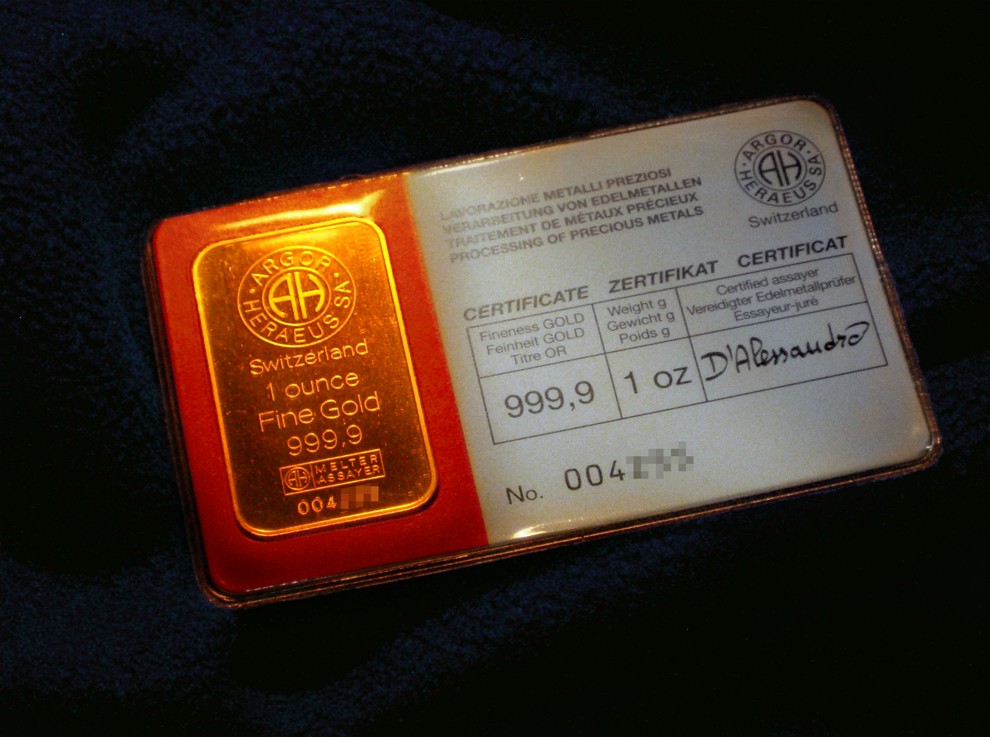
I expect that it would look a lot like that, but without the bar of gold bullion attached.
As for the use of them they may fall into the two categories you outline, depending on the specific note in question.
As to how House Sivis and Kundarak interact, I'd imagine that Kundarak writes the notes up, and Sivis notarizes them to show they are genuine. Kundarak may even have a hefty stack of blank ones, just waiting to be stolen. Sure, they aren't actually authorized by Kundarak but they're still notarized by House Sivis.

The image link is broken, unfortunately.
That's along the lines of what I was thinking, except I figured Sivis would print them (I mean, if you need something printed, you go to Sivis.) So, they're printed and notarized at a Sivis enclave in Mror Holds, Kundarak gets them and puts their seal to them, and out they go.
The image link is broken, unfortunately..
Fixed.
1) How do they really work in the world? Are they like checks, where one person writes them, gives them to someone else, who cashes them at the bank (for example: a noblewoman pays her grocery bill of 20g with a mark. She gives it to the grocer. The grocer then has to take it to the nearest Kundarak bank and cash it to get the real value), or is it more like authorable currency, where one person writes one, gives it, and that mark may change hands a few times (as in the above example, but instead of cashing the mark, the grocer gives it to one of his suppliers for a bushel of grain, the supplier [a farmer] gives it to an artificer to fix his elemental land cart and gets change back, then the artificer cashes it in), or is it a combination of the two (either scenario is as likely as the other).
I figured that an individual would carry a certain amount of spending coin on them and have the rest converted into a mark of credit. When it's time to get more money to carry around, they take the mark of credit to a house Kundarak facility, get their money, and have the value of the note modified.
Since I envision letters of credit being used to prevent the hauling around of large sums, I would limit their use in small scale transactions. You would only use one to pay for something if paying in coin would require you to lug around several pounds worth of platinum and gold.
2) The ECG says they're printed by House Sivis (and that Kundarak is none to happy about this.) If that's the case, what kind of control does Kundarak have over the marks? Is there only a Sivis mark, only a Kundarak mark (that Sivis printed on it), or is there both?
House Sivis uses a ritual to place a magical arcane mark, making it difficult to forge. None of the other houses seem as capable as Sivis as making forgery-resistant signatures and seals, so House Sivis provides notary services for all manner of official documents- not just House Kundarak's bills.
The identification papers in the Eberron Player's Guide, which are issued by their respective nations, also bear Sivis notary marks.
3) I assume if they're all printed in the same place, that place would be the Mror Holds. If they're printed across the continent (which wouldn't be a bad idea, as it would cut down on shipping), are there mints or presses in major cities?
House Kundarak has a fairly cheap means of transfering wealth around the continent. Deposit your funds in Karrn, and you can make withdrawals in Flamekeep via a magically connected system of vaults. I'm sure it would work with Kundarak letters of credit.
I figured that an individual would carry a certain amount of spending coin on them and have the rest converted into a mark of credit. When it's time to get more money to carry around, they take the mark of credit to a house Kundarak facility, get their money, and have the value of the note modified.
Since I envision letters of credit being used to prevent the hauling around of large sums, I would limit their use in small scale transactions. You would only use one to pay for something if paying in coin would require you to lug around several pounds worth of platinum and gold.
House Sivis uses a ritual to place a magical arcane mark, making it difficult to forge. None of the other houses seem as capable as Sivis as making forgery-resistant signatures and seals, so House Sivis provides notary services for all manner of official documents- not just House Kundarak's bills.
The identification papers in the Eberron Player's Guide, which are issued by their respective nations, also bear Sivis notary marks.
House Kundarak has a fairly cheap means of transfering wealth around the continent. Deposit your funds in Karrn, and you can make withdrawals in Flamekeep via a magically connected system of vaults. I'm sure it would work with Kundarak letters of credit.
That's along the same lines as I was thinking... you'd very rarely see a mark of credit for anything less than 100g. But, I can see the marks being used just like we use paper money... almost like an unsigned money order. Why take the time to cash out and lug all that gold wherever when you can just hand over a mark of credit and get change back?
I think I have a good idea of how the Sivis/Kundarak relationship works... Sivis prints the marks entirely (and imbues them with the arcane symbol that makes them difficult to duplicate) and Kundarak bankers fill them out for specific amounts specified and take detailed records. Thus, if I were looking to counterfeit them, it would be much wiser to seek the help of a d'Sivisl if I wanted to steal then, hit up a d'Kundarak.
I had forgotten about the linked vaults... that leads me to assume that Sivis has a large, central station where they create the marks (Mror Holds, I'd assume) and the blank marks and transferred to individual banks.
That's along the same lines as I was thinking... you'd very rarely see a mark of credit for anything less than 100g. But, I can see the marks being used just like we use paper money... almost like an unsigned money order. Why take the time to cash out and lug all that gold wherever when you can just hand over a mark of credit and get change back?
Although, of course, the vast majority of people in Khorvaire would have no use for 100g denominations. They aren't going to be spending that much money at once on anything. Only the upper class will, and I would imagine that few of their transactions involve an exchange of cash right there at the moment a transaction is made.
Although, of course, the vast majority of people in Khorvaire would have no use for 100g denominations. They aren't going to be spending that much money at once on anything. Only the upper class will, and I would imagine that few of their transactions involve an exchange of cash right there at the moment a transaction is made.
See, that brings up another question: marks of credit from house Kundarak are free of charge for account holders (from what I've read). If accounts with Kundarak establishments are pretty common, wouldn't it then serve to reason that marks of credit would more commonly be made available in smaller denominations as well as large? It doesn't seem too outside the realm of possibility that members of the middle class would prefer to carry around 5g to 20g letters of credit instead of, say, 50g in actual galifars?
See, that brings up another question: marks of credit from house Kundarak are free of charge for account holders (from what I've read). If accounts with Kundarak establishments are pretty common, wouldn't it then serve to reason that marks of credit would more commonly be made available in smaller denominations as well as large? It doesn't seem too outside the realm of possibility that members of the middle class would prefer to carry around 5g to 20g letters of credit instead of, say, 50g in actual galifars?
Unlikely, as the nations are still the one's minting the money. A Kundarak mark of credit is just a letter guaranteeing that a certain amount of liquid funds are available. If you have more marks out there then you have available liquid funds then there is a serious problem.
Unlikely, as the nations are still the one's minting the money. A Kundarak mark of credit is just a letter guaranteeing that a certain amount of liquid funds are available. If you have more marks out there then you have available liquid funds then there is a serious problem.
From what I've read, they work like money orders. You get it from the bank, and they note that you have it and deduct from your account accordingly. So, unless someone crunches a number incorrectly, that shouldn't happen.
I guess they can almost be treated like gems or art objects in game. Most of my characters keep their wealth in gems, not in coins (as is suggested in PHB)... why not in Kundarak marks of credit?
From what I've read, they work like money orders. You get it from the bank, and they note that you have it and deduct from your account accordingly. So, unless someone crunches a number incorrectly, that shouldn't happen.
I guess they can almost be treated like gems or art objects in game. Most of my characters keep their wealth in gems, not in coins (as is suggested in PHB)... why not in Kundarak marks of credit?
Which great, although marks of credit could be just a denomination and not notarized to a specific individual, at which point you could end up with more credit slips than actual liquid funds. Which is all kinds of havoc, and might actually make a neat adventure trying to find enough funds to back the slips or find out why things have happened.
Which great, although marks of credit could be just a denomination and not notarized to a specific individual, at which point you could end up with more credit slips than actual liquid funds. Which is all kinds of havoc, and might actually make a neat adventure trying to find enough funds to back the slips or find out why things have happened.
That brings up another issue... are they notarized to the specific account holder? I would assume they'd need to be... so, in theory, you should know where the mark originated.
I guess they can almost be treated like gems or art objects in game. Most of my characters keep their wealth in gems, not in coins (as is suggested in PHB)... why not in Kundarak marks of credit?
Well, gems don't burn, nor do they dissolve in water or are they otherwise as easy to destroy as pieces of paper ;) I suspect most adventurers are going to stick to gems considering their line of work. I know, game mechanically speaking the chances of losing equipment is zero in 4E, but from a RP perspective that is not the case.
Other then that, I do agree that they should only be used for large amounts of money. The fact that they are free already suggests it, after all, an arcane mark ritual does cost money and at some point it becomes unprofitable. I also suspect they are more like current day checks that an individual needs to cash in, otherwise it becomes more and more like paper money, which might work in the near future (assuming Kundarak or the nations are going to back up the money), but not in the current wartime conditions. Paper money requires trust, and the looming threat of war is not endearing to that sense of trust.
Well, gems don't burn, nor do they dissolve in water or are they otherwise as easy to destroy as pieces of paper ;) I suspect most adventurers are going to stick to gems considering their line of work. I know, game mechanically speaking the chances of losing equipment is zero in 4E, but from a RP perspective that is not the case.
Other then that, I do agree that they should only be used for large amounts of money. The fact that they are free already suggests it, after all, an arcane mark ritual does cost money and at some point it becomes unprofitable. I also suspect they are more like current day checks that an individual needs to cash in, otherwise it becomes more and more like paper money, which might work in the near future (assuming Kundarak or the nations are going to back up the money), but not in the current wartime conditions. Paper money requires trust, and the looming threat of war is not endearing to that sense of trust.
While I agree with you about the way adventurers handle their money, (though, I'd say the biggest point against adventurers using marks of credit is the variety of people adventurers deal with... I doubt lizardfolk would accept a piece of paper :P )
I'm more focused on the rest of the world, especially the semi-well off. I can see a nobleman in Sharn walking around with a few marks of credit in his pocket along with a several silver pieces. As for smaller denominations... I think it could work as low as in multiples of 20. 20 gold is quite a bit to drop for something, though it's not out of the question to think a rather wealthy person would make an impluse buy that large. I'd also think it wouldn't be out of the question to expect a wealthy person to keep 100 gold on them at all times (possibly more.) If you look at galifars as being about the same size as an average gold coin (about an ounce) then 100 gold would weight more than 6 pounds and be pretty bulky. Compare that with four 20-gold marks of credit, 18 gold, and 20 silver... much more manageable. Again, this is soley in regards to a wealthy metropolitan citizen. I think it works out pretty well that way.
If you look at galifars as being about the same size as an average gold coin (about an ounce) then 100 gold would weight more than 6 pounds and be pretty bulky. Compare that with four 20-gold marks of credit, 18 gold, and 20 silver... much more manageable. Again, this is soley in regards to a wealthy metropolitan citizen. I think it works out pretty well that way.
I believe this still stands, but its 50 coins per pound. Still that weighs in a quite a bit for any significant value of coin. I'd honestly expect most large sums of hard currency being dealt with in trade bars, and the marks of credit only really applying to redeeming them for a certain amount of coin at a Kundarak bank.
I'd also think it wouldn't be out of the question to expect a wealthy person to keep 100 gold on them at all times (possibly more.)
Why? I don't see many reasons for carrying around what is essentially a gigantic wad of cash in D&D if you're not an adventurer. For the nobility, most of what they buy they probably don't get themselves but rather have servants purchase. There probably isn't much of a consumer culture Eberron, with the well-off walking into shops and expensive things on impulse.
Some individuals, of course, might do just that, but I don't think even the more egalitarian economy of Khorvaire can yet support that kind of marketplace.
Another strike against paper money is the teleportation vaults created by Kundarak and Orien. Any transaction involving an inconveniently heavy about of gold can be simply handled by walking into the K-Bank and asking for a transfer - which might literally move a ton of gold across the continent, which is more convenient that carrying slips of paper.
Another strike against paper money is the teleportation vaults created by Kundarak and Orien. Any transaction involving an inconveniently heavy about of gold can be simply handled by walking into the K-Bank and asking for a transfer - which might literally move a ton of gold across the continent, which is more convenient that carrying slips of paper.
Marks of credit are far more convenient... you go get them ahead of time, and pass them along without having to meet at a bank or carry your cash to wherever it needs to be. It represents just that... the easy transferal of funds.
I really think, from everything I've read and continue to read, that in urban Khorvaire, marks of credit are bound to be very common among the middle-upper class.
Well, gems don't burn, nor do they dissolve in water or are they otherwise as easy to destroy as pieces of paper ;) I suspect most adventurers are going to stick to gems considering their line of work. I know, game mechanically speaking the chances of losing equipment is zero in 4E, but from a RP perspective that is not the case.
Other then that, I do agree that they should only be used for large amounts of money. The fact that they are free already suggests it, after all, an arcane mark ritual does cost money and at some point it becomes unprofitable. I also suspect they are more like current day checks that an individual needs to cash in, otherwise it becomes more and more like paper money, which might work in the near future (assuming Kundarak or the nations are going to back up the money), but not in the current wartime conditions. Paper money requires trust, and the looming threat of war is not endearing to that sense of trust.
Rust monsters are not so keen on paper!
Well, gems don't burn, nor do they dissolve in water or are they otherwise as easy to destroy as pieces of paper
Actually they do. Even diamond will burn at around 1500 degrees Fahrenheit, if I remember correctly. So the question is how hot is elemental fire...or dragon fire?
This is also conveinient for story plot, as a one inch thick stack of 1000gp Marks would represent a prodigious fortune that could easily be smuggled, stolen, or hidden. Payroll robbery on the lightning rail, anyone?