d20 Anime (otherwise known as BESM d20) – requires at least some familiarity, especially with the character point system, attributes, base classes, and combat.
D&D 3.5 core rulebooks (PH, DMG, MM1) – Overlaps with much of the rules. Has base rules for psionics.
Dynamic Spellcasting SRD - found here!
Optional but recommended:
The d20 SRD (otherwise known as d20 Modern) – details the basics of the d20 system and has many modern skills; highly recommended
BESM d20 Advanced Magic –methods for spell conversion, explores the Dynamic Sorcery spellcasting system in greater detail, and has an extremely useful list of converted spells from the Player’s Handbook; practically a required resource if it wasn’t so hard to find. Anything mentioning a Drain or Control check refers to the spellcasting method in that book.
BESM d20 Monstrous Manual – Useful for converting monsters from other d20 systems, and has a helpful list of converted monsters from the Monster Manual 3.5; not all that necessary, but will save you hours of annoyance converting monsters yourself.
Oriental Adventures – A 3.0 edition resource, but includes a lot of campaign appropriate spells, items, and monsters for conversion. Its treasure tables and equipment descriptions are quite handy, and I sometimes use my adaptations of them in anime campaigns.
Spell Compendium 3.5 – includes spells which the Miko class uses, and an all-around good resource.
Any Touhou game or official doujin – Should give you some idea what Touhou is about. You know what? I'll save you a lot of time. It's about little flying girls who drink too much and try to kill each other. There are practically no male characters whatsoever.
How to build a Touhou character:
Follow steps 1-11 in BESM d20. Then...
Pick a thematic power – Every character has a unique power theme which helps determine its Spell Cards’ danmaku attacks, and can also act as a limitation on Magic or Dynamic Sorcery.
Some examples: Purification and spirit warding, Western style magic, puppetry, fate manipulation, elemental magic, miracles, waves, manipulation of eternity and time, wind control, history.
1 Spell Card at level 1, and +1 every 4 levels – A Spell Card is an actual card (Item of Power) which releases Danmaku (bullet curtain) attacks bought with character points. A Danmaku Attack is a ranged Special Attack or spell bought with the IoP’s points. It is acceptable to spend extra character points to improve the attack or upgrade the IoP rank. Danmaku effects often combine Special Attack abilities like Enduring, Rapid Firing, and Area Attack for the effect of a bullet-filled sky.
Here are some helpful tips on character creation by series creator ZUN:

Don't forget: you get precious Character Points for drawing your Touhou!
Races:
Summary of racial adjustments and CP cost. Note that CP cost covers more than just stat changes. I’ve also indicated racial flight bonuses quick reference. Not every race in Gensokyo can fly naturally, but with enough training, anyone can.
Though all races except humans, Lunarians, and Lunarian rabbits are technically youkai, this list refers to the most common subraces, who share many racial traits. When Targeted Special Attacks or certain class skills target youkai, they refer to the races on this list. When taken together, these youkai outnumber every other race in Gensokyo by at least 10 to 1.
The list includes the most common “beast youkai,” consisting of birds, cats, foxes, rabbits, and vermin, some of which have alternate animal forms. These youkai began their lives as animals and lived an extraordinarily long time, or died and became powerful spirits. Upon reaching an enlightened youkai state, they no longer think of themselves as animals.
Also included are the humanlike youkai: dolls, human youkai, and magicians. Doll youkai are born when nature spirits inhabit an old doll, either because of its age, or through an animation ritual. Human youkai are sometimes enlightened humans or former ghosts, but may also be spirits of mankind in general. Magician youkai may have also been human at some point, but sometimes they are born from residual spells which became intelligent after hundreds of years.
Personality: Youkai are self-centered as a whole. Greed and cruelty are not the norm, but youkai societies will not discourage it, whereas kindness and generosity attract a lot of strange looks and alienation. Some aren’t particularly malicious until they get hungry, or someone gets in their way, but there will always be youkai who actually enjoy making others miserable. Evil alone is not a guarantee of villany, more of a stepping stone.
Eating “lesser” intelligent creatures, particularly humans, is seen as a cultural privilege. Though it is also acceptable to eat other youkai, few bother with it since it is believed that humans are tastier. Some may take in humans as servants or pets, but eating those humans would be bad taste. (After all, nobody really wants to eat their own pets.)
Relations: Youkai run Gensokyo, and they could probably run the world if the border seal did not prevent them from leaving. Not that the youkai are interested in world domination at the time. They have convinced themselves there is nothing worthwhile outside.
To other races, and even among themselves, youkai are troublesome. Other races, particularly humans, are on uneven terms with youkai. While some have proven themselves as harmless to humans, even friends, they can never be fully trusted. Even those who live as servants or second class citizens in youkai villages fear the day their masters will eat them.
Alignment: Most youkai are Evil aligned, and there is no ethical preference among them. Even Good and Neutral aligned youkai are a little bit selfish, they just aren’t so big on eating humans.
Youkai lands: All of Gensokyo is considered youkai land. They can be found everywhere, even among the human village.
Language: Youkai speak an archaic form of Japanese which has become the standard language of Gensokyo.
Adventurers: Although youkai are more adept at causing problems than solving them, many do become adventurers. The typical youkai adventurer seeks to increase her own power by engaging in danmaku battles, or to amass whatever pay and prizes she can get a hold of. Even youkai who spend most of their time do-gooding think they have something to gain from it.
Common youkai traits:
-2 Wis – Youkai tend to be selfish and not very observant.
Medium – With the exception of doll youkai, all youkai are medium creatures.
Youkai base land speed is 3x its Dex. ability score, rounded to the nearest 5 ft.
+1 Flight – All youkai have a base fly speed of at least 20 ft. a turn.
Special Defense 1: Aging – Youkai age far more slowly than human beings, with an average lifespan of 800 years or more. Some are mortal creatures who became Youkai after living for an exceptionally long time.
Easily Distracted: Food – Youkai will eat anything, but consider humans (and sometimes anything else that looks human) a delicacy. Not that all Youkai regularly attack humans, but some do. However, if they are presented with a choice of a bigger, easier meal (such as a heaping plate of gourmet food), they will eat that instead. This is a circumstantial weakness, occurring only when a Youkai is hungry.
Youkai Regeneration: +1 Regeneration/Positive Energy - High level Youkai have Regeneration 6 or more, and are able to survive being cut into pieces. They do not regenerate damage from positive energy.
Favored class: Any – Youkai are the most diverse race in Gensokyo.
Unique Weakness: Positive Energy – A Youkai takes double damage from positive energy attacks, and cannot heal positive energy damage normally or with magical healing. A Desecrated area or the damaged Youkai’s Place of Power (if it has one) negates this effect for as long as the Youkai stays in it, allowing normal recovery. (Youkai can still heal using positive energy spells and effects. Only attacks using Positive Energy or damaging spells such as Sunburst do double damage.)
Subracial Variant – A Youkai takes 1 of the following subraces and adds its qualities, listed below:
Bird Youkai:

Mystia Lorelai, flying box of screeches.
Appearance: Bird youkai appear similar to Tengu, as they are characterized by birdlike features. Only paler skin tones and hair colors are a reliable way to tell them apart, although behavior is also a dead giveaway. Each bird youkai has a pair of small feathered wings that flap involuntarily without providing significant lift. Some bird youkai also have plumage behind the ears in formations resembling a cat youkai’s vestigial ears.
+2 Dex – Bird youkai have lightweight honeycomb structured skeletons and elongated muscles, improving agility and twitch reactions.
+8 Spot – Bird youkai have incredible long distance eyesight.
+2 Flight – Bird youkai have a base fly speed of 90 ft. (perfect)
Magical Beast Type – Bird youkai are treated as Magical Beasts for spell effects.
Feature: Stunted wings
Total cost: 5 CP
Cat Youkai (Nekomata):

Chen Yakumo, cat youkai fighter/maid. Tongue of sandpaper.
Appearance: Each cat youkai has a vestigial pair of pointed cat ears, usually emerging from a hairstyle, and a functional tail which seems to help with balance (but is otherwise useless). Older cat youkai have more than one tail.
+2 Dex – Cat youkai have good reflexes and a superior sense of balance.
+4 Balance – Cat youkai possess better kinesthesia than other youkai, and are unaffected by vertigo.
Scent – Cat youkai rely on their keen sense of smell as much as eyesight, gaining Scent as an extraordinary ability.
Magical Beast Type – Cat youkai are treated as Magical Beasts for spell effects.
Climb, Hide, Jump, and Move Silently as class skills
Feature: Cat ears and tail
Alternate Form: Cat – Cat youkai may take the form of a common housecat.
Total cost: 7 CP
Cat Form - counts as 1 Rank of Alternate Form (Partial Powered)
Tiny Animal
HD: ½ d8 (2)
Initiative: +2 (Dex.)
Speed: 30 ft.
AC: 4 (+2 Dex, +2 Size)
Armor: 0
BA: +0
Space/Reach: 2-1/2 ft./0 ft.
Special Attacks: --
Qualities: Climb and Jump based on Dex, Scent
F/R/W: +2/+4/+1
Abilities: Str 3, Dex 15, Con 10, Int 2, Wis 12, Cha 7
Attributes: +1 Heightened Senses I (Low Light Vision), +2 Natural Weapon (Bite [1d3 + Str.], and Claw [1d2 + Str.])
Skills: Balance +11, Climb +7, Hide +16, Jump +10, Listen +3, Move Silently +9, Spot +3
Combat skills: Unarmed Attack: Claw +4
Feats: Dodge, Great Fortitude, Lightning Reflexes
Doll Youkai

Medicine Melancholy, poison spewing freak doll.
Appearance: A doll can be any kind of doll, puppet, or figurine animated by magic. Doll types range from wooden Bunrakku puppets three feet tall (Small), to crude straw voodoo dolls slightly over 6 inches high (Diminutive).
The CP costs for available sizes are listed here. They all return bonus points.
Small Size – Small Dolls have the following size modifiers: +1 AC, +1 Attack, +4 Hide, -4 Grapple. They can only use Small weapons without penalty, and have a base speed of 2x (Dex. ability score +1), rounded to the nearest 5 ft. Total value: +2 BP
Tiny Size – Tiny Dolls have the following size modifiers: +2 AC, +2 Attack, +8 Hide, -8 Grapple. They can only use Tiny weapons without penalty, and have a base speed equal to (Dex. ability score +2), rounded to the nearest 5 ft. Total value: +9 BP
Diminutive Size – Diminutive Dolls have the following size modifiers: +4 AC, +4 Attack, +12 Hide, -12 Grapple. They can only use Diminutive weapons without penalty, and have a base speed equal to (Dex. ability score +4)/2, rounded to the nearest 5 ft. Total value: +11 BP
Construct Traits (see below) – Doll Youkai are animated Constructs with the following traits:
No Con. – A Construct has no Constitution score. It automatically succeeds on Fort. saves.
Construct Immunity - Constructs are immune to poison, sleep, paralysis, stun, disease, death effects, and necromantic effects. They are not subject to critical hits, subdual damage, ability damage, ability drain, and energy drain.
Cannot heal – Constructs cannot heal damage normally, but they can be repaired. A Construct reduced to 0 HP breaks.
Favored class: None – A Doll is built to be one specific character class. It takes XP penalties for multiclassing. Dolls that are Servants or Pet Monsters take on the favored classes of their masters.
Fox Youkai (Kitsune):

Ran Yakumo, wearer of bizarre, pantie-like shower caps.
Appearance: Each fox youkai has a vestigial pair of pointed fox ears, usually emerging from a hairstyle, and a functional tail which seems to help with balance (but is otherwise useless). An elder fox youkai has more than one tail, but otherwise appears young.
+2 Int., +2 Cha. – Fox youkai are fast talkers and fast thinkers.
+4 Escape Artist – Fox youkai are unusually flexible, able to slip out of ropes, chains, and traps easily.
+2 Bluff and Intimidate – Compared to other races, fox youkai are naturally persuasive.
Scent – Like dogs, fox youkai rely on their keen sense of smell, gaining Scent as an extraordinary ability.
Magical Beast Type: fox youkai are treated as Magical Beast for spell effects.
Bluff and Escape Artist as class skills – Even among other youkai, fox youkai are known for trickery.
Feature: Fox ears and tail
Alternate Form: Fox – a fox youkai may take the form of a red fox.
Total cost: 9 CP
Fox Form – Counts as 1 rank of Alternate Form (Partial Powered)
Small Animal
HD: 1d8+2 (6)
Initiative: +3
Speed: 40 ft.
AC: 3 (+2 Dex, +1 Size)
BA: +0
Attack: Bite +2 melee (1d4+Str.)
Full attack: Bite +2 melee (1d4+Str.)
Space/Reach: 5 ft./5 ft.
Special Attacks: --
Qualities: Scent
F/R/W: +4/+5/+1
Abilities: Str 13, Dex 17, Con 15, Int 2, Wis 12, Cha 6
Attributes: +1 Heightened Senses I (Low-Light Vision), +1 Natural Weapon: Bite
Skills: Jump +7, Hide +7, Listen +5, Spot +5, Survival +1 (+5 by scent)
Combat skills: Unarmed Attack: Bite +2
Feats: Great Fortitude, Lightning Reflexes
Human Youkai:

Hong Meirin, also known as China. SHE NOT COMMUNIST!
Appearance: Human youkai are practically indistinguishable from humans. Their natural ability to fly might set them apart, except that many humans in Gensokyo also know how to fly. Fast regeneration is the only way to tell.
+4 SP at 1st level, +1 SP each level – Human Youkai are as skillful as the humans they resemble.
Bonus feat at 1st level – Human Youkai have diverse talents.
Total cost: 4 CP
Magician Youkai

Alice Margatroid. Thousands of years old, lives by herself and plays with dolls.
Appearance: Magician youkai are difficult to tell apart from humans. As a whole, they tend to be more skilled and better looking.
-2 Str., +2 Int., +2 Cha. – Magicians are clever and have a talent for rhetoric, but can’t gain weight or muscle mass as easily as other races. Maybe that’s why they don’t go outside very often.
Bonus feat at 1st level – Like humans, Magicians are flexible and multitalented.
Supernatural Talent: d4 Energy Die at 1st level, improves with Dynamic Sorcery – Magicians have a natural affinity for magic which distinguishes them from other species. They are also more energetic, sometimes being “on edge” to the point of impulsivity. At Dynamic Sorcery rank 10, the die does not improve.
Power Usage: Spellcraft (Int. linked) as class skill – Magicians are predisposed to understanding spells, even if they don’t take magic classes.
Cantrips - A Magician selects up to 3 of the following cantrips as racial spells (Caster level = HD; spell save DC is 10 + Cha): Arcane Mark, Detect Magic, Light, Mage Hand, Prestidigitation, Read Magic
These spells cost 2 EP to cast and do not require drain or control checks.
Favored class: Dynamic Sorcerer – Magicians can only take Dynamic Sorcerer as a favored class.
Total cost: 3 CP
Rabbit Youkai:

Tewi Inaba, rabbit of ADHD.
Appearance: Every rabbit youkai has a pair of rabbit ears emerging from the top of the head, a fist sized white rabbit’s tail at the back waist, and reflective pink eyes. Otherwise they look human.
+2 Dex., -2 Con. – Rabbit youkai are speedy and energetic, but frail.
+2 Listen and Spot –Rabbit youkai have good vision and hearing.
+1 Divine Relationship – 1/session, a rabbit youkai can reroll any die.
Low-light vision – A reflective membrane in the eyes give Rabbit Youkai excellent vision at night.
Scent - Rabbit youkai rely on their sense of smell, gaining Scent as an extraordinary ability.
Magical Beast Type: Rabbit youkai are treated as Magical Beasts for spell effects
Feature: Rabbit ears
Total cost: 5 CP
Optional: Rabbit Form - counts as 1 rank of Alternate Form (Partial Powered), see below.
Rabbit Form
Tiny Animal
HD: 1/2 d8 (2)
Initiative: +2
Speed: 30 ft.
AC: 4 (+2 Dex, +2 Size)
BA: +0
Attack: Bite +4 melee (1d3+Str.)
Full attack: Bite +4 melee (1d3+Str.)
Space/Reach: 2-1/2 ft./0 ft.
Special Attacks: --
Qualities: Climb and Jump based on Dex, low-light vision, scent
F/R/W: +2/+4/+1
Abilities: Str 2, Dex 14, Con 10, Int 2, Wis 12, Cha 6
Attributes: +1 Natural Weapon: Bite
Skills: Balance +10, Climb +6, Hide +16, Jump +12, Listen +4, Move Silently +8, Spot +3
Combat skills: Unarmed Attack: Bite +4
Feats: Great Fortitude, Lightning Reflexes
Vermin Youkai:

Wriggle Nightbug, vermin youkai. Fun fact: she has man pants.
Appearance: Every vermin youkai has a short pair of antennae growing from the top of the head. These are responsible for Blindsense. vermin youkai who were once specific bugs may have other features, such as stag beetle horns or spider fangs (these count as natural weapons, costing an additional CP).
+2 Con., -2 Cha. – Vermin youkai are tough creatures, but also repulsive and shy.
+2 Natural Armor – Vermin youkai have a dense exoskeleton just underneath the skin.
Blindsense 30 ft. – Vermin youkai rely on air tremors around their antennae to sense things within a 30 foot radius.
Feature: Pair of Antennae
Vermin Type: A vermin youkai is treated as Vermin for spell effects.
Total cost: 4 CP
“Devil” is a catch-all term for strange creatures native to the dystopian Makai regions of the Netherworld. Because of the danger involved with crossing the Borderlands, the only Devils that have been cataloged are refugees living in Gensokyo. So far, the only two known Devil species are the fairy-like Imps, and Vampires, who were originally misidentified as undead.
Diabolic racial traits:
+2 Telepathy: devils only
+1 Flight
Adaptation (Hell) 10: Acid resist 10, Cold resist 10
Special Defense 2: Aging
Immunity: Fire and Poison
Unholy Subtype – A creature with the Unholy subtype is treated as Evil for the purposes of spell effects, damage, and attributes. Its attacks are Evil aligned for the purpose of overcoming damage reduction. This has no effect on the creature’s alignment.
Vulnerable to Exorcism attribute
Outsider Traits (see below)
Darkvision 60’
Can’t be resurrected normally
Special Defense: Hunger
Total cost: 10 CP
Imp:
Imps have all devil traits, and the following:
Small – Imps have the following size modifiers: +1 AC, +1 Attack, +4 Hide, -4 Grapple. They can only use Small weapons without penalty, and have a base speed of 2x (Dex. ability score +1), rounded to the nearest 5 ft.
+2 Flight – Imps have a fly speed of 90 ft. (good) and follow rules for vehicular flight. Imps make Flight checks where Pilot checks would normally be appropriate, and get a +8 racial bonus to Flight checks. (They lose +1 Flight from Devil traits, since their flying ability is different.)
+1 Natural Weapon: Claws – Imp claws do 1d3 + Str. Slashing damage with an unarmed strike. This does not provoke an attack of opportunity, as the imp is considered armed.
Feature: Wing hat – An imp has a pair of small black wings protruding from the head.
Total cost: 10 CP
Poltergeist

Merlin Prismriver, one of the three Prismriver sisters. Does not need hands or talent to play the trumpet.
Poltergeists are a specific type of doll youkai built to manipulate enormous amounts of psionic energy. Like undead, constructs resist drain with Will instead of Fort. saves, and make Concentration checks with Wis.
-2 Dex. – Poltergeists move with rapid, jerky motions, inhibiting flexibility and reflexes.
-2 Int. – A large part of a poltergeist’s mind is used for storing psionic energy instead of thinking.
Medium – Poltergeists are built life-sized.
Poltergeist base land speed is 3x its Dex. ability score, rounded to the nearest 5 ft.
+1 Bonus Energy – A poltergeist’s psionic battery stores 20 EP.
+1 Flight – Poltergeist base fly speed is 20 ft.
+1 Telekinesis (permanent) – Small objects near the poltergeist are instantly levitated by its telekinetic field. As the poltergeist moves, the objects are not carried with the field unless the poltergeist wishes, dropping as they exit the field. The field can hold up to 2 lbs of objects.
Control Object – A poltergeist may manifest Control Object as a psi-like ability for 2 EP, at a manifester level equal to ½ its HD. No Drain or Control check is required.
Construct Traits (see below)
No Con.
Immune: Poison, sleep, paralysis, stun
Immune: Disease, death, necromantic
Immune: Critical hits, subdual dmg
Immune: Ability dmg/drain, energy drain
Cannot heal (must be repaired)
Automatic Fort. saves
Favored class- Dynamic Psionic
Total cost: 13 CP
Control Object
Psychokinesis
Manifesting DC: 20
# of Slots: 1
Display: Material
Manifesting time: 1 standard action
Range: Medium (100 ft. + 10 ft./ML)
Target: 1 unattended object weighing up to 100 lbs.
Duration: Concentration, up to 1 round/ML
Saving Throw: None
Power Resistance: No
Effect: You telekinetically “bring to life” an inanimate object. Though it is not actually alive, the object moves under your control. Live vegetation cannot be controlled in this fashion, nor can already animated objects or undead. The controlled object moves like a puppet, with jerky and clumsy movements, at a speed of up to 20 feet. If its form is rigid, it makes creaking, groaning, or grating sounds as you control it.
A controlled object can attack an opponent if you direct it to do so. It has one slam attack, at a base attack bonus equal to your BA + Int. If the attack hits, it deals points of damage equal to 1d6 + Int. A controlled object has its usual hardness and hit points. You can use this power on a nonmagical lock, making it move in such a way as to attempt to unlock itself. If another character makes an Open Lock check involving a lock that you are concentrating on controlling, the character gains a +4 bonus on the check.
Vampire

Remilia Scarlet, accursed bloodfeasting hellspawn of Scarlet Devil Mansion. Enjoys tea parties and assorted flavors of cheese.
Vampire is so powerful and expensive, it counts as a racial class. Its special abilities alone are worth 95 CP. Note that this vampire, though it has many traditional weaknesses, is actually a devil, not undead.
Cost: 8 CP
Starting traits:
+2 Str, +2 Cha.
Speed 30 ft.
+1 Flight
Darkvision 60 ft.
Immune: Poison
Immune: Fire – Takes double damage from Cold energy.
Unholy Subtype – A creature with the Unholy subtype is treated as Evil for the purposes of spell effects, damage, and attributes. Its attacks are Evil aligned for the purpose of overcoming damage reduction. This has no effect on the creature’s alignment.
+2 Bluff
+2 Hide and Move Silently
+2 Listen, Search, Sense Motive, and Spot
Bonus feat and stat every 3 and 4 HD instead of 3 and 4 levels. Its Vampire HD count as levels when determining the bonus for a multiclass character.
Spell Card every 4 HD instead of 4 levels. Its Vampire HD count as levels when determining the bonus for a multiclass character.
Favored class – Vampire
Weaknesses: (total: -19 CP)
Achilles Heel 2: Wooden stake – 2x dmg from stake through heart (-2 CP)
Bane 1: holy water – 1d6 damage from direct contact with holy water (-1 CP)
Bane 3: Sunlight – ½ 3d6 damage, rounded up, per round of exposure to direct sunlight. (-3 CP)
Mild phobia: running water – Can’t cross running water on foot or by flying within 30 ft. over it, but may be carried over it. (-1 CP)
Moderate phobia: garlic – Can’t enter garlic laced areas. (-2 CP)
Moderate phobia: privacy - Can’t enter private building without invitation. (-2 CP)
Severe phobia: mirror – Must stay at least 5 ft. away from creature holding it; can’t make touch or melee attacks against creature holding it. (-3 CP)
Severe phobia: holy symbol – Must stay at least 5 ft. away from creature holding it; can’t make touch or melee attacks against creature holding it. (-3 CP)
Vulnerable to Exorcism Attribute (-2 CP)
Class skills: Bluff, Climb, Craft, Diplomacy, Hide, Jump, Listen, Move Silently, Profession, Search, Seduction, Sense Motive, and Spot.
Combat skills: Unarmed Attack, Unarmed Defense
Skill points: 4 + int
Dynamic Psion (Yamabushi)
It is said there are two possible approaches to magic: the path of the Magician, which seeks to control supernatural forces through the art of similarity and contagion, and the path of the Shaman (or Miko), who channels the supernatural power of gods and spirits. The Dynamic Psion takes the little known third path, finding magical power within ki energy and personal enlightenment. True power, says the Psion, comes from unveiling the hidden inner forces of life, and no spell or prayer can ever release that much potential.
Dynamic Psions are sometimes called Yamabushi, a term for mystical hermits who live in remote mountains. In Gensokyo, the Yamabushi are almost always female.
Characteristics
At first, Dynamic Psions may appear to be Dynamic Sorcerers or priests, even mystical Martial Artists. Their abilities soon prove otherwise, as they are the only known masters of psionics. Each Dynamic Psion has some affinity with an elemental source, which is related to the Psion’s personality. By mastering this part of themselves, they soon manifest psionic powers.
Dynamic Psions gain their mystic powers from personal insight and discovery. Some realize their powers on their own, usually by living as hermits to free themselves from orthodox thought. They sometimes train others in the mystic arts, but few have the dedication or willpower to master psionics as they have. A Dynamic Psion may also be someone who is not fully aware of his unique powers. He exploits a natural psionic talent without giving it much thought. This is often the case with Lunarians and other naturally psionic races.
Hit dice and ability scores
The Dynamic Psion uses d6 hit dice.
Intelligence is the most important ability for the Dynamic Psion. The save DC for the Psion’s powers is equal to 6 + the power’s manifesting DC/5 + the power’s number of spell slots + the Psion’s Int. modifier. Constitution is the next most important ability for the Psion, since it improves Fort. saves to resist psionic Drain, allowing the Psion to manifest stronger powers. Wisdom is also helpful, since it aids the Psion in telepathic combat.
Class skills and skill points
The Dynamic Psion’s class skills are: Autohypnosis, Balance, Bluff, Climb, Concentration, Diplomacy, Intimidate, Jump, Knowledge (any), Power Usage, Profession, Read Lips, Survival, Swim, Speak Languages, Tumble, Use Magic Device, Ranged Special Attack, Unarmed Attack, and Unarmed Defense. The Psion also gains two additional class skills from Elemental Mastery at 1st level.
Skill points: 2 + Int per level.
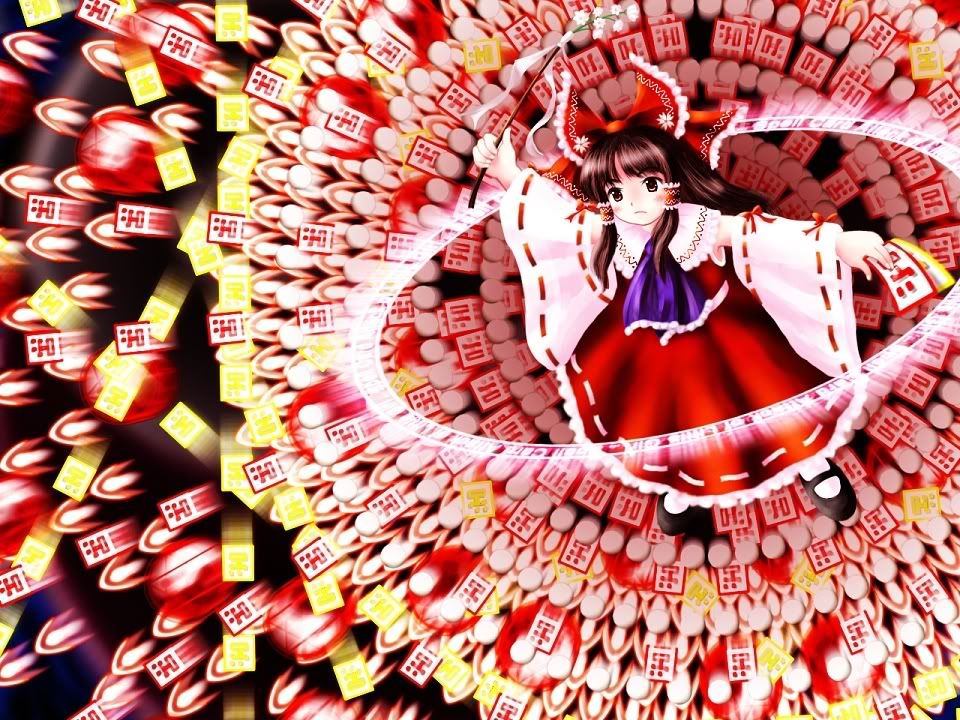
Reimu Hakurei looks much better when she isn't drawn by Zun.
Miko (Shrine Maiden)
The world of Gensokyo is a maelstrom of supernatural forces at work, its every aspect of existence controlled by millions of gods and spirits. Most of its inhabitants are unaware of how deeply life depends on the influence of supernatural beings. These people require a negotiator, someone who can communicate with the world of the living and the world of spirits, to ensure a harmonious existence. This is the role of the Miko, otherwise known as a shrine maiden.
Characteristics
Miko is a spellcasting class whose power comes from gods and spirits. She is sometimes treated as a miracle worker or a minor god in her own right. Like a Cleric or other divine spellcaster in D&D she carries the requests of humans to the gods and brings the power of gods to humans. But unlike a Cleric, she is not acting on the behalf of any particular god’s agenda, nor are the gods working through her. Instead, she works through the gods by using her power to command spirits.
A Miko always has a shrine where she lives and works. The shrine is home to the Miko’s mentor god, with whom she develops a special relationship. As her powers increase, so do her god’s, sometimes represented by bonuses to the Place of Power attribute. While the Miko normally has to learn spells from sutras, just as the Dynamic Sorcerer must learn all her spells from arcane study, this god may also teach the Miko spells of its specialty. This is represented by Miko’s Divine Domain attribute. She can have more than one mentor (a shrine can house many gods at once), and may acquire extra domains for 3 CP apiece.
Hit dice and ability scores
The Miko uses d4 hit dice.
Wisdom is the most important ability for the Miko. The save DC for the Miko’s spells is equal to 6 + the spell’s casting DC/5 + the spell’s number of spell slots + the Miko’s Wis. modifier. Constitution is also important, since it improves Fort. saves to resist Drain, allowing the Miko to cast stronger spells.
Skills:
A Miko’s class skills are Concentration, Craft, Diplomacy, Gather Information, Knowledge: Arcane, Knowledge: Cultural Arts, Knowledge: Nature, Knowledge: Religion, Medical, Perform, Power Usage, Profession, Sense Motive, Speak Language, Unarmed Attack, and Ranged Special Attack.
Skill points per level: 4+Int
Spell slots: 4/level
Arcane Mastery
Cost: 1 point/rank
Relevant ability: None
Progression: 1 spell per rank
Upon taking this attribute, the character selects a spell she already knows. This attribute gives the character a +5 bonus to resist Drain and Control checks for that specific spell.
Bonus Domain
Cost: 2 points/rank
Relevant ability: Wisdom
Progression: One extra divine domain per rank.
This attribute grants a spellcaster a divine domain from the Miko list. The character may cast spells from the domain at ½ the Drain cost, and has use of the domain’s associated Miko power.
Bonus Spells
Cost: 1 point/rank
Relevant ability: Intelligence
Progression: the character gains 4 spell slots/rank
Bonus Spells increases the character’s capacity to learn new spells or psionic powers. Each rank in this attribute grants the character an additional 4 spell slots.
Dynamic Psionics
Cost: 7 points/rank
Relevant ability: intelligence
Progression: descriptive; see below
Using conversion rules for Psionics, Dynamic Psionics works like Dynamic Sorcery, and costs 1 CP less (there are 4 fewer spell slots per rank). The character may only learn Psionic powers (just as in Dynamic Sorcery, the character is restricted to magic spells). Manifesting a power means making a Drain check against its manifesting DC. Augmenting a power adds its augmentation price to the DC rather than EP cost, and there is no limit to the number of times a power may be augmented. However, powers that are augmented more than a number of times equal to the manifester level instantly fail Control checks if the manifester fails the Drain check, and the consequences may be severe. Head explosion comes to mind…
A Dynamic Psion does not automatically know any powers, or gain new powers with levels. However, at any time, a Dynamic Psion may attempt to discover a power (any power from the psion/wilder list, or from disciplines, or the psychic warrior list) through intense meditation and training. The attempt requires a successful Power Usage: Psicraft check against the power’s DC – 10 and takes 24 hours to complete (regardless of success). The Psion does not gain bonuses for re-attempting to discover the same power.
Optional: Random power discovery
To simulate a Dynamic Psion who does not know his powers, the GM may determine the power randomly (it must be one the character does not already have), and the Dynamic Psion only determines the level. The Dynamic Psion can still attempt to discover a specific power which is part of his mastered element, as long as it is listed under the associated discipline in the Expanded Psionics Handbook.
Progression:
Rank 1 - The character gains a +2 bonus on Fortitude Saves against Drain and Control checks and has a Manifester Level of 2. The character has 8 spell slots and rolls 1d2 to determine EP gained each Level.
Rank 2 - The character gains a +4 bonus on Fortitude Saves against Drain and Control checks and has a Manifester Level of 4. The character has 16 spell slots and rolls 1d4 to determine EP gained each Level.
Rank 3 - The character gains a +6 bonus on Fortitude Saves against Drain and Control checks and has a Manifester Level of 6. The character has 24 spell slots and rolls 1d6 to determine EP gained each Level.
Rank 4 - The character gains a +8 bonus on Fortitude Saves against Drain and Control checks and has a Manifester Level of 8. The character has 32 spell slots and rolls 1d8 to determine EP gained each Level.
Rank 5 - The character gains a +10 bonus on Fortitude Saves against Drain and Control checks and has a Manifester Level of 10. The character has 40 spell slots and rolls 1d10 to determine EP gained each Level.
Rank 6 - The character gains a +12 bonus on Fortitude Saves against Drain and Control checks and has a Manifester Level of 12. The character has 48 spell slots and rolls 1d12 to determine EP gained each Level.
Rank 7 - The character gains a +14 bonus on Fortitude Saves against Drain and Control checks and has a Manifester Level of 14. The character has 56 spell slots and rolls 2d8 to determine EP gained each Level.
Rank 8 - The character gains a +16 bonus on Fortitude Saves against Drain and Control checks and has a Manifester Level of 16. The character has 64 spell slots and rolls 1d20 to determine EP gained each Level.
Rank 9 - The character gains a +18 bonus on Fortitude Saves against Drain and Control checks and has a Manifester Level of 18. The character has 72 spell slots and rolls 2d12 to determine EP gained each Level.
Rank 10 - The character gains a +20 bonus on Fortitude Saves against Drain and Control checks and has a Manifester Level of 20. The character has 80 spell slots and rolls 3d10 to determine EP gained each Level.
Dynamic Sorcery
Cost: 8 points/rank
Relevant ability: any mental (intelligence, wisdom, or charisma)
Progression: as SRD
Dynamic Sorcery functions like Dynamic Psionics for spells, except it grants 12 spell slots per rank (instead of 8). A Dynamic Sorcerer does not automatically know any spells, or gain new spells at new levels with each rank of this skill. She must learn all her spells from studying scrolls, spellbooks, or from a mentor.
To learn a spell, the character has to make a successful Knowledge: Arcane check against the spell’s base DC - 10. It takes a total of 12 hours of study for each attempt. If she fails, she can try again with a cumulative +2 circumstantial bonus to Knowledge: Arcane check. A Dynamic Sorcerer can learn both Divine and Arcane spells. Learning a Divine spell requires a successful Knowledge: Religion check instead of Knowledge: Arcane.
For more information on dynamic spellcasting, consult the Advanced d20 Magic OSD. A version is hosted here: http://www.birthright.net/brwiki/index.php/Advanced_d20_Magic
Magic/Psionics
Cost: 4 points/rank
Relevant ability: Intelligence
The Magic/Psionics Attribute uses the same method of magical abilities presented in the Anime OSD- direct expenditure of Energy Points to activate powers that do not fail to work. Spellcasters using this attribute instead of the Dynamic version usually know fewer spells but
don't need to make drain or control checks.
The Magic attribute creates Spell-Like Abilities, while the Psionics attribute creates Psi-Like Abilities, rather than actual spells or powers. This means abilities acquired from this attribute can't be used for counterspelling. Metamagic and Metapsionics are still possible, but the spells must be purchased with permanent Metamagic effects at the adjusted spellcasting DC, and the metamagic can't take effect unless the caster also has the corresponding feats. If the Metamagic increased the EP cost of the spell, it is not lowered for a character without the right feat. For powers with Metapsionic abilities, psionic focus is still required to use the Metapsionics, though they can be manifested normally without focus at no change in EP cost. It is sometimes a good idea to learn the same spell or power more than once, acquiring one metamagic version and a lower cost normal version.
Spells may be purchased using magic points from the Magic Attribute at a cost of the spell’s DC divided by 5 (rounded down). Activating (casting) these spells uses EP equal to half the MP spent to acquire them (rounded up). For example, the Haste spell has a DC of 31 and costs 6 MP to learn via the Magic Attribute. Each use of this spell drains 3 EP from the character. The GM must approve the use of any spell as a magical ability through the Magic Attribute — some spells may simply be inappropriate.
Spells or powers the character can acquire depend on the ranks of this attribute, based on spellcasting DCs. Each rank is equal to twice its caster level, which only counts for the attribute's spells and for item creation prerequisites. It does not stack with bonuses to CL acquired through Dynamic Sorcery or through class levels, though feats and other attributes designed to enhance CL can improve it. The same applies to Psionics and the character's ML.
Rank 1 = DC < 20
Rank 2 = DC < 25
Rank 3 = DC < 30
Rank 4 = DC < 34
Rank 5 = DC < 38
Rank 6 = DC < 42
Rank 7 = DC < 45
Rank 8 = DC < 48
Rank 9 = DC < 51
Rank 10 = No limit
Psionic powers learned with ranks of Psionics can still be augmented. Augmentation costs are no different than the ones described in the EPH. The total EP cost of the power cannot exceed the ML (though the initial cost can). For example, a character takes 2 ranks of Psionics and learns Hammer (which has a manifesting DC of 20) for 4 MP, giving it a manifesting cost of 2 EP. Hammer has an Augmentation price of 1 PP, which equals 1 EP in the Anime system. Since the character has an effective ML of 4, Hammer can be augmented up to 2 times for a total cost of 4 EP.
To keep Magic/Psionics from dominating its more expensive EP sucking Dynamic versions, spells or powers which can learned using this attribute are restricted by the character's thematic power. Acquiring extra themes costs nothing, but ranks of Magic/Psionics representing the new power don't stack with previous ranks of the attribute. This does not return bonus points, though additional Magical Restrictions will if acquired as Defects (as long as they are appropriate). Severely restrictive themes may lower the overall cost of the attribute, and themes with a lot of available spells may increase the cost.
Mechanical Genius
Cost: 2 Points/rank
Relevant ability: Intelligence
Progression: as Anime d20 SRD
In addition to its listed abilities, Mechanical genius also provides the following benefits:
+2 per rank bonus to Craft checks involving Magic, Psionic, or Tech items.
A character with this attribute can make a Power Usage check to emulate attributes and abilities for the purpose of crafting items. Failure or success results in the loss of 1 Wealth worth of materials, and there is no taking 10 or 20 on the check, though retries are possible.
Emulate an alignment: DC 30
Emulate an attribute (other than Magic/Psionics/Dynamic Sorcery/Dynamic Psionics): DC 20
Emulate a caster/manifester level*: DC 10 + CL/ML
Emulate a feat: DC 25
Emulate a psionic power: DC = manifesting DC
Emulate a spell: DC = spellcasting DC
*Each rank of Mechanical Genius can emulate up to 2 caster or manifester levels. Ranks beyond 6 are possible, but don't affect build/repair times.
Spell Card
Cost: 4 points/rank; see below
Relevant ability: None
Progression: 5 points per rank; see below
A spell card is an Item of Power with a basic bullet firing attack based on the attribute rank. Each upgrade adds 5 CP to spend on new traits. Adding an extra damage die costs 3 CP (or more if the size is greater than Medium). If the attack has multiple damage types, the player can choose which type of damage to increase.
A rank 1 spell card begins with the following traits:
Shape: Sphere
Composition: Power
Size: Medium
Properties: None
Damage: 1d6 (unspecified)
Range: 100 ft.
Bonus points: 1 CP
A spell card attack may have only one kind of shape, and one size. It may be composed of up to two elements (For example: Fire and Cold = frozen methane, Fire and Metal = molten lead, etc…), and it may have multiple properties. Changing shape or composition with new ranks does not return lost CP. Unspent CP are not lost.
Shape:
Arrow – Arrow shaped projectile attacks do Piercing damage, and work with bow and arrow related feats or magic. An arrow attack uses the Archery combat skill instead of Special Ranged attack. (3 CP)
Blade – Projectiles shaped like flying blades or other weapons with sharp edges do Slashing damage. (1 CP)
Bullet – Bullet shaped attacks are treated as gunshots, do Ballistic damage, and work with gun related feats like Double Tap. A bullet attack uses the Gun Combat skill instead of Special Ranged attack. (3 CP)
Sphere – Spherical projectiles have no special traits, and have an unspecified damage type. Spheres with elemental components take on the elemental damage type. (0 CP)
Spike – Spike shaped projectiles do Piercing damage. (1 CP)
Teardrop (Blunt) – Teardrop projectiles and other blunt or gelatinous shapes do Bludgeoning damage.(1 CP)
Composition:
Note: Targets that succeed on any saves against composition effects automatically succeed on their next saves against the same spell card effect for the duration of combat. They still take the extra damage.
Acid – The attack adds an extra die of Acid damage, and it shoots acidic projectiles that break on contact, releasing tiny clouds of corrosive gas. The target must make a successful Fort. save against a DC of 13 or take 1 Con damage. (5 CP)
Cold – The attack adds an extra die of Cold damage, and it shoots ice projectiles that cover surfaces in frost. The target must make a successful Fort. save against a DC of 15 or take 1d4 nonlethal damage. If the target is under constant exposure to the attack, and is wearing metal armor, the armor is subjected to the effects of a Chill Metal spell. (5 CP)
Ectoplasm – The attack has a 50% chance of affecting an incorporeal target, and shoots projectiles of lightless gray flame. If the attacker is incorporeal, the attack has a 50% chance of affecting a corporeal target, and a 100% chance of affecting an incorporeal target. (4 CP)
Fire – The attack adds an extra die of Fire damage, and it shoots flaming projectiles that scorch targets. Inanimate objects made from wood, paper, cloth, or other flammable materials instantly catch fire. A target makes Ref. DC 15 or catches fire. Burning targets take 1d6 damage per round, and must make Ref. DC 15 to extinguish, or take another 1d6 damage. Characters with items that catch fire must make the save each time per item. (10 CP)
Lightning – The attack adds an extra die of Electricity damage, and it shoots projectiles made of electric sparks or connected lightning arcs. The target makes a Fort. save (DC 12) or is paralyzed 1d4 rounds. (5 CP)
Metal – The attack is made of steel, lead, or jagged shrapnel. This increases the critical threat range to 19-20. (2 CP)
Power – The damage type remains unchanged (or unspecified). (0 CP)
Prayer – The attack is made of ofuda folded into the projectile shape, adding an extra die of Positive Energy damage. If the target is Undead or has the Evil subtype, the attacker may make an Exorcism check to drain 2 EP from the target and negate any Regeneration for 1d4 rounds with a successful hit. (5 CP)
Shadow – The attack fires projectiles made of solid shadows, adding an extra die of Negative Energy damage. The target makes a Fort. save (DC 12) or is blinded for 1d4 rounds. (5 CP)
Sound – The attack adds an extra die of Sonic damage, and it shoots projectiles made of focused sonic booms. The target makes a Fort. save (DC 12) or is sickened for 1d4 rounds. (5 CP)
Size:
Tiny (projectile only) – The projectile is Tiny, decreasing the damage die to a d3. It is pinhead sized, or as small as a cutting knife. (-8 CP)
Small (projectile only) – The projectile is Small, decreasing the damage die to a d4. It is as small as a singe shot pellet, or dagger sized. (-5 CP)
Medium – This is the default size. The damage die is a d6. The projectile is about as large as a handgun bullet, or a Medium weapon. (0 CP)
Large (projectile only) – The projectile is Large, increasing the damage die to a d8. It is roughly the size of a shotgun slug, or a Large weapon. (+1 CP per die)
Huge (projectile only) – The projectile is Huge, increasing the damage die to a d10. It is 3 inches in diameter, about as wide a soda can, or a Huge weapon. (+2 CP per die)
Gargantuan (projectile only) – The projectile is Gargantuan, increasing the damage die to a d12. It is 6 inches in diameter, slightly larger than a howitzer shell, or a Gargantuan weapon. (+3 CP per die)
Colossal (projectile only) – The projectile is Colossal, increasing the base damage die to 2d8. The object is 16 inches in diameter, the size of a 7 ton artillery shell, or a Colossal weapon. (+6 CP per die)
Properties:
Special Attack abilities - The following abilities are appropriate to add from the Anime d20 SRD. Each extra rank the ability adds costs 4 CP.
Accurate, Affects Incorporeal, Contagious, Drain Body, Drain Energy, Drain Mind, Drain Soul, Flare, Flurry, Incapacitating, Incurable, Indirect, Irritant, Linked (Attack), Long Range, No Regeneration, Penetrating (Armor), Penetrating (Force Field), Spreading, Tangle, Targeted, Trap.
Reduced cost abilities - These abilities cost 3 CP per extra rank:
Auto-Fire, Area Effect, Aura, Enduring, Homing
Special Attack disabilities - The following disabilities are appropriate to add from the Anime d20 SRD. Each extra rank the ability subtracts returns 4 BP.
Drop Shields, Extra Energy, Inaccurate, Limited Shots, Low Penetration, No Damage, Self-Destruct, Short Range, Static, Stoppable, Toxic, Unreliable, Uses Energy.
Secondary special attacks:
You can use leftover points on a spell card to buy a secondary special attack at 1/4 the cost, rounded up (1 point = 1 rank). The ranks of the secondary attack cannot exceed the ranks of its primary.
Melee spell cards:
Some spell cards may create melee weapons, or rely on a character's existing melee weapons. There is no extra cost to link a card to a weapon (for example, a sword that shoots energy bullets). The weapon deals damage normally except in spell card combat, where it deals damage equal to its linked spell card instead (no different than attacking with the Spell Card at the weapon's range). The weapon's special abilities don't apply in spell card combat.
Wild Surge (Psionic)
Cost: 3 points/rank
Relevant ability: Charisma
Progression: +1 ML and +1 augmentation/rank; special
This attribute allows the character to perform a Wild Surge 1/day. While manifesting a psionic power, the manifester may use Wild Surge to increase the effective manifester level and augment the power for free (based on the Attribute rank), making no adjustment to the power’s drain DC (or its EP cost if it is a psi-like ability). It may be further augmented as normal, and the manifester level may be further improved with psionic feats.
Immediately after this attribute is used, the character risks psychic enervation. A character that fails the power’s Drain check becomes psychically enervated. The character loses 1 EP per rank of this attribute (in addition to the normal Drain cost), and is Dazed for 1d4 rounds.
Wild Surge cannot exceed Attribute rank 6. It may not be combined with uses of the Overchannel feat.

Kanako's Wild Surge can melt your brain without psionics!
Force Field
Force field has new ability and disability options.
Abilities:
Arcane Resistant
Each rank of the force field attribute adds +5 Magic Resistance and +5 Power Resistance to all characters and objects protected by the field. This counts as two abilities. You may take this as one ability instead, under the condition that a spell or power which overcomes the resistance automatically shuts down the Force Field.
Blocks Energy
Select 1 type of energy: Acid, Cold, Electricity, Fire, or Sonic. The force field reduces twice as much damage from energy of that type normally (the equivalent of adding +10 energy resistance in addition to +10 armor). You may take this ability up to 5 times, one for each energy type.
Bullet Sphere
The force field is made of fast moving danmaku projectiles. It does not block regular movement. Instead, every time an enemy moves in or out of the force field, it provokes a ranged attack of opportunity from the user (whereas normally, ranged AoO isn't possible). While the enemy is within the field, it takes a -4 penalty to defense rolls, and the user adds his ranks of force field to attack rolls.
Opaque (outside)
The force field is a solid color on the exterior, making it difficult to see anyone within the field. Targets protected by the field get full cover if the field is breached by damage, and they can see out as though looking through a one-way mirror. This may not apply to force fields that are walls or shields.
Disabilities:
Ablative
Damage dealt to the force field reduces its effectiveness. Each point of damage it reduces is subtracted from its armor point total. This damage can be restored by regenerating the shield, recovering 10 points per rank as normal.
Opaque (inside)
The force field is a solid color on the interior, making everyone in the field effectively blind to outside attackers while the force field is active. Those outside the field can see inside without difficulty. This may not apply to force fields that are walls or shields.
Skill Tricks
Cost: 1
Relevant ability: varies by skill
Progression: 1 new trick per rank, +1 use of Skill Tricks per session
Skill tricks are miniature feats with limited use. Each rank of this attribute grants you one new skill trick, and one extra use of skill tricks per session. You can’t use the same trick more than twice per session.
Each trick is linked to one or more attributes, skills, or feats, which the character is required to have before purchasing the trick. A prerequisite skill or feat needs at least one rank.
Assume Quirk
Prereq: Disguise 5 ranks
While impersonating someone, characters familiar with the person you are impersonating are denied a spot check to see through your disguise. This lasts for 1 hour, and may only be activated once per day.
Dr. Fixit
Prereq: Repair 6 ranks, Divine Relationship 2 ranks
You instantly succeed on a Repair check by striking the broken object with your fist. You may only use this trick immediately after failing a Repair check.
Drunken Antitoxin
Prereq: Medical 4 ranks, Poison 4 ranks, Great Fortitude, Damn Healthy! 1 rank
If you fail a Fortitude save against poison, you can drink wine or beer (or something a whole lot stronger) until you vomit (fail 4 Fort. saves in a row), neutralizing the poison. You can’t get alcohol poisoning this way. This trick must be activated within 5 minutes of the initial poisoning.
Easy Escape
Prereq: Medium size or smaller, Escape Artist 8 ranks
If your enemy is larger than you, you gain a circumstantial bonus to Escape Artist checks for escaping a grapple or pin. The bonus is equal to 4 x the number of size categories larger than you your enemy is.
Focused Dodge
Prereq: Dodge
Dodge bonus increases to +2 for 1 minute.
Furious Power Attack
Prereq: Power Attack
Double the damage bonus from Power Attack at no additional penalty to the attack roll.

Reimu has no defense against Patchouli Knowledge's Furious Power Attack.
Ha! Now I Can See You!
Prereq: Spot 12 ranks
As a swift action, make a DC 20 Spot check. If successful, you automatically pinpoint the location of an invisible creature within 30 ft. of you. This lasts until the end of your turn.
Hell Bent Determination
Prereq: Concentration 7 ranks, Highly Skilled 3 ranks
Make a single untrained skill check, and add your ranks of Concentration to your total. You can use this to make checks for skills which you normally can’t use untrained. The action takes twice as long to complete.
Misdirection
Prereq: Bluff 8 ranks, Art of Distraction 2 ranks
Use Bluff to feint against multiple targets. For each target, roll Bluff (opposed by the target’s Sense Motive). Each opponent after the first incurs a cumulative -2 penalty to your skill check.
Moe-Moe
Prereq: Seduction 4 ranks, Art of Distraction 1 rank
You can make a Seduction check against an enemy in combat (opposed by Sense Motive) as a full-round action. If you succeed, the target is flat-footed until the start of your next turn. This is a mind-affecting ability.
Point It Out
Prereq: Spot 8 ranks
If you succeed on a Spot check, you can take an immediate action to grant a nearby ally free spot check to see the same thing, providing a +2 circumstantial bonus. The ally must be within 30 ft. of you.

Cirno Points Out a cleverly hidden enemy.
Social Recovery
Prereq: Bluff 8 ranks, Diplomacy 5 ranks, Knowledge: Cultural Arts 3 ranks
If you fail a Diplomacy check against an NPC, you can spend a full-round action speaking with the NPC, and make a Bluff check with a -10 penalty. A success can improve the NPC’s attitude, but not by more than a single step. You can’t use this ability more than once on the same NPC on the same day, regardless of whether or not you succeed.
You may also use this ability to undo the effect of something disrespectful to an NPC, or to recover an NPC from the result of someone else’s failed Diplomacy. You still must make a Bluff check at a -10 penalty.
Quick Escape
Prereq: Escape Artist 12 ranks
Take a swift action to make an Escape Artist check to escape grapple. You can make this check even if you have used your standard action attempting the same escape.
You can also make an Escape Artist check as a move action instead of a full-round action. You can’t do this more than once against the same restraint.
Quickstep
Prereq: Improved Initiative
Take a swift action to gain a +4 competence bonus to initiative for 1 minute.
Shadow Dance
Prereq: Hide 8 ranks, Perform (dance) 5 ranks
You can attempt a DC 20 Hide check from anywhere, even in full view of the public. If successful, you have full concealment until the start of your next turn.
Spell Surge
Prereq: Spell Focus
Spell focus bonus increases to +3 for 1 minute.
Zen Attack
Prereq: Blind-fight
Negate miss chance for a single attack. This even works on incorporeal targets.
Wealth
Each rank of the Wealth attribute adds a +6 bonus to the character’s Wealth ability score. The Wealth ability functions exactly as in d20 Modern (d20 SRD).
Inappropriate BESM skills:
Computer Scanning and Computer Use (there are no computers in Gensokyo, except in obscure places such as a Kappa research laboratory; they are not prevalent enough for anyone to gain particular skill using them)
Drive (replaced by Pilot and Ride; all vehicles require Pilot checks, animal mounts require Ride checks)
Pick Pockets (replaced by Sleight of Hand)
Sports (you have the option of including your own rules for the use of Sports, and putting sports in your campaign, but by default it will rarely be useful in the Touhou setting)
Wilderness Lore (replaced by Survival)
Wilderness Tracking (replaced by Survival)
Other inappropriate d20 skills:
Appraise (replaced by Knowledge: Cultural Arts: Art Appraisal specialization)
Psicraft (replaced by Power Usage: Psicraft specializaiton and linked to either Psionics or Dynamic Psionics)
Spellcraft (replaced by Power Usage: Spellcraft specialization and linked to either Magic or Dynamic Sorcery)
Knowledge skills
Arcana (replaced by Arcane)
Dungeoneering (not needed; too specific to D&D setting)
Engineering (replaced by Electronics, Mechanics, and Military Sciences)
Geography (replaced by Social Sciences: Geography specialization)
History (replaced by Cultural Arts: History specialization)
Local (replaced by Area and Streetwise)
Nobility and Royalty (replaced by Area, Social Sciences, and sometimes Streetwise)
Psionics (replaced by Occult: Psionics specialization)
The Planes (replaced by Occult: Afterlife or Planes specialization)

Computer Use is not an appropriate skill for Touhou campaigns.
Unlisted skills:
Use Magic Device (The following base classes have Use Magic Device in their class skills: Adventurer, Dynamic Sorcerer, Ninja, Magical Girl, Student, Tech Genius)
Psionic skills (Autohypnosis, Craft: Psionics, Knowledge: Psionics, Psicraft, etc...)
BESM specific skills:
Controlled Breathing (trained only)
You can suspend your respiratory functions to perform certain tasks, such as playing dead or maximizing your breathing efficiency.
Counterpsionic feats
These feats cannot be taken by characters with psionic powers, ranks of Dynamic Psionics, or any psi-like abilities. Taking psionic attributes or abilities later cancels out these feats. (The characters may still have attributes that resemble psionics, such as Telepathy and Telekinesis, which do not affect counterpsionics.) The benefits of a counterpsionic feat apply to the effects of psionics only, unless stated otherwise. For example, Anarchic Mind only denies creatures insight bonuses from psionic powers or psi-like abilities.
Anarchic Mind [Counterpsionic]
Prereq: Chaotic alignment, Cha. 15
Creatures and characters who have an insight bonus on their attack rolls, an insight bonus to their Armor Class, or an insight bonus on skill checks or ability checks do not gain those bonuses against you.
Combat Intuition [General]
Prereq: Intuition, BA +1
You let intuition guide your attacks, relying on your combat senses and striking when enemy weak points appear. You may use your Wis. modifier instead of your Str. modifier to add damage to unarmed attacks, or muscle-powered attacks with one-handed weapons.
Disturbed Mind [Counterpsionic]
Prereq: Cha. 15, Skeleton in the Closet (optional)
Whenever you are subject to a power from the Telepathy discipline (regardless of whether the power is harmful or beneficial to you), the manifester must make a Will saving throw against a DC of 10 + 1/2 your character level + your Charisma bonus or take 2d6 points of damage. This also affects users of the Telepathy attribute, even if they are harmlessly trying to communicate with you.
Optional: Enemies damaged by this feat may also acquire one rank of the Recurring Nightmares defect, occasionally suffering from nightmares about what they saw inside your head.
Drunken Streetfighting [General]
Prereq: Streetfighting, BA +2
While drunk, you get a +2 bonus to unarmed attack rolls and damage, and a -4 penalty to your AC.
Evasion [General]
Prereq: Dodge
If you are exposed to an effect that normally requires you to make a Ref. save for half damage, you take no damage with a successful save. You may only use this feat while wearing light armor or no armor.
Exploit Weakness [General]
Prereq: Judge opponent, BA +4, Int. 16
After using Judge Opponent on a target, starting on the next round you can attack that target adding your Int. bonus to your damage roll. If you are using a muscle-powered attack, this replaces your Str. bonus. The effect lasts until the end of combat.
Extreme Effort [General]
Prereq: BA +1, Str. 14
Take a full-round action on a Str. related skill to add a +8 competence bonus to the skill check.
Improved Extreme Effort [General]
Prereq: Extreme effort
Your competence bonus from Extreme Effort improves to +16.
Improved Uncanny Dodge [General]
Prereq: Uncanny dodge
You cannot be flanked. If you are caught unaware of an attacker, you can make a defense check adding your Dex. bonus only.
Intuition [General]
Prereq: Sense Motive 6 ranks, Wis. 12
You have an intuitive sense of dangerous situations. At any time, you can make a DC 15 Will save. If successful, you get a good or a bad feeling about a specific situation, depending on what the GM finds appropriate. You may only use this feat a number of times per day equal to your Wis. modifier.
Mental Resistance [Counterpsionic]
Prereq: Base Will save +2
Against psionic attacks that do not employ an energy type to deal damage, such as Mind Thrust, you gain damage reduction 3/--. In addition, when you are hit with ability damage (but not ability drain or ability burn damage) from a psionic attack, you take 3 points less than you would normally take.
Powerful Extreme Effort [General]
Prereq: Improved extreme effort
Your competence bonus from Extreme Effort improves to +24.
Psionic Psponge [Counterpsionic]
Prereq: Con. 15
You soak up psionic ki energy like a psychic sponge. When a foe strikes you in melee combat, the foe immediately loses its psionic focus, if any.
Also, if you are the target of a power, the power’s manifesting DC increases by a number equal to your Wisdom bonus.
Scatterbrained [Counterpsionic]
Prereq: None
You get a +2 bonus on all saves vs. psionic powers.
Team Flanking [General]
Prereq: Sneak Attack
When you and an ally flank an opponent, you gain a +4 bonus on your attack roll instead of the normal +2 bonus.
Trick [General]
Prereq: Bluff 6 ranks, Int. 18, 1 or more Skill Tricks
You can use this feat to temporarily confuse a target. The target must have an intelligence of at least 3, it must be within 30 ft. of you, and it must be able to see or hear you.
To play a trick, take full-round action and make a DC 15 Int. check, adding your class levels to the result. If you succeed, the target can make a Ref. save vs. a DC of 10 + your level + your Int. bonus. If the target fails, it becomes Dazed for 1 round.
You can only trick a target once per encounter, even if you don’t succeed at first.
Uncanny Dodge [General]
Prereq: Evasion
If you are caught flat-footed or struck by a hidden attacker, you can still add your AC bonus from Dex. to your defense roll. This does not work if you are immobilized.
Ancestral feats
A character may select an ancestral feat at any level. Once a character selects an ancestral feat, he can’t take another unless it lists his previous feat as a prerequisite. For example, he can’t take Spirit Bonded and Crow Blooded, only one or the other. If he takes Spirit Bonded, he can take Fire Bonded or Earth Bonded for his next feat, but since they only list Spirit Bonded as a prerequisite, he can’t have both.
Ancestral Resistance [Ancestral]
Prereq: Any of the following feats: Earth bonded, fire bonded, metal bonded, moon bonded, sun bonded, water bonded, or wood bonded
The blood of your spirit ancestors is strong within you. You gain a resistance bonus to your insulting element based on your ancestral spirit type, listed below.
Some magic and metamagic feats are slightly different in the Touhou system. Instead of taking up higher spell slots, they add to the spell’s drain DC. They otherwise function exactly as they do in the Anime d20 SRD.
Appropriate item creation feats
These feats work as described in the PH 3.5:
Craft Magic Arms and Armor
Craft Wondrous Item
The magic items count as Items of Power once completed. The items must be made from existing materials, such as mundane armor and weapons which are not Items of Power.
Adapted item creation feats
The following feats work as indicated in the PH 3.5, except where they are adapted for the dynamic spellcasing system:
Brew Potion [Item Creation]
Potions do not need to be designed as Items of Power. Only spells of DC 33 or less may be fashioned into a potion.
Craft Rods, Staves, and Wands [Item Creation]
These items must be enchanted to cast specific spells and they must include their own EP to rely on (using the Energy Bonus Attribute). Only spells of DC 37 or less may be enchanted into a rod, staff, or wand.
Scribe Scroll [Item Creation]
Scrolls do not need to be designed as Items of Power.
Adapted metamagic
Metamagic feats add to the casting DC instead of the spell’s level, but otherwise function the same. You do not need to take extra actions when using metamagic. Similarly, the equivalent metapsionic powers have the same effect on the manifestation DC.
Common Ranged Weapons
Sometimes a spell card alone isn’t enough to get the job done. Weaker spell cards lack the firepower to ward off hungry youkai. Stronger spell cards are too much destruction for certain tasks, like hunting game in Gensokyo’s thick forests. Bows, crossbows, and firearms have their place in Gensokyo as handy backup tools rather than primary weapons.
What do Gensokyo girls do when they aren’t drinking or flying? Try to kill each other with ninja weapons, of course.
These weapons are rare in Gensokyo, but not necessarily expensive.
Frilly little dresses aren't the only thing Touhou characters can wear. They can wear frilly little brigandines and adorable miniature samurai armor.
In a world where people can learn to fly under their own power, why would anyone need a personal flying device like a broomstick? As it turns out, the ability to fly under one’s own power is rather limiting. Flying requires a little bit of effort, and it’s more than just walking, even if the limitations are too small to reflect in game mechanics. After all, if flight were truly effortless, there would be no roads in Gensokyo, no staircases, no shoes or sandals, just because it would be easier to fly everywhere than walk.
Instead, residents of Gensokyo who know how to fly under their own power don’t fly all the time. They might fly to cross a village quickly, to get out of danger, or reach a high place, but they walk everywhere else. When they need to travel great distances, vehicles are required.
Flying broomsticks are the vehicle of choice for many of Gensokyo’s citizens. They aren’t cheap, nor are they easy to use, but they don’t require any magical training to operate, only magical thinking.
A flying broomstick can perform stunts and maneuvers with successful Pilot checks, just as any other flying vehicle in the d20 system. They are usually cheaper than Items of Power because of their widespread availability (with the exception of the Witch Hunter, which counts a Rank 1 Item of Power, or 4 Major Items- 2 ranks of Personal Gear).
A broomstick can be activated or deactivated with a mental command as a swift action. An inactive broomstick does not look like an ordinary broom. Most are built much longer, and some have obvious features like tailplanes, finger grips, rocket engines, and other things which don’t seem to help with cleaning. Even while inert, it emits a faint magic aura (minor Transmutation). A deactivated broom can be used as a bo in melee combat.
Once activated, the broomstick hovers vertically about 2 ft. off the ground, awaiting the commands of its pilot. Commands depend on finger positions for thrust, and the direction the broomstick for steering. It can be ridden with the pilot leaning over facing forward, or sitting sideways upright. Riding style makes no significant difference, although certain positions (like standing on top of the broom and trying to ride it like a surfboard) are probably not a good idea.
Izumo Mk I
The Izumo mark 1 is a training broomstick. It is half as fast as an average broomstick and slow to turn, trading speed and maneuverability for stability and balance. Its cedar wood handle is deliberately left unpolished for an easier grip, and smooth nails driven into the sides of the stick make it easy for a pilot to find the right hand positions.
Type: Vehicle
Class: Flying Broomstick
Size: Medium
HP: 10
Occupants: 1
Cargo: 200 lbs.
Armor: 5
Str: --
Defense: +1
Air Speed: 50 mph (9 squares); Ceiling: 500 ft.
Handling: 3/3
Special abilities: None
Exotic abilities: None
Defects: Open
Weaponry: None
Required skills: Pilot
Personal Gear: 1 major item + 1 minor item
Wealth DC: 26
Caster Level: 3
Izumo Mk II
The mark 2 is designed for practical, everyday use. It is in many ways identical to the Mark 1, except that the handle is polished to prevent splinters, and there are no nails for finger grips. Some of the training restraints placed on the mark 1 are removed, creating a faster but wobbly ride.
Skilled riders are able to make full use of the broom’s potent flying magic. By adjusting the angle of attack during flight, a pilot can “tip” the propulsion spells from the handle into the bristles, doubling flight speed. This speed boost lasts up to 1 hour at a time, but each use causes the handle to develop hairline cracks as the magic drains from it, doing 6 damage to the vehicle. These cracks may be repaired on the ground, requiring a DC 15 repair check which takes at least 1 hour (or more, depending on how long it will take hide glue to dry).
Activating or deactivating the air boost requires a move action.
Type: Vehicle
Class: Flying Broomstick
Size: Medium
HP: 10
Occupants: 1
Cargo: 200 lbs.
Armor: 5
Str: --
Defense: +1
Air Speed: 50 mph (9 squares); Ceiling: 500 ft.
Handling: 5/5
Special abilities: Air boost (+50 mph; +9 squares)
Exotic abilities: None
Defects: Open
Weaponry: None
Required skills: Pilot
Personal Gear: 1 major item + 2 minor items
Wealth DC: 27
Caster Level: 3
Izumo Mk III
The mark 3 is specifically designed for long range travel. Its handle is extended to 9 ft. to allow more potent magic to propel it horizontally, doubling its base speed. A handle at the front end of the broom gives it the appearance of an oversized tonfa and allows the pilot to turn more easily, as well as hold on during acceleration.
The extra flight magic also doubles the speed of the broom’s air boost. Duration remains the same as the mark 2, but the longer handle takes 8 damage from air boost use. The Repair DC increases to 20.
Activating or deactivating the air boost requires a move action.
Type: Vehicle
Class: Flying Broomstick
Size: Medium
HP: 10
Occupants: 1
Cargo: 200 lbs.
Armor: 5
Str: --
Defense: +1
Air Speed: 100 mph (18 squares); Ceiling: 500 ft.
Handling: 6/8
Special abilities: Air boost (+100 mph)
Exotic abilities: None
Defects: Open
Weaponry: None
Required skills: Pilot
Personal Gear: 1 major item + 3 minor items
Wealth DC: 28
Caster Level: 3
Witch Hunter
The ironically named Witch Hunter is optimized for popular racing sports. Modified versions can reach speeds in excess of 500 mph, prompting the designers to include a spear shaped tailplane at the front of the broom. This reduces the size of sonic booms and maintains stability when approaching the sound barrier (around 700 mph). The current Witch Hunter model is 25 ft. long and comes with a carrying case designed to look like a nodachi hilt.
Special: The Witch Hunter’s great length makes it cumbersome. Unlike other brooms, which can be used as improvised bo staffs, it is too long to be used as a melee weapon.
If it takes the Collapsible Handle accessory, it can be compressed to a length of 5 ft., which does not allow for concealment, though allows use as an improvised melee weapon.
Type: Vehicle
Class: Flying Broomstick
Size: Large
HP: 15
Occupants: 1
Cargo: 200 lbs.
Armor: 5
Str: --
Defense: +0
Air Speed: 500 mph (88 squares); Ceiling: 500 ft.
Handling: 8/3
Special abilities: None
Exotic abilities: None
Defects: Open
Weaponry: None
Required skills: Pilot
Personal Gear: 4 Major Items
Wealth DC: 35
Caster Level: 5
Accessories:
(Minor items = Wealth DC 20; Major items = Wealth DC 25)
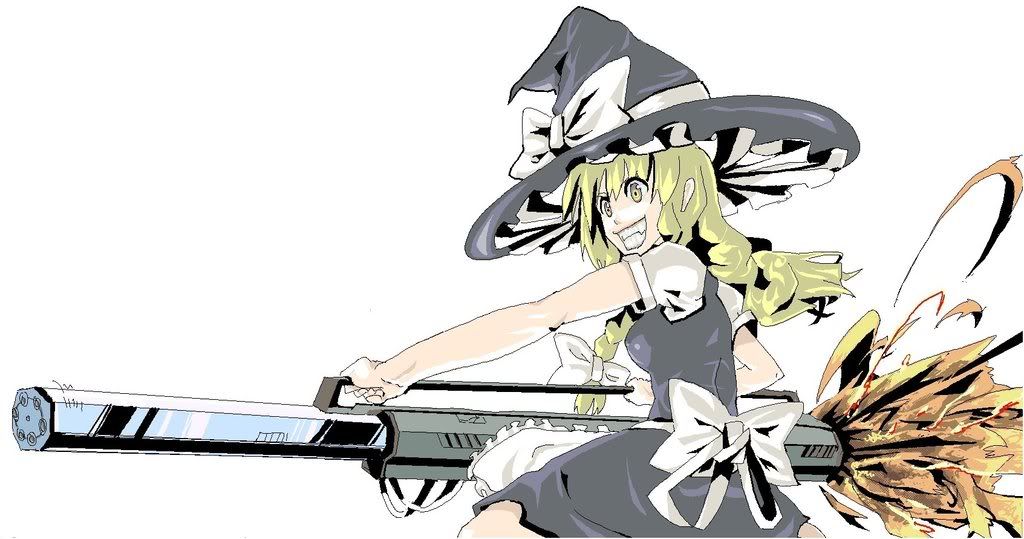
This... is... my... BROOMSTICK!
Alchemical Bristles – The bristles of the broom are soaked in a solution of rainwater, pigeon bile, and tengu feathers for six days. The treatment supposedly lightens the broomstick’s entire load because the potion is made of lightweight things.
Bonus: +20 mph (+4 squares) to air speed, and +50 lbs. to carrying capacity.
Collapsible Handle – The interior handle of the broom is fitted with a pneumatic telescoping rod. It can be extended or collapsed with the push of a button, as a free action. This allows the broomstick to be stored with full concealment in a small case or a coat pocket.
Weight: 3 lb.
Bonus: Concealment
Custom Grips – A pair of custom hand grips, fitted to the pilot’s finger sizes, are placed on both ends of the broom handle. A solid grip prevents the rider from sliding around during breaking and acceleration.
Weight: 1 lb.
Bonus: +0/+2 Handling, +2 circumstantial bonus to Pilot skill during maneuvers which require sudden breaking or acceleration
Flight Varnish – A concoction of flying fish oil, extract of hawk urine, fly’s blood, and other components applied in thin layers to the handle of the broom. Supposedly, this makes the broom fly better because it imitates flying things.
Bonus: +30 mph (+5 squares) to air speed
Special: You can’t take this accessory if the broomstick already has a Titanium Handle. The substance only bonds to wood and similar materials.
Hangseat – A bulky mechanical harness which can be attached to pylons bolted into the broomstick handle. It allows the pilot to hang from the broomstick facing forward and steer the vehicle like a glider. It takes 10 minutes to unpack and assemble the rig or put it away.
Weight: 8 lb.
Bonus: -1/+5 Handling, and you get a +10 equipment bonus to Balance checks to resist being knocked off. This accessory reduces the broomstick’s maximum speed by 10 mph.
Special: Can’t be combined with other grip or seat modifiers, such as Leather Straps or Rocket Engines.
Kanabo Head – A metal weight with spikes affixed to the front of the broom handle.
Weight: 6 lb.
Bonus: Your broom can be used as a kanabo staff when not in flight (see the kanabo entry in the weapons section). You also get a +2 circumstantial bonus to Pilot checks for ramming maneuvers. This accessory reduces the broomstick’s maximum speed by 10 mph.
Leather Straps – Two leather straps fastened to both ends of the broomstick ending with looped handles. This makes steering easier and provides a little extra balance for those who ride sideways.
Weight: 1 lb.
Bonus: +0/+3 Handling, +4 circumstantial bonus to Balance checks to resist being knocked off the vehicle
Rocket Engines – A pair of glycerin fueled rockets bolted to the sides of the broom handle near the back. They provide the broomstick with a significant speed boost of 100 mph and allow it to exceed the standard service ceiling of 500 ft.
Weight: 50 lb.
Bonus: The engine adds 100 mph. (+18 squares) to the broomstick’s top speed while active, and increases the service ceiling to 1000 ft, but incurs a -2 penalty to Pilot checks. While inactive, this accessory reduces the broomstick’s maximum speed by 10 mph.
Special: You can’t take this accessory if the broomstick already has a Hangseat or Collapsible Handle. Activation or deactivation is a move action. Rocket Engines count as a major item.
Titanium Handle – Titanium is a rare lightweight metal from the outside world, obtained from strange wreckage which occasionally falls in through gaps in the upper border. A skilled blacksmith can work scraps of the material into a broomstick handle. This improves the lifting power and durability of the broomstick.
Weight: --
Bonus: The broomstick’s carrying capacity doubles, it gets +15 hp and +3 armor. Its total hp cannot exceed 25.
Special: Taking this accessory negates the bonus from Flight Varnish. This counts as a major item.
Spell-like abilities:
A broomstick is basically a primitive staff or rod used as a flying vehicle. It actually has 4 spell slots and an inherent EP reserve of 20, which it normally never uses. Sometimes black magicians take advantage of this untapped resource, engraving the broom handle with runes to instill the vehicle with spell-like abilities.
Each ability is the equivalent of a combination of minor and major items, a total which cannot exceed the Personal Gear cost of the broom. (For conversions, 1 major item is worth 4 minor items.) For example, an Izumo Mk I is worth 1 major and 1 minor item. It can’t handle more than a 2nd level ability, whereas a Witch Hunter (4 major items) can acquire any ability up to 4th level. Modifications and accessories can’t alter this limit, so even if the Izumo takes 8 or more accessories, it still can’t handle 3rd or 4th level spell-like abilities.
Broomsticks can only acquire a few kinds of spells, listed by level. Each spell-like ability is paid for separately. Its abilities can’t exceed 4 spell slots, and only the broomstick’s EP reserve may pay for them. A broomstick’s spell-like abilities are like a vehicle’s onboard equipment. They can only be used by the pilot during operation.
Activating a spell-like ability is a standard action, provoking an attack of opportunity. The broomstick does not have to make a drain check against its spell, and always pays the indicated EP cost. Its EP reserve recharges at the rate of 1 EP per hour.
0-level spell (DC < 20)
Spell slots: 1
EP cost: 2
Personal Gear = 1 minor item
CP: 1
Wealth DC: 18
Caster level: vehicle +1
Available spells: Dancing Lights, Ghost Sound, Message, Mending, Light, Resistance
1st level spell (DC < 25)
Spell slots: 1
EP cost: 2
Personal Gear = 1 minor item
CP: 1
Wealth DC: 18
Caster level: vehicle +1
Available spells: Alarm, Endure Elements, Magic Aura (as Nystul’s Magic Aura), Shield
2nd level spell (DC < 30)
Spell slots: 1
EP cost: 3
Personal Gear = 3 minor items
CP: 1
Wealth DC: 23
Caster level: vehicle +2
Available spells: Bear’s Endurance, Blur, Bull’s Strength, Cat’s Grace, Darkness, Eagle’s Splendor, Fog Cloud, Fox’s Cunning, Gust of Wind, Invisibility, Mirror Image, Obscure Object, Owl’s Wisdom, Protection from Arrows, Resist Energy, See Invisibility, Whispering Wind
3rd level spell (DC < 34)
Spell slots: 2
EP cost: 3
Personal Gear = 1 major item + 3 minor items
CP: 2
Wealth DC: 28
Caster level: vehicle +3
Available spells: Arcane Sight, Blink, Daylight, Displacement, Gaseous Form, Haste, Heroism, Magic Circle against Chaos/Evil/Good/Law, Protection from Energy, Rage, Stinking Cloud, Wind Wall
4th level spell (DC < 38)
Spell slots: 2
EP cost: 4
Personal Gear = 3 major items + 1 minor item
CP: 4
Wealth DC: 33
Caster level: vehicle +4
Available spells: Dimension Door, Fire Shield, Globe of Invulnerability, Greater Invisibility, Locate Creature, Solid Fog, Stoneskin
Are you still here?? Have some more lists of items you can obtain with Personal Gear and Wealth.
Bags and boxes
In the meantime, I've received several threats from internet tough guys about the d12 as katana damage. Apparently katanas are pieces of overfolded tinfoil that can't cut butter and snap in the slightest breeze. I do acknowledge that I deliberately overpowered the katana because 1. it comes from magic Japan-land, and 2. I am a wapanese fatty with an enormous beard full of Pocky crumbs and a closet full of anime dolls in place of a real girlfriend. So, here are some Katana alternatives-
The DMG Special
Medium Damage: 1d10 Slashing
Abilities: Masterwork, muscle-powered, two-handed (partial)
Disabilities: Melee
Skill: Melee (sword)
Special: A Masterwork Bastard Sword adds a +1 bonus to attack rolls and block defense. Oh, wait, a katana adds a +1 bonus to attack rolls and block defense. If acquired through ranks of Personal Gear, it counts as two major items.
The Mythbuster
Medium Damage: 1d8 Slashing
Abilities: Muscle-powered, two-handed
Disabilities: Melee
Skill: Melee (sword)
Special: A katana has a hardness of 8, and breaks on attempts to sunder materials with a hardness greater than 8. It's not masterwork at all. If you use this version, a wakazashi is also not masterwork.
The Historically Accurate Reproduction
Medium Damage: 0 Bludgeoning
Abilities: Muscle-powered, two-handed
Disabilities: Melee, no damage
Skill: Melee (clubs)
Special: A katana is not a sword in the conventional sense. It is a six-inch cardboard tube painted silver with the words "NINJA MASTER" written on it, but everyone knows it's a sword. If you use this version, a wakazashi is an unpainted cardboard tube with a profound apology from the GM stapled to the side.
On another note, I was mistaken about Wriggle Nightbug having man parts. I was mislead by fan artwork and certain doujins showing otherwise. Wriggle only wears man pants, and what's underneath is anybody's guess. I hope that resolves this extremely important character balance issue and makes a much more enjoyable gameplay experience.
Armor from converted monsters (such as Natural Armor) is converted to ranks of the Armor attribute, at the cost of 1 CP per Armor Point. No mundane weapon or nonmagical Item of Power can ignore armor unless its attack includes the Penetrates Armor or Penetrates Force Field special ability. If a magical weapon does extra energy damage, only the extra damage goes through.
Armor as Damage Reduction: Converting DR weaknesses
A Special Attack is equal to an enhancement bonus of half its rank, rounded down.
Damage reduction remains damage reduction if converted, retaining all its weaknesses. Damage reduction against a specific damage type is a Unique Defect which returns 2 CP. The basic property of damage reduction (that it ignores damage from spells, spell-like abilities, etc...) is a Unique Defect which returns 3 CP. Armor converted from items or natural armor does not share this weakness.
Converting Magical/Psionic Armor
Armor bonuses from Magic or Psionic effects (such as Mage Armor and Kinetic Armor) don’t create actual armor unless they indicate a bonus to Damage Reduction. Instead, these create repulsion fields, functioning similar to deflection bonuses.
Some AC bonuses don’t create repulsion fields. Competence bonuses to AC represent magical foreknowledge, and are not denied by touch attacks and Ranged Special Attacks. Knowing your opponent’s next move before he starts is going to allow better defense regardless of how he attacks. A competence bonus to AC does not apply while flat-footed, or in any other situation denying Dex bonus to AC.
Another exception is a spell or item that grants a natural armor bonus, such as Amulet of Natural Armor or Bracers of Armor. This bonus goes directly to armor points instead of AC.
This also applies to Enhancement bonuses from magic armor (or rings, wondrous items, etc...). +1 armor, for example, adds its +1 bonus to AC instead of Armor. Other armor properties, such as Masterwork or Hihi’irokane armor, can increase the Armor points. (A suit of Masterwork armor, for example, can be up to 4 Points higher than its base value.)
Elemental countering
In addition to ordinary counterspelling, a spell with an elemental descriptor or effect can be countered by spells of the same base casting DC or higher with opposite elements. The elements are Earth, Fire, Metal, Moon, Sun, Water, and Wood. Each element counters another, and is countered by its weakness. Air is a combination of all elements, which can counter any other element but is weak to all of them.
Air
In the Touhou elemental system, Air is a combination of all elements. Air applies to all spells with the Air, Electricity, or Sonic descriptors.
Counters: Any
Weakness: Any
Earth
Earth applies to all spells with the Earth or Acid descriptor, and in the Earth domain.
Counters: Water
Weakness: Wood
Fire
Fire applies to all spells with the Fire descriptor, or in the Fire domain.
Counters: Metal
Weakness: Water
Metal
Metal applies to spells with the Metal descriptor and spells in the Metal domain. It also includes spells that affect blades or weapons, spells that create weapons or armor (exa: Mage Armor), and spells that affect metal such as Chill Metal and Rusting Grasp.
Counters: Wood
Weakness: Fire
Moon
Moon applies to spells in the Darkness domain, spells with the Darkness descriptor, and spells that use negative energy (mostly Inflict spells or ability damage/drain) but not always death effects. It also includes spells with “psionic,” “moon,” or “lunar” in the wording (but not Psionic powers), and spells with lycanthropy effects (such as Were-Doom).
Counters: Sun
Weakness: Sun
Sun
Sun applies to spells in the Sun and Healing domains, and with the Sun and Healing descriptors. It also includes spells that use positive energy and spells with the Light descriptor. Sun can also include spells with “sun” or “solar” in the wording.
Counters: Moon
Weakness: Moon
Water
In the Touhou elemental system, Water is also the death element. Water applies to all spells with the Water or Cold descriptor, in the Water and Death domains, and spells with death effects. (A spell with death effects and a secondary negative energy effect counts as Moon and Water.)
Counters: Fire
Weakness: Earth
Wood
Wood applies to all spells with the Plant descriptor, in the Plant and Wood domains, or spells that affect wood, such as Warp Wood and Wood Shape.
Counters: Earth
Weakness: Metal
Void (Unspecified)
Spells which don’t fall into these categories have no element. They can only counter normally, and can’t be countered by elemental effects.
Control Failures
A sample table full of control failures. Apply when a control check fails by 10 or more, or only when you feel it is appropriate. (In a game emphasizing reputation or romance, some of these could permanently ruin a character, so be careful.)
Roll a d100 and match the result:
01 The spell fails. The caster’s attributes (including spellcasting ability) cease to function for 1d6 rounds. If the caster has any spells or psionics already in effect, they are suppressed (as though subjected to an Antimagic Field) for this duration.
02 The spell fails. The caster is struck by divine lightning, taking 5d6 subdual damage. This damage may not be prevented or reduced by Armor, Force Fields, Damage Reduction, or other abilities.
03-05 The spell fails. The caster takes 1d4 damage to the ability score linked to the spell’s save DC.
06-09 The spell fails. The caster’s clothing and armor teleport onto the target, or into the targeted area (displacing regular armor, and invoking any penalties for armor use without the proper feats), leaving the caster nude. If the target was the caster, they teleport 100 ft. in a random direction. The caster takes a -6 morale penalty to all saves, skill checks, attack and defense rolls, until clothing is recovered, even if normally immune to mind-affecting effects.
10-16 The spell fails. The caster’s focus (if any) explodes for 1d8 Concussion damage to the caster. Creatures within 15 ft. of the caster must succeed on a DC 12 Ref. save or take 1d6 Concussion damage.
17-22 The spell fails in a spectacular flash, like a firework salute discharging in the caster’s face. The caster makes a DC 15 Fort. save or is blinded and deafened for 1 minute (10 rounds). Creatures within 30 ft. of the caster must do the same, but are only affected for 1 round.
23-28 The spell fails. The caster’s unused consumable foci disintegrate, her food spoils, and her consumable magic items must make a DC 15 Fort. save or become useless.
29-34 The spell fails. Each ferrous metal item the caster has on hand (such as metal armor) rusts and becomes useless. Magic items may attempt a DC 15 Fort. save to prevent this. (Items created with the character's CP are either unaffected, or that CP is returned.)
35-40 The spell fails and creates a harmless swarm of doves with area equal to the spell’s area. If the spell had no area effects, a collapsible candle or bouquet of silk flowers appears in the caster’s hands (or sprouts from the caster’s spell focus).
41-46 The spell fails. A random morsel of food (a slice of cake or cup of tea, for example) appears in the caster’s hands.
47-52 The spell’s effects are reversed. Damage effects heal, healing effects do damage, bonuses create penalties, invisibility surrounds targets in glowing auras, etc…
53-58 The spell succeeds. The caster’s head catches fire, doing 1d6 fire damage per round of exposure (a Ref. save DC 10 negates, as does quenching the flames with water or some other means).
59-64 The spell goes off in the distance, far away from the target.
65-70 The spell is extremely weak. All variable and numeric effects are minimized, its caster level is reduced to 1, but it otherwise functions normally.
71-79 The spell succeeds. The caster’s outer clothing disintegrates, leaving only the undergarmets behind (if any). Armor remains intact and items fall to the ground. The caster takes a -4 morale penalty to all saves until clothing is recovered, even if normally immune to mind-affecting effects.
80-89 The spell succeeds, but causes an inadvertent panty flash (or the caster’s pants fall to ankle height). The caster takes a -2 morale penalty to all saves for 1 minute (10 rounds), even if normally immune to mind-affecting effects (even doll youkai don’t like to have their joints exposed).
90-99 The spell succeeds. The caster feels light-headed, taking a -1 penalty to all saves for the next round.
00 Lighting slightly dims, exposed candles are extinguished, natural winds die out, and an ominous silence follows. If there are bystanders nearby, they run for cover. What happens next is entirely up to the GM.
Spells
I haven't had time to playtest these yet.
Border Cloak
Transmutation
Spell list: Arcane, Divine
Casting DC: 43
# of slots: 2
Casting time: 1 standard action
Range: Personal
Target: You
Duration: 1 round/CL
Saving throw: None
Spell resistance: No
Effect: You are sheathed in the ephemeral material of Gensokyo’s outer borders. For the duration of this spell, you may use your Teleport attribute as a free action (instead of a standard action, which most Attributes require). This means you can teleport and perform a standard action on the same turn. Teleporting defensively or as part of an attack still requires the use of Power Defense or Linked Special Attack attributes. This allows you to teleport and attack separately on your turn, for example, or teleport out of harm’s way without provoking an opportunity attack and cast a long range spell in the same turn.
Curse of Imperishable Night
Conjuration (Creation) [Moon]
Spell list: Arcane, Divine
Casting DC: 67
# of slots: 4
Casting time: 1 standard action
Range: Close (25 ft. + 5 ft./2 CL)
Area: 100 ft./CL radius spread, centered on you
Duration: 1 hour/CL
Saving throw: None
Spell resistance: No
Effect: You create an area of pitch black darkness. It may not be dispelled by magical light sources, or even attributes such as Environmental Control. Mundane light sources that rely on flame are extinguished, and magical light sources cease to function. Mundane electric light sources appear clouded in a thick fog, providing only 5 ft. of shadowy illumination. Creatures with Darkvision and similar senses cannot see through the darkness, though creatures that rely on other senses such as Blindsight or Tremorsense are not affected.
Youkai are completely unaffected by this darkness, and see as though in broad daylight.
Embarrass
Enchantment (Mind-Affecting)
Spell list: Arcane, Divine
Casting DC: 15
# of slots: 1
Save DC: 10
Casting time: 1 standard action
Range: Medium (100 ft. + 10 ft./CL)
Target: One humanoid
Duration: Instantaneous
Saving throw: Will negates
Spell resistance: Yes
Effect: You cause your target to believe he or she committed an embarrassing mistake. If the target failed the Will save, he or she takes a -1 morale penalty on all Cha. related checks for 1d4 rounds.
Fire Breath
Transmutation [Fire]
Spell list: Arcane, Divine
Casting DC: 40
# of Slots: 2
Casting time: 1 standard action
Range: Personal
Target: You
Duration: 1 round/CL
Saving throw: None
Spell resistance: No
Effect: You gain the ability to breathe a gout of flame as a standard action, once per round for the duration of the spell. The flame targets one creature within 15 feet of you, and you must succeed at a Ranged Special Attack to affect the target. If you succeed, the target takes 1d8 Fire damage per 2 caster levels (max. 10d8). Combustible objects ignite, and other items are subjected to the effects of environmental fire.
Gravity Well
Conjuration
Spell list: Arcane
Casting DC: 30
# of Slots: 1
Save DC: 13
Casting time: 1 standard action
Range: Medium (100 ft. + 10 ft. / CL)
Area: 15 ft. diameter sphere
Duration: 1 full round
Saving throw: Reflex negates
Spell resistance: No
Effect: You create an area of concentrated gravity 15 ft. across. It has the appearance of a distorting lens, shrinking or magnifying anything behind it depending on the angle. Medium creatures or smaller, and unattended objects weighing 150 lbs. or less are pulled into the center of the sphere by gravity. Targets standing behind the well are granted full concealment (50% miss chance) against ranged attacks unless they are pulled inside it.
Medium or smaller projectiles directed at specific targets within the spell’s area gain 1 rank of the Homing Special Attack ability (a +4 bonus to hit) for the duration of this spell, but the targets have concealment (20% miss chance) if there is anything else drawn in, such as dirt or debris. Grenade attacks which pass through the spell’s area always hit the center square with no chance of bouncing.
A creature caught in the gravity well can make a Climb check to escape, provided there is something to hold onto. It otherwise cannot move, and any ranged attacks it makes are redirected at itself. The DC to escape is equal to the spell save DC.
Phoenix Wings
Transmutation [Fire]
Spell list: Divine
Casting DC: 34
# of slots: 2
Save DC: 14 (harmless)
Casting time: 1 standard action
Range: Personal
Target: You
Duration: 1 min./CL
Effect: Wings of brilliant fire grow from the backs of your arms. The flame does not damage you or any items you have on your back. The wings allow you to fly at a speed of 60 ft. (or 40 ft. if you wear medium or heavy armor), with good maneuverability. You can charge but not run while flying, and you cannot carry more than a light load aloft. Using this spell requires only as much concentration as walking, so you can take other actions normally.
If the spell duration expires while you are aloft, you descend at a rate of 60 feet per round for 1d6 rounds, then fall the rest of the distance if you haven’t already landed. Because dispelling a spell effectively ends it, the subject also descends in this way if the phoenix wings spell is dispelled, but not if it is negated by an antimagic field.
You can make unarmed attacks with the phoenix wings, which are treated as a Special Attack linked to a Natural Weapon. An attack does 2d6 Fire damage + Str. Your wings have the Inaccurate disability, incurring a -4 penalty to hit.
The wings can be extinguished by a Quench spell, immersion in water, or a wind of hurricane or greater force.
Special: You take 1d4 Con. damage upon successfully casting this spell. This does not count towards investments of the body.

Phoenix Wings.
Sakura Storm
Conjuration [Wood]
Spell list: Arcane, Divine
Casting DC: 46
# of Slots: 3
Save DC: 18
Casting time: 1 standard action
Range: 60 ft.
Area: Cone-shaped burst
Duration: Instantaneous
Saving throw: Reflex half; Will negates fascinate
Spell resistance: Yes
Effect: A gentle breeze carrying razor sharp cherry blossom petals emanates from the palm of your hand. Anything caught in the breeze takes 1d6 Slashing damage per caster level (max. 15d6 damage). This damage can be reduced by Armor and Force Fields.
The burst of falling petals also has a hypnotic effect. Creatures in the area must make a Will save or become fascinated for 1d4 rounds as they contemplate a warrior’s fleeting existence or ponder the great mystery of why flowers from nowhere always have sharp edges.
If the petals encounter other winds, they move as a swarm of Diminutive objects for 1 move action at the end of the turn, damaging everything they touch.
Scarlet Weather
Conjuration (Creation)
Spell list: Divine
Casting DC: 71
# of Slots: 4
Casting time: 1 standard action
Range: Personal
Area: 1 mile/CL radius, centered on you
Duration: 1 min./CL
Saving throw: None
Spell resistance: No
Effect: You conjure weather with magical properties. Select one of the following scarlet weather effects:
Aurora – Creates a geomagnetic storm that fills the sky with streaks of dancing, colorful lights. Dynamic spells are cast at a +1 caster level, and spellcasters gain a +5 Sacred bonus to Fort. saves against Drain and Control. Electrical equipment has a 5% chance of shorting out and becoming useless at the start of each hour for the duration of the aurora.
Blizzard – Causes a sudden snowstorm. All attacks gain the Energy Drain Special Attack ability. The area is exposed to blizzard environmental effects (DMG 94-95).
Blood mist – Covers the area in thick red mist. Creatures must succeed on a DC 20 Will save or take a -1 morale penalty on all attack and defense rolls, damage rolls, saves, and skill checks for 1 day. Devils, ghosts, and corporeal undead get a +1 morale bonus to all attack and defense rolls, damage rolls, saves, and skill checks for 1 day. All vision is obscured 5 ft. away, and creatures 5 ft. away or more have concealment (20 % miss chance).
Drizzle – Creates light precipitation. Spell card attacks gain an extra die of damage. Exposed flames have a 20% chance of being extinguished.
Hail – Causes marble sized chunks of ice to fall from the sky. All ranged attacks deal double damage. The area is subjected to the effects of a hailstorm (DMG 94).
Heavy fog – Covers the area in a reeking pea soup fog. All attacks gain the Vampiric Special Attack ability. All vision is obscured 5 ft. away, and creatures 5 ft. away or more have concealment (20 % miss chance).
Scorching sun – Clears up the sky and magnifies the sun to twice its original size. Flight speeds are doubled. Creatures must make a DC 15 Fort. save at the start of each hour or take 1d4 nonlethal damage. Every time, the Fort. save DC increases by 1.
Sun shower – Causes rain to fall from clear skies, creating a rainbow effect. All creatures take a -4 penalty to defense rolls. The area is subjected to the effects of rain and thunderstorms (DMG 94-95).
Typhoon – Creates a typhoon or severe tropical storm. All creatures gain +2 Armor and cannot add their defensive combat skills to defense rolls. The area is subjected to the effects of rain and hurricane force winds (DMG 94-95). Optionally, you may create an eye of the typhoon ½-1 mile across, centered on yourself. The eye is not subject to wind and rain effects, but creatures inside it are still affected by the weather’s magical properties.
Shakujo
Transmutation [Wood]
Spell list: Divine
Casting DC: 22
# of Slots: 1
Casting time: 1 standard action
Range: Touch
Target: One gohei (in the Equipment section, listed as a Divine Focus)
Duration: 1 min./CL
Saving throw: Will negates (object)
Spell resistance: Yes (object)
Effect: Turns a gohei (spell focus) into a magic shakujo (a monk’s staff with iron rings at the end). Treat this as a +1 bo which deals 2d6 Bludgeoning damage as though it were a Large weapon. The shakujo counts as a divine focus, granting a +2 bonus to resist Drain and Control when casting divine spells.
Stardust Jar
Conjuration [Sun]
Spell list: Arcane
Casting DC: 26
# of Slots: 1
Save DC: 12
Casting time: 1 standard action
Range: 50 ft.
Area: 10 ft. radius sphere
Duration: Instantaneous
Saving throw: Reflex negates
Spell resistance: Yes
Effects: You make a grenade attack by tossing a clay jar filled with white hot stardust, using the Thrown Weapons combat skill. The jar detonates in a 10 ft. radius sphere, doing 1d6 Fire damage to all targets in range.
Special: You may use a clay jar as a consumable focus for this spell, reducing the casting DC by 1 (mundane item; Wealth DC 2). This stacks with the effects of other foci.
Summon Yukkuri
Conjuration (Summoning)
Spell list: Arcane, Divine
Casting DC: 21
# of Slots: 1
Range: Close (25 ft. + 5 ft. / 2 CL)
Duration: 1 round/CL
Saving throw: None
Spell resistance: No
Effect: Summon a Yukkuri, a living rice bun the size of a human head filled with red or black bean paste (or any other gelatinous or creamy food). The bun has facial features, hair, a hat, and is capable of speaking a single phrase such as “take it easy.” The Yukkuri appears wherever you designate, and can follow simple commands like “move there,” “attack,” “follow me,” and “stay put.” If no orders are given before its turn, it will imitate your last action as best as it is able or try to move into your square.
A Yukkuri moves by bouncing or rolling along the ground. It attacks by biting or bouncing into enemies on its square. Other options may be available depending on whose head the Yukkuri resembles.
Yukkuri
Tiny Construct
Space/Reach: 2 ft./0 ft.
HD: 1d10 (5)
Init: +1
Speed: 40 ft. (5 ft. + Unique Attribute)
AC: 9
Armor: 1
BA/Grapple: +1/-7
Attack: Bite +4 melee (1d2), Slam +4 melee (1d4 Bludgeoning)
Full attack: --
EP: 1
F/R/W: +2/+3/+3
Abilities: Str. 11, Dex. 13, Con. --, Int. 7, Wis. 12, Cha. 6
Attributes: Construct Traits, Heightened Senses II: Darkvision, Unique Attribute (Base speed +35 ft.)
Defects: Unique Defect (Can't use spell cards)
Skills: Hide +9, Jump +3, Listen +6, Spot +6
Combat skills: Unarmed Attack +4
Special: Upon summoning, choose a head type and assign the traits listed below.
Heads:
Aya Shameimaru – +2 Speed.
Eirin Yagokoro - +5 armor points vs. one energy type: acid, cold, fire, electricity, or sonic.
Marisa Kirisame –May cast any spell you know with a base casting DC of 15 or less for 1 EP as a spell-like ability (no Drain or Control check required). You select the spell when summoning the Yukkuri.
Nitori Kawashiro – Adaptation (Underwater), +1 Swim Speed.
Patchouli Knowledge – The Yukkuri can speak and read its caster’s native language fluently. It can’t make intelligent conversation, but it can report simple things or events it witnesses.
Remilia Scarlet – Feature (pair of bat wings above the ears), +1 Flight
Reimu Hakurei – +2 Exorcism, +2 Spirit Ward
Sakuya Izayoi – Can spit a knife up to 15 ft. away for 1d4 Piercing damage.
Suwako Moriya – Can attack with its tongue up to 5 ft. away (as Natural Weapon: tentacle).
Tewi Inaba - +2 AC, +1 Divine Relationship
Youmu Konpaku - Can hold a melee weapon in its mouth and attack with it. It also gains 2 ranks of Melee Attack and Melee Defense.

Yukkuri heads infect your internet.
Winter Spout
Evocation [Cold]
Spell list: Arcane, Divine
Casting DC: 37
# of Slots: 2
Save DC: 14
Casting time: 1 standard action
Range: Close (25 ft. + 5 ft. / 2 CL)
Area: 50 ft. high cylinder, 2.5 ft. radius
Target: One 5 ft. x 5 ft. patch of solid ground
Duration: Instantaneous
Saving throw: Reflex half
Spell resistance: Yes
Effect: A large spike of solid ice to bursts from the ground, rising to a height of 50 ft. before melting and evaporating. Creatures in the area take 1d8 Bludgeoning damage, and 1d8 Cold damage per caster level (max. 1d8 Bludgeoning + 9d8 Cold). The Bludgeoning damage is subject to damage reduction from ranks of Armor and Force Field, but ignores spell resistance, cold resistance, and cold immunity.
Alternate spell names
Although the names for spells presented in the 3.5 SRD (not the actual Player’s Handbook, which has slightly different names) are good enough, feel free to use these.
Acid Arrow = Eirin’s Acid Arrow
Black Tentacles = Naughty Tentacles
Clenched Fist = Hong’s Clenched Fist
Crushing Hand = Hong’s Crushing Hand
Floating Disk = Rin’s Floating Wheelbarrow
Forceful Hand = Hong’s Forceful Hand
Freezing Sphere = Cirno’s Cryogenic Surprise
Grasping Hand = Hong’s Grasping Hand
Hideous Laughter = Hina’s Hideous Laughter
Interposing Hand = Hong’s Interposing Hand
Irresistible Dance = Hina’s Irresistible Dance
Mage’s Disjunction = Yukari’s Disjunction
Mage’s Faithful Hound = Momizi’s Spirit Wolf
Mage’s Magnificent Mansion = Gates of Eientei
Mage’s Private Sanctum = Kaguya’s Privacy Curtain
Mage’s Sword = Momizi’s Sword
Magic Aura = Tewi’s Magic Aura
Resilient Sphere = Yukari’s Resilient Boundary
Secret Chest = Yukari’s Secret Chest
Secure Shelter = Tenshi’s Secure Shrine
Telekinetic Sphere = Reisen’s Telekinetic Sphere
Telepathic Bond = Mind of the White Rabbit
Tiny Hut = Yukari’s Defensive Boundary
Transformation = Kanako’s Transformation
Wail of the Banshee = Komachi’s Harvest
Weird = Remilia’s Phantasmal Familiar
The following spells are inappropriate for the dynamic spellcasting system:
Mage’s Lucubration
Mnemonic Enhancer
These spells are inappropriate for the campaign setting:
Shillelagh (replace with Shakujo)
And these spells have slightly altered effects:
Summon Monster I-IX
The Summon Monster list has equivalents based on Japanese mythological creatures. There are a few replacements (detailed in the monster section, later). Unless noted otherwise, magically summoned creatures can't use their spell cards (for example, Servants and Pet Monsters can).
2nd level
Lemure (devil) LE – replace with Chibi Devil (devil)
3rd Level
Hell hound LE – replace with Basan (devil)
Dretch (demon) CE – Abura Akago CE
A fire-eating ghost or child-like demon that drinks the burning oil from lanterns. This can take both Devil and Youkai subtypes, and may carry a paper lantern for the purpose of starting fires.
4th Level
Archon, lantern LG – Aosaginohi LG
A legendary night heron which glows like the sun.
Mephit (any) N – Replace with Tanuki
Yeth hound NE – Okuri-Inu NE
A dog or wolf that follows travelers at night, similar to the Black Dog or Barghest of English folklore.
Howler CE – Yamaarashi CN
A supernatural porcupine. It loses its Evil subtype.
5th Level
Archon, hound LG – Inugami CG
An inugami is a type of shikigami (familiar), resembling, and usually originating from, a dog, and most commonly carrying out vengeance or acting as guardians on behalf of the inugami-mochi, or "inugami owner." Inugami are extremely powerful and capable of existing independently, as well as turning on their "owners" and even possessing humans. Inugami have the Chaotic subtype instead of Lawful.
Celestial griffon CG – Shishi LG
Shishi are celestial half-lion, half-dogs who guard shrines and other sacred locations. They have no wings and rely on spiritual flight. Shishi have the Lawful subtype instead of Chaotic.
Achaierai LE – Yatagarasu LN
A giant three-footed crow said to be the messenger of the sun deity Amaterasu (not to be confused with Yatagarasu Youkai, which have humanoid forms). A Yatagarasu loses the Evil subtype. It may only make one claw attack during a full attack. The Black Cloud ability becomes a Fusion Storm with the same effect, except it does double damage to Undead creatures (who automatically fail their save) and its victims contract radiation sickness instead of Insanity on a failed Fort. save.
Devil, bearded LE – replace with Futakuchi-onna (devil)
Shadow mastiff NE – Betobeto NE
An invisible spirit which follows people at night, making the sound of footsteps. It is more powerful than the Okuri-inu.
6th Level
Bralani (eladrin) CG – Spirit of Dust CN
A minor kami of sandstorms and dust devils. A spirit of dust loses its Good subtype.
Janni (genie) N – Spirit of Sea Fog N
A minor kami of breezes, clouds, morning mist, and vapor. It loses its ability to produce food and drink, and gains Obscuring Mist as a Spell-Like Ability, available at will.
Devil, chain LE – Replace with Kyton Youkai
Xill LE – Harionago LE
The Harionago is a frightening female ghoul in Japanese mythology. Her name literally meaning "Barbed woman," the Harionago is said to be a beautiful woman with extremely long hair tipped with thorn-like barbs. Her hair is under her direct control, and she uses it to ensare men. She is said to wander the roads of the Japanese prefecture of Ehime on the island of Shikoku, searching for victims. When she finds a young man, she will laugh at him, and if the young man dares to laugh back, Harionago will drop her terrible, barbed hair and attack. A Harionago loses Implant and Planewalk special abilities and gains Undead traits. Her hair counts as 2 ranks of Extra Arms with 1 rank of Elasticity, which she uses like the Xill’s 4 arms. Her paralyzing ability is linked to a touch attack with her Extra Arms.
(A Harionago could also replace a Kyton, taking its stats instead and using its chains for hair. The Xill would then be any evil spirit.)
7th Level
Avoral (guardinal) NG – Replace with Avoral Youkai
Djinni (genie) CG – Spirit of Storms
A minor kami of fierce storms. Its Create Wine and Create Food and Water are replaced with Call Lightning, available 3/day.
Invisible stalker N - Ato-oi-kozo N
An invisible spirit that follows people. It gains the Undead subtype.
Devil, bone LE – Noderabo (devil) LE
A strange monster with poisonous claws. It loses its stinger attack but its claw attacks gain the poison ability.
Babau (demon) CE – Oni Stalker CE
The Oni Stalker loses its Demon subtype but otherwise remains acid immune.
Fiendish girallon CE – Fiendish hibagon CE
The Hibagon is the Japanese equivalent of the Bigfoot or Yeti. It is a mountain-dweller, and smaller than most of the cryptic ape varieties, standing at about five feet tall, but with large feet. Sightings have been reported in forested areas of the country, describing a black creature with white feet and hands. It has been reported in the forests around Mount Hiba in Hiroshima Prefecture and said to resemble a gorilla.
8th Level
Lillend CG – Nure-Onna CG
A nure-onna is an amphibious creature with the head of a woman and the body of a snake. While the description of her appearance varies slightly from story to story, she has been described as being 300 m in length and has snake-like eyes, long claws, fangs and long, beautiful hair. She is typically spotted on a shore, washing her hair.
Hellcat LE – replace with Kasha Youkai
Vrock (demon) CE – Yomatsu-Shikome (demon) CE
Yomotsu-shikome are hags from the underworld. In Touhou they would originate in Makai, which can be accessed from the underworld in certain areas.
9th Level
Couatl LG – Celestial Dragon LG
A minor dragon from a heavenly realm (full dragons are as powerful as the gods in D&D). It loses its wings but maintains the ability to fly.
Leonal (guardinal) NG – replace with Leonal Youkai N
Celestial roc CG – Vermilion Bird CG
The Vermilion Bird is one of the Four Symbols of the Chinese constellations. According to Wu Xing, the Taoist five-elemental system, it represents the fire-element, the direction south, and the season summer correspondingly. Thus it is sometimes called the Vermilion Bird of the South. It is often mistaken for the Fenghuang due to similarities in appearance, but the two are different creatures. The Fenghuang is the king of birds, while the Vermilion Bird is a mythological spirit creature of the Chinese constellations. It gains the Fire subtype and its attacks add an extra die of Fire damage.
Devil, barbed LE – Namahage (devil) LE
Namahage is Japanese traditional folkways which is observed throughout Oga Peninsula, Akita Prefecture in northern Japan. Originally it is said to be a ritual for cleansing people's soul, and praying coming year to be a good one. It is a kind of toshigami.
On New Year's Eve, a group of young villagermen dressed up as fierce demons or bogeymen, or Namahage, visit each house in the village, interrogating loudly "any misbehaving kids live here?" They then come up to children in the house, to menace them telling not to be lazy or cry, though little children bursting out crying is usually the case. Then parents will assure Namahage there is no bad child in their house, and treat refreshments to the demons.
Night hag NE – Yama-uba NE
Yama-uba looks like an old woman, usually a hideous one. Her unkempt hair is long and golden white, and her kimono (usually red) is filthy and tattered. Her mouth is sometimes said to stretch the entire width of her face, and some depictions give her a second mouth at the top of her head. She is able to change her appearance, though, and she uses this tactic to great success in capturing her victims.
Bebilith (demon) CE – Kiri no Oni (spider oni) CE
A gigantic demonic spider. It gains a Slaad's Implant ability.
Hezrou (demon) CE – Yama-otoko NE
A giant mountain man related to the yama-uba. Does not bathe, hence the Stench ability. It loses its Demon and Chaotic subtypes.
Reincarnation
Use races from the Races section instead of those presented in the OSD. If the new race has a different cost than the character’s original, the difference is paid in an XP penalty or bonus. 1 character point is worth 100 experience points (in some situations, this could result in the loss of two levels, or zero).
Though from her flavor tex, Remilia isn't affected by religious symbols.
To properly represent Touhou combat, put on a maid costume, wear a funny hat, throw a handful of uncooked rice onto a board full of miniatures while shouting "Danmaku! Danmaku!" and run to the nearest transvestite bar as fast as you can. Or you could just stack pennies and read the section on spell card combat.
Spell Card Combat

Please enjoy this attempt at making a witty comment. I hope it will distract you from the content below.
Spell Cards
A spell card is a special or unique danmaku attack. It is often named by the owner, and related to the owner’s thematic power. Powerful spell cards can spew projectiles in incredibly complex shooting patterns, filling the air with spectacular and bewildering displays of magical firepower.
Spell card combat was established by Reimu Hakurei, a shrine maiden, to give ordinary humans a chance to defend themselves against powerful youkai. Similar to dueling, it is a way to settle disputes of honor through nonlethal danmaku combat. Some youkai view the creation of spell cards as the ultimate means of self-expression.
Naming a Spell Card
A spell card’s name has two parts. The first is a designation (sometimes followed by the word “sign,”) or category related to the card’s power source, and the second is a declaration of intent, a description of the attack, or anything relating to the owner’s thematic power.
Spell Cards in Normal Combat
The most basic use of a spell card is to use its primary attack in ordinary combat, unleashing a short burst of danmaku projectiles. A spell card used this way is a full-round action, and the character is still able to take a move action. (Secondary or Flurry attacks may follow if the user chooses to make a full attack.) The user can still make defense checks, but can’t add any defensive combat skills to the result.
Rules for Spell Card Combat
The most common use of a spell card is in spell card combat. In this way, using a spell card is an attack action, not a full action. A character has as many spell cards as she needs (if she only spent CP on one card, she has a deck full of identical cards). Spell card rules are detailed below.
The Basics
- Spell card combat is a battle of curtain fire between two willing individuals (spell combat only works on a 1 vs. 1 basis; no charms, mind control, coercion, or other means of forcing an opponent into spell combat)
- Both parties must agree on the number of cards played in advance (usually between 3 and 5. 6 or more is reserved for powerful spell cards, 1-2 is considered too short, and 0 is out of the question.)
- Both parties make a wager before combat, and the winner takes all
- Winners generally allow for rematches
- Battles are in 3 dimensions but there's no need to keep track of all the patterns. Some strips of colored paper for bullet paths in circles, lines, and spiral arms may help players visualize combat, but it's not really necessary. The only important matter is how far apart the combatants are from one another.
Wagers
- Both parties must willingly agree to terms before engaging in spell card combat (to challenge an NPC, its attitude must be at least neutral, and it cannot be mind controlled, charmed, or otherwise forced into participation)
- The challenger places the ante, and the defender can either match it with something of equal value, raise the ante if the challenger agrees, or refuse altogether if he or she doesn’t want it
- Any adjustments or changes in a wager afterwards require the consent of both parties
- Once the wagers are set, the fight begins
Fights
- Every spell card must have a name. Its name is declared before activation.
- Only spell card attacks are acceptable (no Dynamic Sorcery/Psionics, Mind Control, Pocket Dimension attacks, natural weapons, etc…)
Cards – Each card is worth 10 points of temporary HP. At the start of the match, participants start with equal amounts. When a character’s temporary HP reserve is reduced to 0, he or she loses. At the start of each round, the attacker draws a spell card, resulting in the loss of 10 temporary HP. (Obviously, the goal is to reduce the opponent to 0 temporary HP before running out.) If this brings the attacker to 0 temporary HP or less, the attacker still has a chance to succeed on a final attack, ignoring the damage until the end of the round.
Conditions – A character loses when he or she is unable to draw a card. The remaining participant is the winner. This normally happens when the character’s temporary HP total reaches 0, but there are other conditions that prevent drawing spell cards:
- 0 or fewer Energy Points: the character is knocked out
- An ability score of 0 or less: the character is disabled
- The character is paralyzed, petrified, put to sleep, etc…
- Incapacitated by an attack: the character gets a second chance to make the Fort. save at the start of the next round; if the character fails again, he or she loses, but if successful, escape counts as a free action
- Unable to use a spell card attack: this applies when the attacker’s last available spell card has an energy cost the attacker can’t pay, runs out of ammunition (if it has the Limited Shots disability), requires 1 or more rounds to recharge, etc…
- Voluntary surrender: this includes moving out of range and hiding
- The attacker chooses not to attack – this is considered the same as running out of spell cards; if you don’t draw, you lose.
Initiative – Instead of making initiative rolls, at the start of combat the defending character may choose who goes first. The roles alternate between attack and defense each round, starting with attack, so whoever goes first attacks first and defends second. The only exception is during a rematch, when the challenger is allowed to choose.
Combat – Each round, an attacker activates a spell card while the defender attempts to dodge it. This is no different from ordinary combat, except that during the round, the attacker may only attack, the defender can only take defensive actions. The defender’s bonuses from skills and AC apply normally, but the attacker only uses bonuses from base attack and from chosen patterns.
The characters have options which are only available during spell card combat.
Attack options – The attacker can choose the pattern of the danmaku attack, listed below. Each additional pattern makes the attack harder to dodge, adding a +1 bonus per pattern beyond the first, with a maximum number of patterns equal to the spell card’s rank. (For example, a Rank 4 spell card can have up to 4 patterns, giving the attacker at least a +3 bonus to hit.) Each pattern fills the entire field of battle with attacks, so the opponent’s position does not matter so much. However, spell cards attacks with the Short Range disability take a -5 penalty to hit targets normally out of range (the pattern breaks up and danmaku projectiles spread out beyond 50 ft.).
Every pattern has a prerequisite spell card rank, and some may require specific properties to work. All bonuses and penalties from patterns stack.
Rank 1 (0-5 Build Points)
Flower
Prerequisite: None
Effect: Your danmaku bullets travel in curved streams in a shape resembling a four-petal flower. Your next pattern adds an extra +1 bonus to your roll. You may add this pattern more than once, increasing the number of petals. If this is your only kind of rank 1 attack, add 1d6 to your attack roll for each of your character levels (max. 3d6), and add a +1 bonus each time beyond the first. Otherwise, add +2 to your attack each time you take it.
Fast Bullets
Prerequisite: Long Range
Effect: You release a spray of fast bullets. The defender takes a -1 penalty if using focused movement. Add your 2d6 + your Dex. modifier to your attack roll.
Spiral
Prerequisite: None
Effect: You release streams of bullets while rotating in a clockwise or counterclockwise direction, forming an expanding spiral. If this is your only kind of rank 1 attack, add 2d8 to your attack roll. Otherwise add +1d8.
Rank 2 (6-10 Build Points)
Banishing
Prerequisite: Prayer (composition)
Effect: If your target is evil, it takes a -1 penalty to its next defense for each rank of spell card you have.
Blinding
Prerequisite: Shadow (composition)
Effect: Your target must succeed on a DC 14 Fort. save or be struck blind for the duration of the round.
Burst
Prerequisite: Area Attack
Effect: Your bullets break into smaller bullets, scattering in all directions. You may add your ranks of Area Attack to your roll.
Counterspiral
Prerequisite: Spiral
Effect: You release a kite that shoots danmaku bullets while spinning in the opposite direction. The two spirals cross each other at difficult intervals. You get a +8 bonus to your next roll, and if you take another pattern (other than Spiral), your opponent must succeed on a DC 14 Ref. save or be flat-footed during your attack.
Laser
Prerequisite: Accurate
Effect: You fire multiple slow lasers aimed directly at your target, restricting movement. You get a +2 bonus to your roll. You may take this pattern twice to add a +3 bonus instead (taken twice for a total of +10 including the bonus from Accurate).

Ran combines flower, spiral, and laser patterns.
Narrow
Prerequisite: none
Effect: Your attack forms two or more walls of close-together bullets which slowly converge to trap your target. You get a +2 bonus to your roll, and +2 more if your target attempts evasive maneuvers.
Rank 3 (11-15 Build Points)
Flaming Swarm
Prerequisite: Fire (composition)
Effect: You release a large number of fiery bullets which swerve unpredictably. The target loses bonuses up to +5 from memorizing your spell card attack. If you have Fast Bullets, your bullets swerve quickly, covering a lot of extra ground, and giving you a +5 bonus to your attack roll.
Funnel Cloud
Prerequisite: Sonic (composition)
Effect: Your bullets circle you at high speed and generate storm winds. You may expand this circle to subject your target to hurricane force winds during its defense. Your target must be within 25 ft. of you to reach the winds.
Hypnotizing
Prerequisite: Burst
Effect: Your bursts move at varying speeds to create a soothing appearance. Your target must make a DC 16 Will save or become fascinated before defending (consequently unable to make a defense roll). If you have Fast Bullets, the pattern becomes disorienting and difficult to follow, adding a +6 bonus to your attack roll.
Ice-⑨
Prerequisite: Ice (composition)
Effect: You unleash a blizzard of danmaku bullets, complete with a sudden drop in temperature. Your target automatically fails its Fort. save against cold damage from this attack.
Lightning Sprite
Prerequisite: Electricity (composition)
Effect: You fire weblike clusters of jagged electrical current. If you miss your target, you have a 50% chance of generating a random lightning bolt. If successful, your target is struck by your spell card attack anyway, but the target can make a DC 16 Ref. save for half damage.
Rank 4 (16 or more Build Points)
Grid
Prerequisite: Narrow
Effect: Your attacks form a grid of near-solid lines filled with bullets. Add your spell card ranks to your attack roll.
Mystic Resonance
Prerequisite: Ectoplasm (composition)
Effect: Your attack splits into two identical forms. Your target makes 2 defense rolls and must use the lower one.
Seeking
Prerequisite: Homing
Effect: You get a +1 bonus to your next attack. The next round you attack, if you use a seeking pattern, the +1 bonus doubles each time (max. +8).
Vortex
Prerequisite: Counterspiral
Effect: You encircle your target with bullets and fire inward from all sides. It loses any bonuses from Dodge and Block Defense. If your target is flanked, you get a +2 bonus as well.
Defense options- Because of the defensive options already available, defenders don’t have as many new choices. Unlike attacks, availability is not dependent on spell card level. Remember that actions like Block Defense and Dodge are still available to a defender.
Acrobatic Defense
Prerequisite: Flight 4 ranks, Tumble 10 ranks
Effect: You may add ranks of Tumble to your defense roll instead of a defensive combat skill. This only applies while flying.
Bomb Out
Prerequisite: 1 or more remaining spell card attacks
Effect: You release one spell card attack as a powerful energy bomb, eradicating all danmaku bullets within 100 ft. of you. Your attacker is defenseless against bombing and must suffer damage as though struck with your spell card attack. The attacker can make a Ref. save vs. a DC of 10 + 2 per spell card rank for half damage.
Once you bomb out with an attack, you cannot use the attack again for the remainder of spell card combat (if that was your last attack, you lose at the end of the next round if your opponent is not immediately defeated). You can’t bomb more than twice in a single spell card combat encounter, and each bomb requires an XP investment of 200 x the spell card’s rank.
You may choose to bomb out at any time while you defend, even immediately after making a defense roll (which still prevents damage).
Focused Movement
Prerequisite: Dodge (feat)
Effect: You move at a slower speed with careful deliberation and focus. Add your Dex. modifier to your AC once more before defending. You can’t move more than 5 ft. in any direction (5 ft. relative to the field of battle if both characters are flying at similar speeds), and you may not add your Dex. modifier to any skills or Ref. saves.
Memorization
Prerequisite: You must have encountered the exact same spell card attack previously
Effect: You draw upon your last encounter with this spell card attack, taking measures against its abilities and moving into perceived safe spots. Even if patterns change, you still feel prepared. Add your Int. modifier to your next defense roll.
Summary of combat:
Get a high damage spell card, agree to 3 rounds, defend first and immediately bomb out. If you can get 15d3 together with a ton of defects there's no way you can lose.
As a diehard Touhou and D20 player, I must say that I think I love you. This is pretty obscene in the amount of content, how long did it take you to complete?!
10,000 hours in Microsoft Word. I mean notepad. I'm not done yet.
Though from her flavor tex, Remilia isn't affected by religious symbols.
You can always remove the racial defect and add 3 CP to the cost. If 11 is a bit much, you can just have a Remllia NPC or vampire character pay off the defect later and say she is a unique vampire.
Spell card combat isn’t the only friendly competition. Skill contests are a way for Touhou characters to showcase other talents. Usually, there is nothing to gain except a little admiration and respect, but Touhou characters can be extremely competitive, treating the most trivial contests as a matter of life or death (and usually at the expense of much greater priorities). Sometimes small prizes may be involved, or the favor of an important NPC, but a particularly difficult or important contest may award up to 100 XP or 1 CP to the winner (unless it’s something important to the plot; then it becomes an encounter and awards XP based on challenge rating). Usually, these are more about reputation than anything else.
Skill contests are often held during festivals. A certain shrine may hold a poetry contest during the Flower Viewing Festival, or a kappa fireworks company may hold a pyrotechnics contest on New Year’s Day (which is more than likely going to end with singed hats, burnt spectators, several offended gods, and the stench of cordite lingering for weeks). Other contests may spontaneously occur at parties, when bored hosts think they can stir things up.
A skill contest is usually between two competitors, who make opposing rolls with the relevant skill (if the contest isn’t very specific, competitors may choose what skill to use). The winner is the one with the highest roll. In case of a tie, the character with the highest ranks of the skill is the winner, and if those are also even, then the victory goes to the character with the highest relevant ability score. In case of a complete tie, where characters have equal rolls, equal skill ranks, and equal abilities, the characters enter an argument. They make opposed checks with Cha. modifiers only, and keep going until someone wins, or until all judges and spectators (if any) get tired of the characters arguing and leave.
It’s common to have some advance warning of a contest, so a character can have some piece of art or a presentation prepared. If so, the character takes 20 on the skill check if it is made at least 24 hours before the contest (or longer if it takes more than day to complete a check for that skill, such as with a Craft: Armor check). This usually only applies to contests involving Craft: Artwork skills, and it may not apply to all of them. A character can’t, for example, prepare an arm wrestle ahead of time, though she may train hard for the event.
Example contests and relevant skills:
Almost every Touhou game involves a series of flying battles, making air combat the very heart of danmaku battles. These rules aren’t always necessary; for combat over a small area or just little skirmishes, characters can move however they want regarding flight and maneuverability, but for cinematic chases through obstacle courses and gigantic danmaku furballs in the sky you might want to consider using something a little more like vehicle combat.
Air combat uses many of the same rules for vehicular combat in d20 Modern. At high speeds, characters become harder to hit and movement becomes more difficult, even if they are flying without vehicles. High ranks of Flight also enable characters to travel extreme distances in a single round, which may require chase scale.
Reimu, Marisa, and Sakuya battle the mighty lens flare.
Carrying capacity
Creatures with ranks of Flight are obviously able to fly, but they can only carry as much equipment as a medium load (characters with a lot of gear and low carrying capacity may want to consider purchasing ranks of Pocket Dimension to store equipment). Creatures carrying light loads move normally, and creatures carrying medium loads can only fly at half speed and take a -4 penalty to Power Usage: Flight checks. Flying creatures suddenly weighted down by heavy loads float down at a rate of 60 ft. a round, taking no damage when they hit the ground. (Creatures with limited flying ability, such as gliding or wing-dependant flight, drop out of the sky under heavy loads and take falling damage.)
Flying spells
Spells such as Fly and Phoenix Wings can still be useful, even if your ranks of flight far exceed their capability. If a fly spell is in effect, and you are already in flight using attributes, the top speed of each category increases by the speed at which the spell would normally permit you to fly. For example, casting Fly while using Flight rank 1 allows you to move up to 60 ft. a turn instead of 20 or 40 ft. without increasing the minimum range.
Character positions
Driver: When there is no vehicle involved in flight, the flying character is technically the driver. Sustained flight is a move action, and requires no more concentration than walking. Hovering in place is not a move action. It is possible to make a full attack if the driver only moves forward the minimum number of squares, and makes no further maneuvers or stunts until the start of its next turn. This counts as taking a step 5 ft. in any direction.
Scale
Before an encounter, determine if you will be using chase scale or character scale. Character scale is best for encounters where all creatures are moving slowly (no more than Flight rank 2), or where the creatures are moving at relatively the same speed and fighting is at close range. Chase scale, which is normally for vehicles and mecha, is more appropriate for high speed combat and dogfights. It may be appropriate to switch between scales as the fighters close in or move away from one another.
Character scale – The standard scale for the d20 system. Everything is measured in 5 ft. x 5 ft. squares. Or 5 ft. diameter hexagons, or anything else people use for grids these days.
Chase scale – Everything is measured in 50 ft. x 50 ft. squares, or just 10x smaller if you’re not using squares. Because medium creatures occupy a 5 ft. x 5 ft. area, they must be in the same square to engage in melee combat. Also, keep in mind that medium ranged attacks only go out 10 squares, and short ranged attacks have a range of 1 square.
Firing arcs
Only creatures with ranks of limited flight have to bother with firing arcs. The only available arc is facing directly forward.
Initiative
Initiative is determined normally for flying creatures. (One of the advantages of using a vehicle is the initiative bonus.)
Speed
Your speed is determined by the number of ranks of Flight you are using. Each rank is a category with its own range of movement. Each round, you move according to this category. (See the charts below for additional information.)
Declaring speed
Just as with declaring vehicle speed, you declare your ranks of Flight at the start of your action. You can move up or down one rank at a time. At rank 1, you can hover unless you are using certain kinds of restricted flight. This also means at the first round of combat, if you weren’t already moving you can start at Flight rank 2. Sometimes it may be easier just to declare speed in miles per hour.
Movement
You can only move a number of squares (or ft.) that fall within your speed category. For example, if you declared Flight rank 4, can move up to 900 ft. a turn, but you must move at least 185 ft. on your turn. On a grid of squares, diagonals count as double moves, regardless of what scale is used.
Effects of speed
Moving faster makes you harder to hit (giving you an AC bonus), but you take penalties to skill checks involving Power Usage: Flight.
Since you don’t have your own cockpit, you experience wind blowing at a rate equal to your speed. This only affects your attacks with certain ranged weapons, any open flames your character may have, and your ability to communicate vocally. For some reason this never affects visibility. (Other winds encountered, such as strong jet streams, have effects of normal wind.)
Another effect is wind generated by fast flying. As you fly, you generate a wind equal to your speed, which extends 5 ft. from you in all directions. From a stationary position, the wind occupies a 15 ft. line, blows in your direction, and persists for 1 second per rank of Flight (up to 1 full round). If you are extremely careful, you can move within 5 ft. of a ground target and knock it over with natural wind (the DC is up to the GM).
Character scale (5 ft. squares)
Stunts require a successful check using the Power Usage: Flight skill. If you lose control, you fall at a rate of 200 ft. per round while moving forward at the last speed you declared. After 1d4 rounds, you can make a DC 10 Power Usage: Flight check to regain control.
Airbrake (DC 15)
Success: Decrease speed by up to 2 extra ranks.
Failure: No change in speed, even if you would normally move up 1 rank of Flight.
Special: If this brings your speed to less than 0, you move backwards.
Banked Turn (DC 10)
Success: Move a distance equal to your turning distance and turn 90 degrees.
Failure: Turn 45 degrees instead and lose 1 square of movement.
Dash (DC 15)
Success: Increase speed by 1 extra rank.
Failure: No change in speed, even if you would normally move up 1 rank of Flight.
Immelmann Turn (DC 20)
Success: Make 2 consecutive 90 degree turns straight up and complete a half-roll at no cost of extra movement squares. Your direction is effectively reversed at an increased elevation.
Failure: Succeed on a second DC 20 Power Usage check or lose control.
Split S (DC 20)
Success: Make 2 consecutive 90 degree turns straight down and complete a half-roll at no cost of extra movement squares. Your direction is effectively reversed at a decreased elevation.
Failure: Succeed on a second DC 20 Power Usage check or lose control.
Strafe (DC 20)
Success: You swoop down and make ranged attacks against any number ground targets in a straight line, with length equal to distance you travel in a single turn. You may make extra attacks as though you were making a full attack. This stunt provokes an attack of opportunity against you from ground attackers.
Failure: You crash.
Wingover (DC 20)
Success: Move left or right in a straight line equal to your turn distance and turn 180 degrees.
Failure: Succeed on a second DC 20 Power Usage check or lose control.
High Altitude combat
Touhou combat isn’t usually more than a few hundred feet above ground level, but expeditions to Youkai Mountain or extremely high flight will present characters with the dangers of altitude. These can be prevented with 1 or 2 ranks of Special Defense: Altitude (1 rank makes the character immune to altitude sickness, and 2 ranks makes the character immune to Hypoxia. Defense against suffocation requires another Rank 2 Special Defense or perhaps 1 rank of Immunity). Damage from environmental cold can be prevented with ranks of Adaptation, or Cold Immunity. Spells like Endure Elements can also protect characters from these kinds of environmental hazards.
Altitude effects
0-4,999 ft. – No effect
Weather: Varies.
5,000-15,000 ft. – Non-acclimated creatures must make a DC 15 Fort. save every hour, DC +1 per hour, or become fatigued. (A creature must spend at least a day at this altitude to properly acclimate.)
Weather: Cold weather.
15,001-25,000 ft. – Creatures are subjected to high altitude effects above and risk altitude sickness, even if they are acclimated (1 rank of Special Defense: Altitude can prevent this). Every 6 hours, creatures make a Fort. save (DC 15 + 1 per previous check) or take 1 point of damage to each ability score.
Weather: Severe cold.
25,001-50,000 ft. – Marks the edge of the stratosphere, where jet streams and turbulence occur. In addition to the above effects, creatures at this altitude are subjected to winds ranging from strong to hurricane force. The frequency of the altitude sickness Fort. save increases to once every minute, and the Fort. save to resist fatigue is made once every 2 rounds (12 seconds, or 5 per minute). Even acclimated characters must make the save to resist fatigue.
Weather: Extreme cold (-70° F).
50,001 ft. and above – Gensokyo’s unique upper stratosphere, which has no known boundaries (it even reaches past the moon). Wind effects become impossible (except through use of magic, psionics, the environmental control attribute, and similar effects), winged flight no longer functions (other sources of lift may still function, such as magical flight), and the air at this altitude is too thin to breathe. You can still burn up if you are moving at hypersonic speed. Instead of making Fort. saves against altitude effects, every third round of exposure, characters must succeed on a DC 20 Controlled Breathing check or contract hypoxia and become stunned (hypoxia counts as a disease, except it is not affected by disease effects such as Cure Disease, nor can it be transmitted through disease effects such as Contagion). The DC increases by 5 each time the save is made. Creatures that fail this save by 5 or more also lose consciousness. In addition to this, all creatures are subjected to the effects of a vacuum and extreme cold.
A creature can avoid the effects of suffocation by holding its breath, though each round it suffers 1 Con. damage from lung tissue damage. Every round a DC 15 Controlled Breathing check is required to prevent loss of consciousness, increasing by 1 each round.
Weather: Extreme cold (-70° F).
100,000 ft. - The height of Gensokyo's outermost border. The stratosphere continues normally beyond this point, but creatures and objects unable to cross the border are repelled downwards.
Weather: The greatest hazards of stratospheric weather are the constant freezing temperatures and hypoxia. Sunburn, radiation poisoning, and solar storms, which are hazards of the Material Plane’s stratosphere, don’t seem to occur in the spirit world where Gensokyo resides.
There really isn’t much air to move around and cause windstorms, and the altitude is well above the clouds.
At the border to the stratosphere (roughly 25,000-50,000 ft. in the air), things are different. Jet streams are a major hazard, and have winds of strong to hurricane force. When entering the stratosphere, there is a 30% chance of encountering a jet stream. A character looking for a jet stream has a 50% chance of finding one every hour beyond the first.
Magical weather: During the spring, areas in the northwest part of the sky sometimes experience a lethal rain of undead cherry blossom petals, though “blizzard” more accurately describes its appearance. The weather starts at 25,000 ft (technically higher, since the rain also fills the Borderlands’ Infinite Staircase), disintegrating at 10,000 ft. (covering the highest mountaintops in petals). Creatures and objects caught in the rain are effectively blind, and take 1d6 Negative Energy damage each round of exposure.
Jet stream hazard
In a straight BESM campaign, there is no need for treasure and magic items since everything can be done with character point awards. For those who want to introduce something a bit more traditional, they can use this system in addition to CP and XP awards.
Wealth
If the PCs are working for an organization or collecting rewards, they receive payment in the form of Wealth ability bonuses. The payoff is a bonus to the Wealth ability score (NOT the Wealth attribute) equal to the encounter’s challenge rating +3.
Items
Earning special items is a large part of all d20 games. Even if Touhou monsters and NPCs don’t normally carry a lot of magic trinkets, consider loading a few enemies with random items anyway. These items are explained in greater detail later on.
Temporary Character Points (Karma/Fate Points)
Consider awarding temporary character points in addition to experience points (separate from standard CP, which is still awarded normally). These points are used to purchase disposable gear or powerful one-time effects. This should cut down the dice rolling, give the PCs an extra form of treasure, and allow the GM to create challenges exceeding what the PCs could normally handle.
If temporary CP is used to purchase an Item of Power, the cost per rank is reduced to 3 CP. These purchases can be destroyed, stolen, misplaced, corrupted, destroyed, etc… After all, they’re not part of the character, and that’s what makes these points temporary.
Another use is to spend temporary CP to improve saves, skill or ability checks, attack rolls, and defense rolls. Each CP is worth a +2 bonus to the next roll and 10 CP buys a critical success. (Critical successes may not be appropriate for long term checks, such as the use of Craft or the Wealth ability, though spending 10 CP is worth a +20 bonus.)
Temporary CP cannot be used to improve Spell Cards, but it can be used to create new spell cards which are destroyed after a single use (and consequently can’t take ranks of the Limited Use or Self-Destruct disabilities). These cards can be lost, stolen, or destroyed like anything else bought with temporary CP.
One final use for temporary CP is to purchase quick attributes. This represents a character’s ability to suddenly and inexplicably exhibit new powers at contrived moments, JUST AS PLANNED! The attributes cost twice as much as normal attributes, the ranks gained stack with the character’s existing attributes, they are only paid for with temporary CP, and are gone after a single use. A character can spend temporary CP to acquire any attribute at any time (GM willing), when it is the most convenient. It can’t be used to purchase sudden ranks of Item of Power, Magic/Psionics, Dynamic Sorcery, Dynamic Psionics, or Highly Skilled. If the attribute gained is a passive effect (such as Immunity or Damn Healthy!), they gain that attribute for the duration of one round after purchase. Buying attributes with temporary CP is a swift action. For a less powerful variant, characters might be limited to gaining single-use attribute bonuses (for attributes they already have) instead.
The total cost of a magic item is paid for by ranks of Item of Power. Each rank is worth 4 CP (3 if the item is purchased with temporary CP), and provides 5 build points as usual.
Assigning defects:
When you have found the final CP cost for the ranks of Item of Power, you may assign additional defects to reduce the total build points and return some CP, detailed below. Most are for IoPs such as Masterwork items that don’t use all their build points.
Spell-like Ability: This defect applies to all effects of magic items, making them vulnerable to Antimagic Field and similar effects. For weapons, this defect is only linked to the attack's magic abilities and enhancement bonuses, not its usual Special Attack abilities. For all enhancement bonus items, the defect has already been calculated into the base price, so it adds no bonus points to the total cost. (0-1 BP)
Restriction 1-3: Removes up 1-3 build points from IoP’s total. Should not be greater than 3.
Because of the Spell-like Ability defect, a Reduction of 3 would bring the cost of 1 rank of Item of Power to 0, so you only get 2 bonus points. Note that if you take a Reduction, the price of IoP becomes 3 per rank, for a total of 2 for the final rank. In that case, a Restriction greater than 1 would bring the cost of the final rank to 0, so it doesn’t give you more than 1 bonus point. (1-2 BP)
Reduction 1: Removes 1 build point per rank. Should not be greater than 1. (1x attribute rank BP)
Values for magic weapons and armor
Most shield special abilities are only usable during Block Defense, especially passive abilities such as Fortification and energy resistance. Some effects differ from the OSD.
Magic shield abilities

Screenshot from the latest Touhou release, Subterranean Animism.
Weapons
Ranged psionic abilities
Tech abilities are special modifications added to weapons which go far beyond their normal use. This often includes adding special attachments to guns, or designing traditional weapons from futuristic materials (for example, making a ninjato into a psi-blade by adding the Drain Mind and Mind Attack abilities). Unlike magic and psionic abilities, tech abilities do not require weapons to have Enhancement bonuses, nor are they subject to dispelling and antimagic effects.
For every two ranks a Special Attack is increased by tech abilities, it gains the equivalent of a +1 Enhancement bonus for the purpose of overcoming damage reduction. For example, adding the Homing tech ability to a +2 weapon increases the SA rank by 2, making it able to overcome DR/+3 (it still only gets a +2 bonus to the attack roll). Adding 2 ranks of the Penetrating: Armor tech ability enables it to overcome DR/+4. Magic and psionic abilities which increase the attack’s rank don’t count towards this total, nor do the weapon’s inherent abilities.
All tech abilities are described in the Anime SRD in the Attributes section, listed under Special Attack abilities.
Adding tech abilities
Only characters with the Mechanical Genius attribute may add tech abilities to weapons. The Craft DC to add a tech ability to a weapon is equal to 20 + (10 x the Item of Power’s final rank), and each check, successful or not, reduces the character’s Wealth attribute by 1 per SA increase (this is the base cost of materials, and does not count towards Wealth investments).
Each rank of Mechanical Genius adds a +2 bonus to the character’s Craft check (remember that Mechanical Genius also accelerates the building process, so investing time can greatly reduce the DC without sacrificing a whole lot). The weapon’s final Wealth value may not exceed the equivalent of a +10 weapon, just as it is with adding magic abilities.
Random tech abilities
Use the table below for generating random tech abilities.
Tech Weapon Special Abilities
-Magic/Psionics: It is now possible to use this attribute to buy Spell-Like or Psi-Like abilities. EP costs are low and don't have to contend with drain/control, so use carefully.
-Mechanical Genius: Can now be used to build magic/tech/psionic items by emulating spells, powers, feats, alignments, and other attributes with Power Usage checks. This is somewhat Wealth consuming, but not nearly as expensive as buying the items.
Roll on the following table to determine if the potion contains a spell or an attribute.
Talismans may take many forms, from clothing, to jewelry, to weapons. The defining aspect of a talisman is that it assists in a character’s spellcasting, either by making spellcasting easier or by otherwise boosting or adding effects to a character’s spells. If a talisman has multiple metamagic effects, only one may apply at a time. Talismans are generally created to assist with a specific type of spell, but are not tied to any particular spell. The bonuses from talismans stack with those from spell foci and wands, but not other equipment.
To randomly generate a Talisman, determine the casting bonus, spell type, then metamagic abilities using the table below.
Example: A +8 Talisman of Extend/Fork Enchantment provides a +8 bonus to resist drain and control from spells in the Enchantment school only, and automatically doubles the duration of any appropriate Enchantment spells without raising the casting DC. Alternately, Enchantment spells may acquire twice the usual number of targets instead of increasing duration, and the +8 bonus still applies.
Random Talisman
Many wondrous items encountered are from the DMG 3.5, but have different names, or slightly different effects. Some items are inappropriate for the setting, and should be replaced by new items. See the list of substitutions and replacements below.
Build point cost of a wondrous item
Skill/Attribute bonus: 1 point per +2 bonus
Spell, spell-like ability, or other effect: (Spell level^2)/2 + CL; 1/day or 1 charge: ([Spell level^2]/2)/2 + CL; 2-3/day or 2-3charges: ([Spell level^2]/2)0.75 + CL; 4/day or more: (Spell level^2)/2 + CL
The final character point cost of a wondrous item uses the minimum possible ranks of Item of Power. As with rings and wands, these conversions don’t return CP for unspent build points.
Purchase DC of a wondrous item
The purchase DC of a wondrous item is equal to 25 + the item’s Caster Level + any modifier, listed below:
Single use: +0
Continuous effect: +3
Limited use/day: +2
Limited charges: +1
Substitutions and Replacements
Clothing name changes:
Lenses, goggles = Glasses or mask
Circlet = Headband
Helmet = Kabuto
Phylactery = Prayer beads
Vest = Apron
Vestment = Shirt
Cloak = Haori
Cape, mantle = Happi
Bracers = Detachable sleeves
Medallion = Earrings
Scarab = Amulet or pocket watch
Periapt = Hatpin or hairpin
Robe = Furisode, iromuji, or komon
Belt = Obi
Boots = Sandals or tabi
Other name changes:
Bag = Furoshiki
Pipes = Shakuhachi
Horn = Horgai
Lyre, harp = Koto
Manual = Mantra
Tome = Sutra
Ioun stone = Option (or Kite); An Option is much bigger than an Ioun Stone and orbits the user’s whole body.
Minor wondrous items:
Quall’s = Shameimaru’s
Quiver of Elhonna = Yagokoro’s quiver
Heward’s handy haversack = Yakumo’s furoshiki
Elemental gem = replace with Prismriver Hat
Boots of elvenkind = Mayohigan tabi
Boots of the winterlands = Tabi of the ice fairy
Cloak of elvenkind = Mayohigan haori
Gauntlets of ogre power = Konpaku’s gardening gloves
Scarab, golembane = replace with Butterfly Dream Pills
Druid’s vestments = replace with Tewi’s Magic Marker
Keoghtam’s = Yagokoro’s
Nolzur’s marvelous pigments = Stick of magic chalk (special requirement: 1 rank of Dynamic Sorcery or Magic, or an inherent Spell-Like Ability to use; A successful Craft: Visual Art check against a DC of 15 is required for the chalk to work, and the drawing must be life-sized)
Murlynd’s spoon = Buddha’s stone bowl (produces rice instead of gruel, and is a self-repairing stone bowl, not a spoon)
Cloak of the Manta Ray = Kawashiro’s Haori (turns user into a turtle)
Horseshoes of a zephyr = replace with Swallow’s Cowrie Shell
Medium wondrous items:
Boots of Levitation = replace with Buddhist Diamond
Cape of the mountebank = Yakumo’s happi
Golem manual, flesh = replace with Butterfly Nightmare Pills
Phylactery of undead turning = replace with Eight Trigram Coins
Boccob’s blessed book = Kotiya’s blessed book
Belt, monk’s = replace with Meiling’s Uniform
Cloak of Arachnida = Kurodani’s haori
Belt of dwarvenkind = replace with Hakurei’s Ofuda
Horn of the tritons = replace with Mirror of Curing
Pearl of the sirines = Pearl of the river dragon
Boots, winged = replace with Mirror of Enlightenment
Broom of flying = replace with accessorized Witch Hunter (flying broomstick; accessories: collapsible handle, flight varnish)
Carpet of flying = replace with Pads of the Maid
Portable hole = Portable gap
Golem manual, stone = replace with Ultimate Paper of Crafting
Mattock of the titans = Hoshiguma’s entrenchment tool
Maul of the titans = Hoshiguma’s kanabo of demolition
Iron Bands of Bilarro = Yasaka’s infinite knot
Periapt of proof against poison = replace with Kurodani’s charm
Major wondrous items:
Carpet of flying = replace with Charm of Protection from Theft
Golem manual, iron = replace with Gong of Dispelling
Golem manual, greater stone = replace with Dragon’s Necklace
Horn of Valhalla = replace with Pearl of Protection from Fire, minor
Wings of flying = Fairy wings
Daern’s = Mizuhashi’s
Bowl of commanding water elementals = replace with Pearl of Protection from Fire, major
Brazier of commanding fire elementals = replace with Mask of Pure Thought
Censer of controlling air elementals = replace with Mirror of Fear
Stone of controlling earth elementals = replace with Mirror of Spirit Seeing
Amulet of the planes = replace with Saigyouji’s Rice Mortar, common
Robe of eyes = replace with Saigyouji’s Rice Mortar, extraordinary
Efreeti bottle = replace with Jeweled Branch of the Hourai
Apparatus of Kwalish = Kisume’s giant bucket
Wondrous item descriptions
Buddhist Diamond (or Diamond Buddhist)
This item is a fist-sized cloudy diamond cut to resemble a Buddhist monk. Perhaps it symbolizes one of the Three Sacred Jewels of Buddhism. But more likely, it symbolizes the author’s failure to understand a confusing translation of a spell card in Imperishable Night. Either way, it shoots lightning.
When a character points the head of the monk at a target and speaks the command word, the character makes a drain and control check against a DC of 30 with a +12 casting bonus to successfully cast Lightning Bolt (CL 12), using only EP from the diamond’s reserve. The diamond has an EP reserve of 60 which does not regenerate.
CL: 12; Prereq: Craft Wondrous Item, Lightning Bolt
CP: (Item of Power rank 8 [32 CP], reduction: consumable [8 BP]) {24 CP}
Weight: ½ lb.
Craft: 89
Wealth: 40
Butterfly Dream Pills
An inconspicuous orange bottle containing 5 iridescent white gel capsules. Directions on the bottle say to take 1 pill before bedtime with 1 meal. If the directions are followed, the user experiences a pleasant dream of a giant butterfly drifting through an endless forest. During this sleep, the user recovers EP, ability damage, and similar effects at 4 times the normal rate, and recovers hit points at the rate of 4 per hour.
It is impossible to overdose on Butterfly Dream Pills and there are no side effects, but the pills have no effect if the directions on the bottle are not followed.
When taken at the same time as Butterfly Nightmare Pills, the effects initially negate each other. The user has a 5% chance (1-5 on a d100) of falling into a deep coma, which can only be recovered by the effects of a Limited Wish, Wish, or Miracle spell (or their psionic equivalents). The user also has a 10% chance (6-15 on a d100) of automatically manifesting Dream Travel (ML 10) for 3 hours.
ML: 5; Prereq: Craft Universal Item, Craft: Pharmaceutical 4 ranks, Body Adjustment
CP: (Item of Power rank 2 [8 CP], reduction: consumable [2 BP]) {6 CP}
Weight: --
Craft: 64
Wealth: 31
Butterfly Nightmare Pills
An inconspicuous orange bottle containing 5 black gel capsules. Directions on the bottle say to take 1 pill before bedtime with 1 meal. If the directions are followed, the user experiences a nightmare of a ghostly butterfly with a leech’s head soaring through hell’s deepest furnace at sickeningly fast speeds. During this time, the user falls into a deep sleep for 1 hour and awakens suddenly.
When the user awakens, she cannot sleep for 7 days, and is immune to any ill effects from loss of sleep. For this duration, the user is immune to all sleep effects, and may take a standard action to recover from tiredness, exhaustion, or fatigue at any time. Other status ailments wear off after 1 hour.
It is impossible to overdose on Butterfly Nightmare Pills and there are no side effects (other than nightmares), but the pills have no effect if the directions on the bottle are not followed.
When taken at the same time as Butterfly Dream Pills, the effects initially negate each other. The user has a 5% chance (1-5 on a d100) of falling into a deep coma, which can only be recovered by the effects of a Limited Wish, Wish, or Miracle spell (or their psionic equivalents). The user also has a 10% chance (6-15 on a d100) of automatically manifesting Dream Travel (ML 10) for 3 hours.
ML: 10; Prereq: Craft Universal Item, Craft: Pharmaceutical 4 ranks, Recall Agony
CP: (Item of Power rank 5 [20 CP], reduction: consumable [5 BP]) {15 CP}
Weight: --
Craft: 66
Wealth: 36
Charm of Protection from Theft
This charm is in the form of a set of tiny wooden puppets, painted to look like black magicians, with rough iron nails driven into them. The charm can protect a building from thievery and unwanted entries. All creatures within the protected building suffer a -10 penalty on all Hide, Move Silently, and Open Lock checks.
The puppets must be nailed to the outside of every door and splashed with red ink (mundane item) in order to work. Anyone other than the owner of the building who attempts to remove the puppet suffers 2d8 Electricity damage.
CL: 5; Prereq: Craft Wondrous Item, Arcane Lock, Glyph of Warding, See Invisibility
CP: (Item of Power rank 5 [20 CP]) {20 CP}
Weight: 6 lb.
Craft: 82
Wealth: 33
Dragon’s Necklace
This necklace of seven multicolored starry gems was once the possession of a powerful rainbow dragon. Each gem on the necklace contains one Miracle, and its glow extinguishes when used. A depleted necklace is worth 28 Wealth, even though the gems cannot be recharged.
CL: 20; Prereq: Craft Wondrous Item, Miracle
CP: (Item of Power rank 15 [60 CP], reduction: consumable [15 BP]) {45 CP}
Weight: --
Craft: 85
Wealth: 46
Eight Trigram Coins
This set of eight hexagonal copper coins is a powerful fortune telling device. The user tosses the coins onto the ground and interprets the configuration of symbols, duplicating the effect of a Divination spell. The ability only functions once per day.
CL: 7; Prereq: Craft Wondrous Item, Divination
CP: (Item of Power rank 2 [8 CP]) {8 CP}
Weight: --
Craft: 67
Wealth: 32
Gong of Dispelling
This magic item is a large gong, 3 feet in diameter. When hung from a frame and struck, the gong has the effects of Dispel Magic and Dispel Evil (CL 15) within a 30 ft. radius. Each time the gong is sounded, 1 charge is used. The gong has 50 charges when created.
CL: 15; Prereq: Craft Wondrous Item, Dispel Magic, Dispel Evil
CP: (Item of Power rank 10 [40 CP], reduction: consumable [10 BP]) {30 CP}
Weight: 5 lb.
Craft: 72
Wealth: 41
Hakurei’s Ofuda
This small strip of paper contains a strong exorcism spell. Touching it to the head of an undead creature, youkai, or evil outsider, it automatically renders it unable to attack the user or the user’s allies, as though affected by the Exorcism attribute, for as long as the paper remains on its head (it can’t take any other offensive actions, either). Placing the ofuda requires a successful melee touch attack. This provokes an attack of opportunity from the target, though the attacker is still able to make a defense roll. If the attack against the user is successful, the ofuda was improperly placed and its effect does not trigger, though the user may try again the next round. Once the ofuda is properly attached, it can’t be removed except by the user or allies.
CL: 5; Prereq: Craft Wondrous Item, Exorcism 2 ranks
CP: (Item of Power rank 2 [8 CP], reduction: consumable [2 BP]) {6 CP}
Weight: --
Craft: 44
Wealth: 30
Jeweled Branch of the Hourai
This silvery tree branch holds seven different colored jewels like fruit. There is one jewel of every color, and each has its own effect, which triggers when thrown. Activating a gem is a standard action, and each gem is consumed after a single use.
Red ruby – Casts Delayed Blast Fireball (CL 20).
Orange topaz – Casts Prismatic Sphere (CL 20)
Yellow diamond – Casts Chain Lightning (CL 20)
Green emerald – Casts Mass Hold Monster (CL 20)
Blue diamond – Casts a Maximized Cirno’s Cryogenic Surprise (CL 20)
Indigo star sapphire – Casts Circle of Death (CL 20)
Violet amethyst – Casts Create Greater Undead (CL 20)
CL: 20; Prereq: Craft Wondrous Item, Wish
CP: (Item of Power rank 15 [60 CP], reduction: consumable [15 BP]) {45 CP}
Weight: 1 lb.
Craft: 125
Wealth: 46
Kurodani’s Charm
This yellow silk ribbon has prayers written all over one side. When tied to a feature inside a house or similar building (such as a rafter or doorknob), the occupants gain 2 ranks of Immunity to all diseases (except Hypoxia) for as long as they remain inside. The charm covers any building that can fit within its effective radius of 30 ft. The charm is easily destroyed by fire and other disasters, and ceases to function if removed.
CL: 5; Prereq: Craft Wondrous Item, Remove Disease
CP: (Item of Power rank 4 [16 CP]) {16 CP}
Weight: --
Craft: 51
Wealth: 33
Mask of Pure Thought
The wearer of this mask can use Discern Lies as a standard action up to 3 times per day. This item can’t be worn with goggles, eyeglasses, lenses, or other eye equipment.
CL: 7; Prereq: Craft Wondrous Item, Discern Lies
CP: (Item of Power rank 4 [16 CP]) {16 CP}
Weight: 2 lb.
Craft: 58
Wealth: 34
Meiling’s Uniform
This traditional Chinese dress includes a cloth beret which is olive green and decorated with a golden star. When worn, the user gains the following bonuses: Attack Combat Mastery +5, Initiative +4, Massive Damage: Unarmed Strike +1, Speed +1, Unarmed Attack skill +2, Unarmed Defense skill +2, and a Ki Blast special attack (Rank 1 Special Attack: 1d8 damage, range 500 ft).
CL: 10; Prereq: Craft Wondrous Item, Kanako’s Transformation, Martial Artist level 1
CP: (Item of Power rank 6 [24 CP]) {24 CP}
Weight: --
Craft: 66
Wealth: 38
Mirror of Curing
Looking like an ordinary handheld mirror, this item is imbued with healing magic. When a character points the mirror at a target and speaks the command word, the character makes a drain and control check against a DC of 42 with a +11 casting bonus to successfully cast Heal (CL 11) on the target, using only EP from the mirror’s reserve. The mirror has an EP reserve of 60 which does not regenerate.
CL: 11; Prereq: Craft Wondrous Item, Heal
CP: (Item of Power rank 8 [32 CP], reduction: consumable [8 BP]) {24 CP}
Weight: 1/2 lb.
Craft: 97
Wealth: 37
Mirror of Enlightenment
This looks like a normal handheld mirror. When a character speaks the command word, that character can see a colored aura surrounding the reflection of any creature visible in the mirror. By concentrating as a standard action, the character can use Arcane Sight, Detect Chaos, Detect Evil, Detect Good, or Detect Law (CL 5) on any one creature visible in the mirror.
CL: 5; Prereq: Craft Wondrous Item, Arcane Sight, Detect Chaos, Detect Evil, Detect Good, Detect Law
CP: (Item of Power rank 3 [12 CP]) {12 CP}
Weight: 1/2 lb.
Craft: 90
Wealth: 33
Mirror of Fear
This mirror looks the same as a Mirror of Enlightenment. Any creature looking in the mirror sees a hideous and distorted reflection of itself. The viewer must succeed on a DC 15 Will save or become Panicked.
CL: 7; Prereq: Craft Wondrous Item, Fear
CP: (Item of Power rank 6 [24 CP]) {24 CP}
Weight: ½ lb.
Craft: 67
Wealth: 35
Mirror of Spirit Seeing
This small, round mirror, 1 ft. in diameter, looks ordinary enough. However, looking into the mirror duplicates the effect of True Seeing, revealing all invisible creatures, spirits, and the true forms of shapechangers or otherwise disguised creatures.
CL: 9; Prereq: Craft Wondrous Item, True Seeing
CP: (Item of Power rank 8[32 CP]) {32 CP}
Weight: 5 lb.
Craft: 65
Wealth: 37
Pads of the Maid
This is a thickly padded blue bra. When worn, the user gets the following bonuses: Extra Attacks +2, Extra Defenses +2, Flight +1, Speed +1, and a Dagger Toss special attack (Rank 1 Special Attack: 1d8 Piercing damage, short range).
CL: 10; Prereq: Craft Wondrous Item, Haste, Slow, Magical Girl level 1
CP: (Item of Power rank 7 [28 CP]) {28 CP}
Weight: 1 lb.
Craft: 61
Wealth: 38
Pearl of Protection from Fire
This orange tinted pearl grants its user Fire Resistance as long as it is carried. A minor pearl grants Fire Resistance 15, and a major pearl grants Fire Resistance 30.
CL: 5 (minor), 7 (major); Prereq: Craft Wondrous Item, Protection from Energy
CP: (Item of Power rank 2 [8 CP]) {8 CP, Minor}; (Item of Power rank 4 [16 CP]) {16 CP, Major}
Weight: --
Craft: 53 (minor); 58 (major)
Wealth: 33 (minor); 35 (major)
Prismriver Hat
This fancy hat is autographed by the Prismriver sisters, a famous trio of poltergeist musicians. When worn, it provides a +10 Competence bonus to Performance checks involving brass, keyboard, or stringed instruments.
CL: 3; Prereq: Craft Wondrous Item, Calm Emotions, Ghost Sound
CP: (Item of Power rank 1) {4 CP}
Weight: --
Craft: 63
Wealth: 31
Saigyouji’s Rice Mortar
This magic item appears to be an elaborate rice mortar and mallet with the Saigyouji family seal. The item’s magic is activated by turning the mallet in the mortar one direction, and deactivated by turning it in the other direction. There are two kinds: common and extraordinary.
Common: Once per day, the mortar can produce any type of food or drink for up to 100 people (or 1 Yuyuko) as desired. The food from the mortar is hot and fresh- rice, buns, candies, tea, moichi, and other foodstuffs can all be produced. This includes any kind of tea or alcohol, some of which may be used as a consumable spell focus. The food is normal in all respects.
Extraordinary: Identical to the common version, but contains 4 Wishes. Once the wishes are used up, it continues to function as a common Saigyouji’s Rice Mortar.
CL: 11 (common), 17 (extraordinary); Prereq: Craft Wondrous Item, Create Food and Water; Wish (extraordinary only)
CP: (Item of Power rank 5 [20 CP]) {20 CP, common}; (Item of Power rank 15 [60 CP]) {60 CP, extraordinary}
Weight: 1 lb.
Craft: 61 (common); 125 (extraordinary)
Wealth: 38 (common); 44 (extraordinary)
Swallow’s Cowrie Shell
A spiral shell sometimes found inside swallow’s nest- a Chinese and Indonesian delicacy made from the nests of cave dwelling swallows. Eating the shell has great medicinal effect, providing a +8 Enhancement bonus to Constitution for 1 hour.
CL: 5; Prereq: Craft Wondrous Item, Rage
CP: (Item of Power rank 1 [4 CP], reduction: consumable [1 BP]) {3 CP}
Weight: --
Craft: 66
Wealth: 30
Tewi’s Magic Marker
A strong smelling black permanent marker shaped like a carrot. When used for writing, it provides a +2 Competence bonus on Craft: Visual Artwork (calligraphy) checks, and a +10 Luck bonus on Forgery checks.
CL: 5; Prereq: Craft Wondrous Item, Forgery 4 ranks, Silent Image
CP: (Item of Power rank 2) {8 CP}
Weight: --
Craft: 61
Wealth: 33
Ultimate Paper of Crafting
This magic paper can only be used by characters with the Craft: Visual Art specialization. When the character folds the paper to create an animal or object, requiring a successful DC 20 Craft: Visual Art (origami) check, then blows on the origami form and speaks the command word, the paper transforms into a life-sized, real version of the form with all the normal properties of the item created. The paper can only create Large animals or smaller (not other creatures, such as Magical Beasts or Humanoids, even if they were once animals), or nonmagical items up to 1,000 cubic feet large (a 10x10x10 cube, or variant). All objects or animals created take double damage from metal sources and can float on water surfaces regardless of weight. Some objects may retain the appearance of paper form while changing size only (a paper airplane, for example, would function as a Medium sized glider, even if a real paper airplane of that size would not hold its shape and sink to the ground under the weight of its cargo; optionally the DC for making a paper glider or other simple forms may be reduced to 10, or not require a check at all).
The paper remains in its transformed state until the character who created it speaks a second command word, returning it to origami form. The origami form can be transformed again into the same form as long as it is never unfolded; unfolding the original shape ruins the paper and negates the magic.
CL: 15; Prereq: Craft Wondrous Item, Animate Objects, Major Creation
CP: (Item of Power rank 6 [24 CP]) {24 CP}
Weight: --
Craft: 81
Wealth: 43
Use this table to determine random mundane items sometimes collected as treasure, or just randomly generated debris.
These are classes adapted from the NPC classes in the DMG 3.5. Each class is worth about 160 character points, 20% less than that of a player class (with the exception of the Aristocrat, which is worth 190 CP). These classes are not meant to be playable, as most are weakened versions of existing player classes.
NPC abilities
The average NPC starts with 30 character points, and has a score of 10 in every attribute (leaving none left over). Since they start with 10 CP less than player characters, and their classes are worth less than character classes, NPCs start with a challenge rating 2 lower than character level.
Important NPCs start with 40 character points, and use the Elite Array (15, 14, 13, 12, 10, and 8) worth 36 CP. The 4 leftover points can be spent on race, a Spell Card, or Magic to help develop a thematic power. They have a challenge rating 1 lower than character level. If racial costs take the NPC over the 4 point limit, this is fine. Its challenge rating increases by 1, or it can acquire defects to pay off the difference (be careful not to add too many defects; a return of 5 bonus points at most). Average NPCs shouldn’t have to acquire defects to pay for race, unless the entire community is known for a particular defect.
Adept
Adepts represent NPCs who have above-average magical or psionic ability, but aren’t powerful enough to become Dynamic Sorcerers, Dynamic Psions, or Mikos. This includes ordinary magicians, the local healers, diviners, alchemists, astrologers, etc… Adepts use their limited ability to specialize in one area of magic, making them somewhat useful as hired help (since Magic is more dependable than Dynamic Sorcery), or as creators of magic items. Characteristic attributes of this class are Magic and Bonus Energy, and at later levels, Place of Power and Divine Relationship. Bonus Character Points are most often spent on Damn Healthy!, Highly Skilled, and magic related feats.
HD = 1d6
Skill = (2 + Int)
Class skills: Concentration, Craft, Handle Animal, Knowledge (any), Medical, Pilot, Power Usage, Profession
Since most encounters in Touhou are with NPCs, these encounter tables can be useful. For combat encounters, consider adding an entourage of 5-10 low-level Adepts, Commoners, or Warriors with for each of these NPCs (after sending them in groups of 3 or 4), and give them abilities related to their commanders’ classes. The numbers may be high compared to other d20 systems, but in BESM combat they can all die in a couple of rounds, even in low or mid-level combat.

You can't fly 10 feet in Gensokyo before you're drowning in Fairies and bullets.
Hakugyokoru Elite (White Jade Tower Elite)

Yoki Konpaku. Runs away to become a hermit and leaves Youmu with an unpaid mortgage on the shrine and a pile of bills he hasn't touched in almost 500 years. Youmu is sure it's all part of a grand lesson in swordsmanship.
When the first Konpaku agreed to serve the Saigyouji family and defend Hakugyokoru shrine, the spirit of a great poet rewarded them with three legendary volumes: the Tome of Daggers, the Tome of Swords, and the Tome of Shears, in that order. The first volume describes 444 different moves from martial dances, some of which appear to be physically impossible. The second uses the techniques learned in the Tome of Daggers to create 444 strength exercises. The final volume, called the Tome of Shears, contains 444 cryptic instructions on how to artfully cut a cherry tree, which are incomprehensible without understanding the lessons of the first two volumes. The final page simply says that if a gardener knows 444 ways to cut a tree, she knows 4,444 ways to slash an adversary to pieces. Never mind if the math doesn’t quite add up, for the Konpaku it appears to be true.
The Konpaku family has guarded the Borderlands between reality and the Netherworld for centuries. They don’t intend to relax because of a good track record. Their finest gardeners volunteer for a brutal training program based on the teachings of Saigyouji’s tomes. Those who succeed are allowed to practice the 444 techniques of each volume, unlocking the subtle magic to improve their physical and mental capabilities. These Elites are said to be invulnerable, possessed of supernatural toughness and concentration that lets them ignore the pain of death to continue fighting.
Combat oriented classes are the fastest way to reach Elite, particularly Samurai. Martial Artists can reach this class at the same rate, but the class’s lack of unarmed combat skills may hinder Martial Artist/Elite builds slightly. Ninja/Elites could work, trading better hit points for Hide and Move Silently improvement. Another build to consider: Dynamic Sorcerer/Elite for a combat mage. The Fort. save is good, the HP is high, and the Unnatural Stamina attribute doubles the rate of EP restoration. It’s worse than taking more levels of Dynamic Sorcerer, but it’s easier on casting than other combat multiclass possibilities.
NPC Elites are always Lawful Neutral, no-nonsense types who coordinate the border patrols along Hakugyokoru’s expansive groves. They prefer not to fight if it can be avoided, but they are bad negotiators, and often end up slashing trespassers in half because of it. They don’t have time to mess with intruders anyway; not when there are angry youkai cherry trees to prune. The average Elite is stern, polite, and completely uncompromising, the kind of person who would invoke a samurai’s right to decapitate someone for not bowing properly.
Hit die: d12
Hakugyokoru Elites in Gensokyo
Elites rarely venture outside the confines of their territory into Gensokyo or the Netherworld. If they do, it’s probably because someone offended the Saigyouji family and needs to be taken care of, so they have no business with anyone else.
Youki Konpaku, Youmu Konpaku’s father and mentor, is a possible Samurai/Elite NPC. Almost nothing official is written about him, except that he was the head gardener for the Saigyouji family before Youmu. He retired to become an enlightened hermit, and his current whereabouts are unknown.
Requirements
To qualify as a Hakugyokoru Elite, a character must fulfill all the following criteria.
Race: Half-Ghost
Base attack: +5
Feats: Power Attack
Other: Konpaku family (Half-Ghost)
Class Skills
The Hakugyokoru Elite’s class skills are Climb, Decipher Script, Jump, Intimidate, Knowledge: Military Sciences, Knowledge: Nature, Powerlifting, Profession, Ride, Swim, Archery, Melee Attack, Melee Defense, Thrown Weapons, and Ranged Defense.
Skill points at each level: 4+int

Iku Nagae creates a Purified Lightning Bolt.
A Miracle Worker is somewhere between a faith healer and a god. In fact, she is already on her way to becoming a god (albeit a minor kami), and with a significant investment of character points, she can become a Half-Celestial (for 40 CP instead of 60, possibly less). As she advances, she gains miraculous feats- unique talents that can improve her healing, turn her spells into spell-like abilities, or alter her spells so they don’t harm Good aligned creatures. Those who encounter a Miracle Worker may feel blessed by the gods, or feel badly burnt from repeated holy lightning strikes.
Mikos benefit the most from the Miracle Worker’s ability, especially from Surging Exorcism, but the class is not limited to being a powered up healer. With Unarmed Attack as a class skill, and a lot of resistance bonuses, she could focus on combat abilities and take a few levels of Martial Artist, incorporating combat bonuses into her spell-like abilities. Multiclassing with charismatic types like the Student can get her more ranks of Flunkies- true believers who will study all the spells for her so she can spend more time adventuring. Other possible candidates are the Dynamic Sorcerers who focus on Divine spells and use bonus CP from character progression to buy the necessary attributes.
Miracle Worker NPCs are good support healers for parties who don’t have a lot of access to healing magic, as long as alignment is not a big problem. Combining Faith Healing with Divinely Heightened Cure spells acquired with Spell-Like Ability can make a very effective and dependable healer, who can also cast spells like Purified Flame Strike, attacking large areas without damaging her allies (assuming her allies are Good-aligned). A Miracle Worker might also act as a wise NPC who can teach spells to Mikos and Dynamic Sorcerers, be the guardian of a shrine (along with a Miko or two), or the representative of a god.
Hit die: d6
Miracle Workers in Touhou:
Since the class does not require a Good alignment, consider the damage an evil Miracle Worker could do as a con artist, or as one of those friendly, helpful NPCs who is secretly evil (with a disguised alignment, or at the expense of Intense Aura, worth 2 CP total). And then there are always Moriya Shrine conspiracies. Introducing a Miracle Worker can introduce a new god, disrupt Gensokyo, and at the same time, start manipulating events to gain new followers.
Characters based on Sanae Kotiya may have levels in this class, and so can god characters like Kanako Yasaka (and every other character introduced in Mountain of Faith except Nitori).
Requirements
To become a Miracle Worker, a character must fulfill all the following criteria.
Skills: Knowledge: Religion 8 ranks
Base saves: Will +5
Attributes: Exorcism rank 2, Flight rank 2, Flunkies rank 1
Spells: 14 Divine spells known, at least one with a casting DC of 45 or more
Class skills
The Miracle Worker’s class skills are Bluff, Concentration, Decipher Script, Diplomacy, Forgery, Knowledge: Arcane, Knowledge: Architecture, Knowledge: Area, Knowledge: Nature, Knowledge: Occult, Knowledge: Religion, Medical, Perform, Power Usage, Profession, Sleight of Hand, Special Ranged Attack, Unarmed Attack
Skill points each level: 4+Int.

Fransu, Horanda, Tibetto, Kyoto, Rondon, Roshia, Oreans!
The Puppet Master is characteristically obsessed with dolls. Not the people or the things dolls represent, but dolls themselves. She is not content to collect dolls, paint and build her own, or even play with them. Maybe she has a huge collection already, and she talks to them, pours them little cups of sake, dresses them up as people she knows and nails them to trees. Or just one or two she never lets go of. And every day her little dolls don’t talk back, she tries to correct this slight flaw. Before you know it she’s ripped out the soul of her favorite pet and stuck it in a doll, because it’s so much better that way.
The Puppet Master class is almost exclusively for Pet Monster Trainers. Like the base class, almost all of this class’s bonus attributes benefit the Pet Monster. Using metaphysical strings, the Pet Monster gains the ability to imitate anything, create its own puppets, even bring objects to life and use them like marionettes. At higher levels, it can use the Puppet Master’s health and energy to repair itself, and spend its master’s XP to rebuild itself like an Item of Power. Of course other classes may reach this prestige class, particularly the Adventurer, but they come out slightly behind.
Puppet Master NPCs are more than a little odd. They tend to have obsessive personalities, and may behave like stage parents toward their dolls. With only a few skills to go by, they’re not a particularly good downtime resource for characters, although their dolls may be highly skilled if skill limitations based on level are ignored (consider using Pet Monster rank in place of level to limit the maximum ranks of a single skill).
Hit die: d4
Puppet Masters in Touhou
Alice Margatroid is the obvious inspiration for this class. She can always have a protégé or a nemesis so she isn’t the only Puppet Master in Gensokyo. On the other hand, Alice might work alone, and be the only character who knows the Karakuri Ritual. In this case it would be difficult to reach her. The Forest of Magic where she lives is a dangerous place, to begin with.
A doll with a lost Puppet Master NPC could make an adventure hook, and an evil Puppet Master with several Doll Youkai characters under her command is an interesting adversary.
Requirements
To become a Puppet Master, a character must fulfill all the following criteria.
Base Attack: +3
Skills: Disable Device 8 ranks, Knowledge: Occult 4 ranks
Attributes: Animal Friendship 2 ranks, Mechanical Genius 3 ranks, Pet Monster 3 ranks
Feats: Lightning Reflexes
Special: Must perform the Karakuri Ritual, placing a living soul inside a doll.
Class skills
The Puppet Master’s class skills are Craft, Disable Device, Knowledge: Cultural Arts, Knowledge: Mechanical, Knowledge: Occult, Perform, Use Rope, Repair, Sleight of Hand, Speak Languages, and Use Magic Device.
Skill points each level: 4 + int.

Maribel Han and Renko Usami have the power to cross supernatural borders and work for supernaturally low wages.
Spirit Hunters are privately contracted paranormal investigators, specializing in ghostly phenomenon, parapsychological profiling, exorcism, Higan law, and the containment of troublesome undead. They do much of the same work as shinigami (grim reapers, basically), except they aren’t paid by the Higan government (the judge, jury, and executioners of the dead), and they don’t have to collect spirits or ensure that they safely cross over to the Netherworld. Spirit Hunters have Organizational Ties to Higan, obtaining a Spirit Hunter License. Those who work without a license operate outside Higan law, and don’t have special gear and access privileges.
Adventurers and Students are the most likely to become Spirit Hunters, since they often have the investigative skills necessary. Other classes, like the Martial Artist and Hot Rod, may benefit from the Spirit Hunter’s spell-like abilities and Ghost Combat. Magical characters like the Dynamic Sorcerer and Miko sometimes become Spirit Hunters, learning Divinations and Enchantments to aid investigation. Dynamic Psion/Spirit Hunters are just as effective, especially Earth, Fire, and Metal disciplines.
As NPCs, Spirit Hunters generally make their services available to anyone who can afford it. They can be useful when the PCs lack investigation skills, have trouble with Undead enemies, or don’t want to do a whole lot of legwork. They can also be hired as an alternative to Adepts.
Hit die: d6
Possible Spirit Hunters in Touhou
Maribel Han and Renko Usami are very close to being Spirit Hunters, though they would work just as well as Students. Shinigami NPCs could also go freelance, taking levels of Adventurer and Spirit Hunter, though they possess most of the Spirit Hunter’s abilities anyway.
Requirements
To qualify as a Spirit Hunter, a character must fulfill all the following criteria.
Skills: Decipher Script 8 ranks, Knowledge: Occult 4 ranks, Research 8 ranks
Attributes: Divine Relationship 2 ranks, Exorcism 3 ranks, Organizational Ties 1 rank, Sixth Sense 1 rank
The Spirit Hunter’s class skills are Decipher Script, Gather Information, Intimidate, Investigate, Knowledge: Law, Knowledge: Occult, Knowledge: Police Sciences, Knowledge: Religion, Knowledge: Streetwise, Listen, Open Lock, Poisons, Power Usage, Profession, Read Lips, Research, Search, Sense Motive, Spot, Survival, Melee Attack, Melee Defense
Skill points at each level: 2+int

Utsuho Reiuji is an inexhaustible source of third leg jokes and futa material. And let's not forget the god of nuclear fusion she swallowed- that's "vore fantasy" in internet pervert language...
Wielding a unique firearm covered in magical script, the Super Shooter uses gun combat to achieve an arcane trance, converting bullets into magic spells as they leave the barrel. Reaching this state of mind is tricky and requires a very exacting kind of focus, so those who aren’t completely dedicated to gun combat find it isn’t worthwhile. The casting method is weak compared to straight magic from Dynamic Sorcery or Psionics, and the casting techniques are criticized by magicians for being invented by human outsiders, but characters who become Shooters don’t care. It lets them play with magic without sacrificing a whole lot of time at the danmaku shooting range.
This prestige class is most easily available to Gun Bunnies and Hot Rods. Characters with levels of Tech Genius or Magical Girl may have better Items of Power. These builds don’t always have a lot of energy for magic, but they can just as easily use straight gun combat skills when magic runs out, using Expert Armory to pick up better sidearms in case this happens.
A Super Shooter NPC can represent any character known for a gun or ranged weapon with magical abilities. One possibility is to alter the spell list to reflect that character’s theme more closely, just as most characters acquire Magic and Spell Cards based on a thematic power.
Hit die: d8
Requirements
To qualify as a Super Shooter, a character must fulfill all the following criteria.
Base Attack: +5
Skills: Knowledge: Arcane 3 ranks, Gun Combat 5 ranks
Feats: Point-Blank Shot, Portable Armory
Attributes: Item of Power rank 1 (gun related), Special Attack rank 1 (cannot be melee or a Spell Card, but it may be purchased as part of the Item of Power)
The Super Shooter’s class skills are Balance, Climb, Concentration, Controlled Breathing, Craft: Metalwork, Craft: Weapon, Decipher Script, Hide, Jump, Knowledge: Arcane, Knowledge: Mechanics, Move Silently, Powerlifting, Power Usage, Repair, Sleight of Hand, Swim, Tumble, Use Magic Device, Gun combat, Ranged Defense
Skill points at each level: 4+Int.

Wriggle Manpants is at it again.
The skittering of multiple legs across the floor, the droning of wings, the earsplitting screeches of a flying cross dresser trying not to be ignored- these phenomena mark the passing of a Vermin Soul. As the name suggests, this unusual character has the power to control insects and similar vermin. Under the command of a Vermin Soul, ordinarily harmless bugs can become as deadly as a swarm of killer bees, and a swarm of killer bees becomes as deadly as, uh, death!
Adventurers are the most likely to take this class. Pet Monster Trainer/Dynamic Sorcerers are less common, and are about as effective as Trainer/Miko builds. Trainer/Adventurers are also possible.
Vermin Soul NPCs are rare. They tend to live in the Forest of Magic, away from human and youkai settlements where bugs are plentiful. Some may live near places like the Dark Road, preying on travelers at night. They are usually nocturnal, and prefer to inhabit cool shady areas where they can stay hidden during the day.
Possible Vermin Souls in Touhou
The Vermin Soul class was intended for a Wriggle Nightbug character, but since Wriggle has a reputation for being weak, it might be easier to make another character with similar powers who is a bit stronger.
Hit die: d6
Requirements
To qualify as a Vermin Soul, a character must fulfill all the following criteria.
Prerequisites
Skills: Knowledge: Nature 8 ranks, Handle Animal 8 ranks
Attributes: Pet Monster 1 rank (must be vermin), Swarm 1 rank
Magic: Caster Level 2, 1 or more spells known
The Vermin Soul’s class skills are Bluff, Climb, Hide, Knowledge: Biological Sciences, Knowledge: Nature, Listen, Handle Animal, Move Silently, Perform, Powerlifting, Power Usage, Ride, Search, Spot, Unarmed Attack, Unarmed Defense
Skill points at each level: 4+Int.
Tsurube-Otoshi (Severed Head Bucket Monster)
Small {5 CP} Undead {90 CP}
(Evil {1 CP} Extraplanar {0 CP})
(Youkai) {12 CP}
Hit dice: 1d12 (6)
Initiative: +7
Speed: 10 ft. ground, 90 ft. fly
AC: 4 (+3 Dex, +1 Size)
Armor: 2 (Bucket only)
BA/Grapple: +1/+6
Attack: Bite +5 melee (1d3+1)
Full attack: Bite +5 melee (1d3+1)
Special attacks:
Grapple: A tsurube-otoshi can grapple targets up to two size categories larger than itself, and multiple tsurube-otoshi can grapple the same target. If successful, a tsrube-otoshi cannot perform the normal grapple maneuvers. Instead, it immobilizes an arm or a leg (depending on where it attacks) by holding on with its teeth. The target takes a -2 penalty to all Str. and Dex. related skills for each immobilized limb (max. -8). A creature that has all its limbs is distracted and flat-footed. The target can break free with a successful Str. check opposed by the tsurube-otoshi’s Unarmed Attack: Grapple. While maintaining this attack, the tsurube-otoshi takes a -4 penalty to AC.
A tsurube-otoshi that has grappled an opponent in this way has a biting grip (see the Natural Weapon: Bite entry). {2 CP}
Natural Weapon: Bite (1d3+1 damage); A successful strike or grapple gives the tsurube-otoshi the option to attach itself with a biting grip. The biting grip continues to inflict 1d3+1 damage in subsequent rounds. These attacks are automatically successful and penetrate all armor, but the opponent can break the hold with a successful Str. check opposed by the tsurube-otoshi’s Unarmed Attack: Grapple. While maintaining this attack, the tsurube-otoshi takes a -4 penalty to AC. {1 CP}
Special Attack 3, Blood Drain (1d4 Con. damage); If the tsurube-otoshi has a biting grip on a target, it automatically deals an additional 1d4 Con. damage with each successful bite attack; (Linked: Attack, Drain Body; No Damage; Secondary attack [3 CP]) {3 CP}
No Spell Card {4 BP}
Undead traits: Heightened Senses (Type II: Darkvision), Special Defense 25 (Feels no pain; Needs never sleep, eat or breathe; Not subject to: Ability Score Damage to physical Ability Scores, Death Effects, Disease, Energy Drain, Fatigue and Exhaustion, Nonlethal Damage, Paralysis, Sleep Effects, or Stun; does not need to eat, sleep, or breathe), Immunity 1: Poison, Immunity 1: Fort. Saves, Immunity 2: Mind-Affecting (charms, compulsions, phantasms, and morale effects), Immunity 2: Critical Hits, Unique Attribute (Cha. for Concentration checks), Unique Attribute: EP = 4x HD, Unique Defect: No Con. score, Unique Defect: Destroyed at 0 HP or less, Unique Defect (Cannot be raised, reincarnated, resurrected, or affected by healing magic. Resurrection and True Resurrection can return undead creatures to their living forms. Neg. Energy heals undead creatures), Unique Defect: Vulnerable to Exorcism and Ghost Ward
Youkai traits: Flight 1, Regeneration 2 (Reduction: No regeneration from Positive Energy Damage), Special Defense 1 (slow aging), Achilles Heel (Double damage from positive energy attacks), Easily Distracted (Youkai become enthralled by gourmet food if presented to them until it is eaten, or can no longer influence them), Unique Defect (Can’t heal damage from Positive Energy normally)
Creature Traits: Armor 1 (Partial [3 CP], Restriction: -2 AP [2 BP]), Flight 2 [8 CP], Jumping 6 [6 CP], Natural Weapon: Bite [1 CP], Special Movement (Wall Bouncing [1 CP]), Unique Ability (+4 racial bonus to Grapple [3 CP]) {19 CP}
F/R/W: +0/+3/+4
Abilities: Str: 9, Dex: 16, Con: --, Int: 10, Wis: 14, Cha: 15 {32 CP}
Skills: Hide +6, Jump +59, Listen +5, Move Silently +5, Spot +5, Unarmed Attack +4 (Grapple +5)
Feats: Improved Initiative
Energy points: 4
Environment: Hell, any underground
Alignment: Usually Neutral Evil
Organization: Group (2-8), mob (10-30)
Creature Points: 177
CR: ½ (13)
Advancement: By character class
Tsurube-otoshi are small, vicious youkai grown from severed heads. They usually inhabit buckets and lurk in the tops of trees, dropping down to eat unsuspecting humans. The name is an expression for "falling quickly" which literally means "a well-bucket dropping.”
A tsurube-otoshi is 2 ft. tall and weighs about 32 lbs. including the bucket.
Combat
Tsurube-otoshi are good fliers, but they prefer to move by jumping across terrain and bouncing off walls, staying inside their buckets the whole time. They use their flying ability to hover near tree branches, rooftops, and cave ceilings where they are hard to spot. In flying encounters, they can hide inside clouds or tree branches and jump onto anyone passing close by.
Tactics
Most encounters with the creatures begin with the tsurube-otoshi hidden at least 10 ft. overhead, waiting for a meal to walk beneath them. They drop from above and immediately attach themselves to their victims, biting any exposed flesh they can find. Once attached, they will constantly use Blood Drain for 2-4 rounds, then jump away as quickly as possible.
A single tsurube-otoshi can fly holding up to 30 lbs. If about 4 of the creatures latch onto a Medium humanoid at once, they may try to drag the prey back to their hiding place.
Tsurube-otoshi as characters
Total cost: 22 CP
ECL: +1
Regolith Beast
Medium {0 CP} Outsider {1 CP}
(Psionic {0 CP}, Native {0 CP})
Hit dice: 4d8+4 (22) {42 CP}
Initiative: +3
Speed: 90 ft. ground, 20 ft. fly
AC: +1
Armor: 5 (natural)
BA/Grapple: +4/+7
Attack: Bite +7 melee (1d8+4) or Energy Cone +4 ranged (5d6, see EPH)
Full attack: Bite +7 melee (1d8+4) or Energy Cone +4 ranged (5d6, see EPH)
Special attacks:
Special Attack 1, Bite (1d8+1 damage, Muscle-Powered; Melee [4 CP]) {4 CP}
Energy Cone (DC 15): A Regolith Beast can manifest Energy Cone (EPH) at will as a psi-like ability (ML 3). The save DC is Int. based. {8 CP}
Spell Card rank 2: Teleforce (1d6+1d6 Telekinetic) {0 CP}
Outsider traits: EP = HD x4, Heightened Senses (Type II: Darvision), no armor proficiency
Creature traits: Adaptation 5 (Cold) [5 CP], Armor 2 (Reduction: -1 AP/rank [2 BP], Restriction: -1 AP [1 BP]) [8 CP], Flight 1 [4 CP], Massive Damage: Bite 2 (Restriction: -1 damage [1 BP]) [4 CP], Mind Shield 2 [2 CP], Special Defense 2 (Type II: Does not need to breathe [2 CP]), Special Movement: Dimension Hop (Material Plane) [2 CP], Speed 1 [2 CP], Telepathy 4 [12 CP], Unskilled 3 [3 BP] {29 CP}
F/R/W: +5/+5/+6
Abilities: Str: 13, Dex: 12, Con: 13, Int: 10, Wis: 10, Cha: 6 {34 CP}
Skills: Hide +8, Intimidate +5, Jump +8, Listen +7, Spot +7, Survival +7, Swim +8, Unarmed Attack +3
Feats: Ability Focus (Energy Cone), Iron Will
Energy Points: 16
Environment: Lunar Wastelands
Organization: Solitary, pair, or pack (7-16)
Creature Points: 123
CR: 3 (7)
Alignment: Always Neutral
Treasure: None
Advancement: 5-8 HD (Medium); 9-12 HD (Large)
Regolith beasts are cyclopean wolf-like creatures living in the wastelands beyond the lunar seas at the edge of the moon’s far side. They appear to be enormous six-legged dogs with white jade hides and a single eye that radiates psionic energy. The creatures are feared for their psychokinetic ability, which they use to spray fire, ice, and other elements. Though regolith beasts are almost as intelligent as Lunarians, they mostly behave like the wild animals they resemble. Some conspiracy theorists believe a regolith beast was responsible for the destruction of a Soviet lunar probe in the 1970s, indicating the creatures can enter the Material Plane and are capable of manipulating the human race.
The average regolith beast is 4 ft. high at the shoulders and weighs 200 lbs. (34 lbs. on the lunar surface).
Regolith beasts don’t speak or understand any languages. Their species communicates telepathically using images only.
Combat
Regolith Beasts won’t attack unless threatened, provoked, or if they’re on a hunt. The creatures organize themselves into clans with a favored element, so no pack will use more than one type of energy damage for psi-like abilities.
Tactics
Regolith Beasts prefer to hunt in packs. They surround their prey whenever possible, and try to herd it into their Energy Cone attacks (enemies resistant to their energy attacks quickly become the targets of Telepathy attacks). When faced with a tough adversary, they will use Dimension Hop to flee to the Material Plane unless they are defending their territory.
Giant Firefly
Large {-5 CP} Vermin {18 CP}
Hit dice: 3d8+6 (19) {13 CP}
Initiative: 0
Speed: 50 ft. ground, 90 ft. fly
AC: 0 (+1 Dex, -1 Size)
Armor: 5 (Exoskeletal)
BA/Grapple: +1/+5
Attack: Bite +5 melee (1d8+6+Poison)
Full attack: Bite +5 melee (1d8+6+Poison)
Special attacks:
Natural Weapon: Mandibles (see Anime OSD for special abilities) {1 CP}
Special Attack 1, Bite (1d8+4 damage; Accurate, muscle-powered; Melee; [4 CP]) {4 CP}
Special Attack 4, Poison (The target of a successful Bite attack must make a DC 17 Fort. save or take 1 Dex. damage, and another save 1 min. later or take 1d4 Dex. damage; Burning [Slow burn, 1 min.], drain body, linked: Bite; No damage, toxic, unique disability: DC 17 Fort. save negates, [4 CP]) {4 CP}
No Spell Card {4 BP}
Vermin traits: Immunity 2 (Mind-Affecting, including charms, compulsions, phantasms, patterns, and morale effects), Heightened Senses (Type II: Darkvision 60 ft.), Unique Defect (Mindless: no Int. score)
Creature traits: Armor 2 [8 CP] (Restriction: -3 armor points [3 BP]), Environmental Control 1 (Light; 50 ft. radius of shadowy illumination centered on the creature [1 CP]), Flight 2 [8 CP], Extra Arms 2 (6-legged creature [2 CP]), [Heightened Senses (Type II: Low-light vision [1 CP]), Special Movement 2 (Wall-Walking [2 CP])
F/R/W: +5/+2/+2
Abilities: Str: 18, Dex: 12, Con: 15, Int: --, Wis: 13, Cha: 4 {31 CP}
Skills: None
Feats: Flyby Attack, Snatch
Energy points: 3
Environment: Forest of Magic
Organization: Solitary, pair, swarm (10-100)
Creature Points: 80
CR: 2 (4)
Treasure: Special
Alignment: Always Neutral
Advancement: 4-7 HD (Large); 8-9 HD (Huge)
Fireflies are actually flying beetles with bioluminescent organs in the abdomen, capable of producing flashes of bright green light. This particular giant firefly species is carnivorous, and has a pair of hooked mandibles which it uses to capture prey and inject with paralyzing venom.
Combat
Giant Fireflies attack with their mandibles. They will bite anything that looks like food (Small-size creatures or larger). The creatures prefer large meals like horses and cattle, but they will attack humans, youkai, small animals, even Constructs and corporeal Undead (if a few bites don’t yield any food, they don’t seem to notice).
Tactics
A giant firefly will usually hover close to its prey and bite it repeatedly with rapid strikes, using its Flyby Attack feat. It will try to carry off targets 100 lbs. or less using its Snatch ability.
Treasure
The abdomen of the giant firefly is prized by Kappa, who harvest the creature’s light producing organs to create elixir for lightsticks and other applications. One abdomen is worth 4 Wealth, as long as it is in good condition and glowing. A severed abdomen will retain a constant glow for 1d4 days, emitting a 50 ft. radius of shadowy green illumination. Spells that preserve corpses or organs (such as Gentle Repose) can preserve the glow as well.
Kedama (Flying Hairball)
Medium {0 CP} Elemental {39 CP}
(Air {0 CP} Spirit {1 CP})
Hit Dice: 2d8+4 (13) {12 CP}
Initiative: +3
Speed: 90 ft. fly
AC: 7 (+3 Dex, +4 Defense Combat Mastery)
Armor: 0
BA/Grapple: +3/+3
Attack: Slam +3 melee (1d6+1 + Paralysis), spell card +3 ranged (1d6+2)
Full attack: Slam +3 melee (1d6+1 + Paralysis), spell card +3 ranged (1d6+2)
Special Attacks:
Special Attack 1, Slam (1d6+1 Bludgeoning damage; Muscle-powered; Melee [3 CP])
Special Attack 6, Engulf (Aura, incapacitating, tangle; No damage; See text [24 CP]) {24 CP}
Special Attack 6, Choke (Secondary Attack; 1d4+1 damage; Muscle-powered, linked: engulf; unique ability: grapple maneuver; See text [6 CP]) {6 CP}
Special Attack 8, Paralysis (Secondary attack; Enduring x3, Incapacitating, Linked: slam or engulf; No damage, toxic; see text [8 CP]) {8 CP}
Spell Card 1, Blaster (1d6+2 damage; Medium sphere of power [3 build points]; Massive Damage: Blaster 1 [2 build points])
Special Qualities
Elemental Traits: Heightened Senses (Type II: Darkvision), Special Defense 4 (Immune to Paralysis, Sleep Effects, or Stun), Immunity 2 (Extra damage from Critical Hits), Immunity 1 (Poison)
Spirit Traits: EP = 4x HD, Unique Defect (Subject to the effects of Exorcism and Spirit Ward attributes, as well as any spells or abilities that affect Spirits or Outsiders)
Creature Traits: Unique Attribute (Airy; See text [5 CP]), Attack Combat Mastery +2 [6 CP], Defense Combat Mastery +4 [8 CP] {19 CP}
F/R/W: +3/+5/+2
Abilities: Str: 12, Dex: 16, Con: 15, Int: 4, Wis: 10, Cha: 7 {32 CP}
Skills: Listen +2, Spot +3
Feats: Iron Will
Energy Points: 8
Environment: Atmosphere; any altitude (Gensokyo)
Organization: Pair, squadron (3-8), formation (10-20 plus 2 3rd lvl. Fairy or Youkai NPCs, and 1 Youkai leader 3rd-5th lvl)
Creature Points: 144
CR: 1 (10)
Treasure: None
Alignment: Always Neutral
Advancement: 3-4 HD (Large), 5-6 HD (Huge)
Kedama are air spirits in the form of yellow-white balls of hair, dust, and wind. They are sometimes referred to as F.O.E. (Field-On Enemies). Fairies and youkai have been able to train kedama like attack dogs with some success.
A kedama is about 8 ft. across and weighs only 10 lbs.
Combat
Kedama drift through the skies like flying tumbleweed, using their spell cards and special attacks to harm anything in their way.
Tactics
Kedama start combat with their spell card attacks, concentrating all fire on a single enemy. If an enemy comes within 5 ft. of a kedama, it will try to engulf the creature.
Special Attacks:
Choke: A creature engulfed by a kedama is quickly strangled by the kedama’s thick mass of spinning hair. This attack automatically hits and inflicts 1d4+1 damage as though the creature were caught in a choke hold (see the combat section of the Anime OSD).
Engulf: A kedama can absorb a Medium creature or smaller as a standard action. It cannot make an unarmed or spell card attack during the round in which it engulfs. It merely has to move over its opponent, occupying the same 5 ft. square. Its opponents can make a free attack against the kedama as it rolls forward, but if they do so they are not entitled to a saving throw. Those who do not attempt attacks of opportunity must succeed on a DC 13 Reflex Save or be engulfed; on a success, they are pushed 5 ft. aside as the kedama moves forward. Engulfed creatures are subject to the kedama’s paralysis and choking effects.
A kedama can hold 1 Medium creature at a time (500 lbs maximum, Medium size or smaller). The creature is unable to move or take any actions, unless it takes an attack action to break free. This requires a successful DC 13 Dex. check at the start of the engulfed creature’s turn.
Paralysis: A kedama is partly composed of a light-colored dust which causes a severe coughing fit if inhaled. Those who come into contact with a kedama through its slam or engulf attacks must succeed on a DC 12 Fort. save or be paralyzed with coughing for 1d4+1 rounds. Creatures with Special Defense (Type II: Breathing) are immune to this effect, since they don’t need to breathe. The save DC is Con. based.
Special Qualities
Airy: Since a kedama is constantly spinning and its anatomy is composed entirely of dust, hair, and empty space, it is difficult to know where to attack the creature. Any melee or ranged attack that does Piercing, Ballistic, or unspecified damage directed at the kedama has a 20% miss chance. The attack may pass through the creature’s body without harming it, and may harm a victim of the creature’s Engulf ability (the engulfed victim makes a Defense roll using the kedama’s AC). Even True Seeing and Judge Opponent are useless for determining where and how to strike the creature.
Basan
Medium {0 CP} Outsider {2 CP}
(Evil {1 CP}, Extraplanar {0 CP}, Fire {48}, Lawful {1 CP})
Hit dice: 4d8+4 (22) {42 CP}
Initiative: +6
Speed: 60 ft. ground, 20 ft. fly (clumsy)
AC: 2 (+2 Dex.)
Armor: 4 (Armor rank 1 natural [4 CP]) {4 CP}
BA/Grapple: +4/+5
Attack: Peck +5 melee (1d3+2 Piercing; unarmed), claw +5 melee (1d8 Slashing), Flamethrower
Full attack: Claw +5 melee (1d8 Slashing) or Flamethrower
Special attacks:
Natural Weapon: Beak (+2 damage to Peck, see Anime OSD for special abilities)
Special Attack 1, Claw (1d8 Piercing damage; Flurry, muscle-powered; Melee) {4 CP}
Special Attack 3, Flamethrower (breath weapon; 2d6 Fire damage, area [10 ft. cone, Ref. DC 13 negates], spreading; short range, unique disability: usable once every 2d4 rounds [9 CP]), unique disability: Supernatural ability [1 BP] {8 CP}
Spell Card 2: Grease Fire (1d8+2 Fire)
Evil traits: All attacks count as Evil aligned
Lawful traits: All attacks count as Lawful aligned
Fire traits: Immunity 5 (Fire), Achilles Heel 2 (Cold)
Outsider traits: EP = HD x4, Heightened Senses (Type II: Darvision), Special Defense 4 (No need to eat or sleep), Unique Defect (Cannot be raised, reincarnated, or resurrected), no armor proficiency
Creature traits: Flight 1 (Clumsy [2 CP]), Jumping 4 [4 CP], Natural Weapon 1 (Beak [1 CP]) {19 CP}
F/R/W: +8/+4/+4
Abilities: Str: 10, Dex: 15, Con: 18, Int: 6, Wis: 10, Cha: 6 {32.5}
Skills: Unarmed Attack +1, Climb +7, Intimidate +5, Jump +40, Spot +7
Feats: Improved Initiative, Leap Attack
Energy Points: 16
Environment: Hell
Organization: Solitary, pair, flock (5-20)
Creature Points: 149.5
CR: 3 (12)
Treasure: Fried chicken?
Alignment: Always Lawful Evil
Advancement: 5-8 HD (Medium); 9-12 HD (Large)
A Basan is a 10 ft. tall, 300 lb. fire breathing demonic chicken from Japanese mythology, and by “Japanese mythology,” I mean some Wikipedia article with a lack of citations warning. It is not quite the same as a pyrolisk, but call it what you like.
Combat
Look up “cockfighting” on youtube and scroll past the animal rights videos until you find some good footage. Or visit Mexico.
Tactics
By round:
1: Flamethrower
2: Leap Attack (claw)
3: Repeat 2, and 1 whenever it recharges
Against a shielded opponent, a flock of Basan is at least intelligent enough to surround the target and peck it apart with a combined attack. They will also use their peck attacks against Tiny opponents or smaller, and have a taste for small dogs and foxes.
Special
The Basan replaces the Hellhound in the Summon Monster list.
Tanuki
Medium {0 CP} Humanoid {4 CP}
(Augmented Magical Beast {1 CP}, Shapechanger {0 CP}, Youkai)
Hit dice: 3d8+3 (16) {25 CP}
Initiative: +1
Speed: 35 ft.
AC: 1
Armor: 4 (Brigandine; Armor rank 1 [partial] [2 CP])
BA/Grapple: +3/+3
Attack: Aikuchi dagger +5 melee (1d4 Piercing or Slashing; Concealable) or nagamaki +5 melee (2d4 Piercing; two-handed)
Full attack: Aikuchi dagger +5 melee (1d4 Piercing or Slashing; Concealable) or nagamaki +5 melee (2d4 Piercing; two-handed)
Special attacks:
Sneak Attack (+1d6 damage; feat)
Spell Card rank 1: Invention Sign: Aeolopile Shard (Whirling porcelain blades driven by compressed steam; 1d4+1 Slashing damage; crit. 19-20)
Special Qualities:
Alternate Form rank 0 (cosmetic changes [2 CP]; Supernatural ability [1 BP]) {1 CP}
Alternate Form rank 3 (object form; partial powered [9 CP]; see description; Activation time: 1 round [1 BP], supernatural ability [1 BP]) {7 CP}
Alternate Form rank 2 (animal form; partial powered [6 CP]; may use Energy Bonus and Magic attributes while in this form; Restriction: no feats [1 BP]; Supernatural Ability [1 BP]) {4 CP}
Humanoid traits: Proficient in all types of Light and Medium armor
Magical beast traits: Heightened Senses (Type II: Low-light vision)
Youkai traits:
Creature traits: Energy Bonus rank 1 [3 CP], Flight rank 1, Magic rank 2 (CL 4 [8 CP])
F/R/W: +4/+4/+2
Abilities: Str: 10, Dex: 13, Con: 12, Int: 17, Wis: 8, Cha: 22
Skills: Bluff +12, Escape Artist +7, Forgery +9, Hide +7, Move Silently +7, Melee Attack +2, Melee Defense +2
Feats: Great Fortitude, Sneak Attack
Energy Points: 23
Environment: Forest of Magic
Organization:
Creature Points:
CR: 3
Treasure:
Alignment: Any Chaotic, usually Neutral
Advancement: By character class
Spell-like abilities (CL 4, DCs are Int. based):
Blind Spot (-4 penalty to Listen and Spot checks against the caster; counts as Sensory Block rank 2 [Type I: Vision and Hearing]; illusion, mind-affecting; 1 EP, Will negates [DC 14])
Daze (2 EP, DC 13), Flare (2 EP, DC 13), Grease (2 EP, DC 14), Silent Image (2 EP, DC 14), Ventriloquism (2 EP, DC 14)
Special qualities
Animal Form (Su): A tanuki can take the form of a raccoon dog (an animal closely resembling a raccoon or badger). The new form is approximately 2 ft. long and weighs 10 lbs. It has the following traits:
Small Size (AC: +1, Attack: +1; -4 Grapple, +4 Hide; [Dex. x2] [4 BP])
Hit dice: 1d8+2 (6)
Initiative: +3
Speed: 20 ft. ground, 20 ft. fly (glide)
AC: 4 (+1 size, +3 Dex.)
Armor: 1 (Natural; Armor rank 1 [4 CP], reduction: -3 AP [3 BP]) {1 CP}
BA/Grapple: +0/-5
Attack: Claw +0 melee (1d2-1), or bite +0 melee (1d3+1)
Full Attack: 2 claws +0 melee (1d2-1) and bite -2 melee (1d3+1)
Special Attacks
Natural Weapon rank 1 (Teeth; 1d3+2+Str. [1 CP]) {1 CP}
No spell card {4 BP}
Special Qualities
Creature traits: Flight rank 1 (glider [2 CP]), Heightened Senses (Type II: Low-light vision [1 CP]), Unique Attribute (+1 racial bonus to base Fort. saves [1 CP]), Special Movement (Improved Climb [1 CP]; provides +8 racial bonus to Climb, Climb checks linked to Dex. bonus)
Defects: Inept Attack rank 4 (BA -4 [12 BP]), Not So Tough rank 2 (HD -2d8; [2 BP]), Unique Defect (-1 to base Ref, -3 to base Will [4 BP])
F/R/W: +4/+5/+1
Abilities: Str: 8, Dex: 17, Con: 15, Int. 10, Wis: 12, Cha: 8 {35 CP}
Skills: Climb +11, Hide +13, Escape Artist +9, Listen +7, Spot +7
Feats: Multiattack, Run {4 CP}
Energy points: 23
Object Form (Su): A tanuki can assume the shape of any static object from 1-150 cubic ft. (Tiny-Medium size) weighing 1-200 lbs, becoming an Animated Object (MM1 3.5) of the appropriate size. While in this form, the tanuki loses the use of all its previous attributes except Magic. This provides a +10 circumstantial bonus to Disguise checks if the object form is appropriate for the surroundings. Only True Seeing can reveal the tanuki’s real form, but a creature that succeeds against the tanuki’s Disguise check notices the object is moving oddly or breathing.
A tanuki can also imitate static plants (use stats for an Animated Object, but replace construct traits with plant traits), and parts of plants like fruit or tree branches.
This ability requires 1 full round to complete, provoking an attack of opportunity.
Chibi Devil
Small {5 CP} Outsider {2 CP}
(Extraplanar {0 CP}, Evil {1 CP}, Lawful {1 CP})
HD: 2d8 (9) (Mindless) {17 CP}
Initiative: +1
Speed: ground 25 ft, fly 20 ft. (good)
AC: 2
Armor: 8 (Armor rank 1, natural [4 CP], Armor rank 1, DR 4/good [4 CP], restriction: provides no protection against good-aligned attacks or energy damage [3 BP])
(+10 vs. Acid and Cold (Armor rank 2, Optimized vs. Acid [8 CP], Restriction: -6 armor [3 BP]; Armor rank 2, Optimized vs. Cold [8 CP], Restriction: -6 armor [3 BP]) {15 CP}
BA/Grapple: +2/+2
Attack: Horns +2 melee (1d2 +2 piercing), Scythe +2 melee (1d6 piercing or slashing), or Spell Card +1 ranged (1d6)
Full Attack: Horns +2 melee (1d2 +2 piercing), Scythe +2 melee (1d6 piercing or slashing), or Spell Card +1 ranged (1d6)
Special Attacks: --
Spell Card: Blaster (Rank 1, 1d6 damage, medium sphere of power)
Special Qualities
Outsider Traits: Heightened Senses (Darkvision); Special Defense (No need to eat or sleep); Unique Defect (Cannot be raised, reincarnated, or resurrected).
Lawful Traits: Natural weapons and any weapons it wields are treated as lawful-aligned for the purpose of overcoming damage reduction; it is susceptible to all effects that specifically affect Lawful creatures.
Evil Traits: Natural weapons and any weapons it wields are treated as evil-aligned for the purpose of overcoming damage reduction; it is susceptible to all effects that specifically affect Evil creatures.
Devil Traits: Immunity (Fire [40 CP]); Immunity (Poison [10 CP]); Heightened Senses I (See in Darkness [1 CP]); Telepathy rank 4 (12 CP). {63 CP}
Creature Traits: Armor rank 1 (Natural armor [4 CP]); Immunity (Mind-Affecting Magic, including charms, compulsions, phantasms, patterns, and morale effects [30 CP]); Feature: Wings and tail (1 CP); Flight rank 1 (Winged flight [6 CP]); Personal Gear rank 1 (Scythe [2 CP]); Natural Weapon (horns [1 CP]); Unique Defect (Mindless [1 BP]). {41 CP}
F/R/W: +3/+4/+1
Abilities: Str: 10, Dex: 12, Con: 10, Int: --, Wis: 6, Cha: 6
Skills: --
Feats: --
Environment:
Organization:
Creature points: 145
CR: 1
Advancement: 2-3 HD (Small); 4-6 HD (Medium)
Chibi Devils are 2½ ft. tall Imps with features resembling chibi dolls.
Oni
Medium {0 CP} Monstrous Humanoid {3 CP}
(Chaotic {1 CP}, Extraplanar {0 CP}, Oni {0 CP})
HD: 8d8+8 (44 hp) {52 CP}
Initiative: -1 (Dex.)
Speed: 20 ft.
AC: 0
Armor: 7 (Ashigaru, +2 natural [2 CP]) {2 CP}
BA: +6/+1
Grapple: +11
Attack: Horn +12 melee (1d3+8), charge +12 melee (1d3+1d6+6), kanabo +12 melee (1d10+9, knockback)
Full attack: 1 horn +12/+7 melee (1d3+8), 2 horns +8/+4/+3/-1 melee (1d3+8), charge +12 melee (1d3+1d6+6), or kanabo +12/+7 melee (1d10+9, knockback)
Special Attacks: Spell-like Abilities (Magic Rank 5, 50 magic points, CL 10; [20 CP]), Restriction (-20 magic points; [5 BP]) (15 CP)
Spell Card: Oni Sign: Drunken Fireball +6 ranged (Rank 3; spits a ball of flaming doburoko up to 50 ft. away; Damage: 2d6 + 2d6 Fire + heat; target makes DC 15 Ref. save or catches fire, taking 1d6 Fire damage per minute, range 50 ft; short-range) {0 CP}
Special Qualities
Monstrous Humanoid Traits: Heightened Senses (Type II: Darkvision), Light Armor Proficiency
Chaotic Traits: An Oni’s natural weapons, as well as any weapons it wields, are treated as chaotic aligned for the purpose of overcoming armor; it is susceptible to all effects that specifically affect Chaotic creatures.
Creature Traits: Bonus Energy Rank 1 (+20 energy points; [3 CP]), Highly Skilled Rank 2 (8 skill points; [2 CP]), Natural Weapon: 2 horns (2 CP), Unique Defect (speed = 2x [Dex. +1] [2 BP]) {5 CP}
F/R/W: +7/+1/+3
Abilities: Str: 23, Dex: 10, Con: 13, Int: 8, Wis: 12, Cha: 13, EP: 28 {38.5 CP}
Skills: Climb +10, Listen +4, Spot +5
Combat Skills: Melee Attack (kanabo) +5, Unarmed Attack (strikes) +5
Feats: Armor Proficiency (Light), Cleave, Power Attack, Two-Weapon Fighting
Environment: Makai (Hell)
Organization: Solitary, unit (2-8), or company (9-20)
Alignment: Always Chaotic (usually Chaotic Evil)
Creature Points: 118
CR: 6 (7)
Advancement: By character class
Alignment: Any Chaotic
Spell-like abilities (CL 10, save DC is Cha. based):
Cause Fear (2 EP, DC 12), Alter Self (3 EP), Invisibility (3 EP), Flight Rank 4 (8 EP)
Aka-Oni
Medium {0 CP} Monstrous Humanoid {3 CP}
(Chaotic {1 CP}, Extraplanar {0 CP}, Oni {0 CP})
Hit dice: 4d8 + 12 (30) {25 CP}
Initiative: +2
Speed: 45 ft. ground, 20 ft. fly (perfect)
AC: 6 (+2 Dex, +2 Defense Combat Mastery, +2 Unarmed Defense)
Armor: 5 (Chain shirt 4, +1 natural)
BA/Grapple: +3/+7
Attack: Slam +9 melee (1d8+7 stun), Power Slam +7 melee, Spell Card +3 ranged
Full attack: Power Slam +7 melee
Special attacks: Special Attack rank 2, Power Slam (+9 melee, 2d8+7; bludgeoning, muscle-powered; melee) {8 CP}
Spell Card rank 1, Blaster (+3 ranged,1d8 damage; medium sphere of power) {0 CP}
Special Qualities
Monstrous Humanoid Traits: Heightened Senses (Type II: Darkvision), Light Armor Proficiency
Chaotic Traits: An Oni’s natural weapons, as well as any weapons it wields, are treated as chaotic aligned for the purpose of overcoming armor; it is susceptible to all effects that specifically affect Chaotic creatures.
Creature Traits: Armor Rank 1 (natural armor [4 CP], restriction: -3 points [3 BP], 1 total), Damn Healthy! rank 1 (2 CP), Defense Combat Mastery rank 2 (4 CP), Highly Skilled rank 2 (2 CP), Personal Gear (2 CP), Flight rank 1 (4 CP), Superstrength rank 1 (4 CP) {19 CP}
F/R/W: +4/+5/+3
Abilities: Str: 24, Dex: 15, Con: 16, Int: 8, Wis: 11, Cha: 6, EP: 3 {35 CP}
Skills: Powerlifting +9, Listen +3, Spot +3; Unarmed Attack +4, Unarmed Defense +2
Feats: Brawl, Improved Brawl
Environment: Any underground
Organization: Solitary, pair, or troupe (1-2 plus 3-4 youkai)
Creature Points: 91
CR: 3 (5)
Advancement: By character class
Alignment: Any Chaotic
Aka-Oni are the smaller, weaker cousins of Oni. They may have one or two horns, too small to be used as natural weapons. The red color of their skin makes them resemble Tengu, if Tengu were into steroid abuse. On average they are only 5½ ft. tall and weigh 250 pounds.
Oni Deva
Medium {0 CP} Monstrous Humanoid {5 CP}
(Chaotic {1 CP}, Extraplanar {0 CP}, Oni {0 CP})
HD: 20d8 + 200 {290}
Initiative: +3 (Dex.)
Speed: 50 ft.
AC: +3 (Dex.)
Armor: 40 (Rank 4 Armor; Natural [16 CP], Restriction: Only provides 14 Points of armor [2 BP]; Item of Power Rank 3, Masterwork Hihi’irokane Partial Armor: Provides 11 Points of armor [12 CP], Restriction: Item of Power Rank 3 only grants 11 CP of Attributes [3 BP]); Rank 4 Armor: Damage Reduction [16 CP], Restriction: Only provides 15 Points of armor [1 BP], Restriction: provides no protection against lawful-aligned weapons [2 BP], Restriction: provides no protection against energy damage, as well as spells, spell-like Abilities, and supernatural Abilities [3 BP]). {36 CP}
BA: +15/+10/+5
Grapple: +28
Attack: 1 horn +28 Melee (1d3+18), charge +28 Melee (1d3+1d8+16), Gargantuan Tectonic Sledgehammer +32 Melee (4d6+27), or Gargantuan Manriki +18 Ranged (3d6+19, flexible; range 50 ft.)
Full attack: 1 horn +28/+26/+24 Melee (1d3+18), 2 horns +24/+20/+22/+18/+20/+16 Melee (1d3+18), charge +28 Melee (1d3+1d8+16), Gargantuan Tectonic Sledgehammer +32/+27/+22 Melee (4d6+27), or Gargantuan Manriki +18/+13/+8 Ranged (3d6+19, flexible; range 50 ft.)
Special Attacks: Item of Power Rank 4, Gargantuan Tectonic Sledgehammer (Special Attack Rank 6 [18 CP]; 4d6+24+3 damage + Quake, Ref. save DC 21 negates; Accurate, Flurry, Muscle-Powered (Two-Handed), Quake; Melee; Restriction: Accurate only adds +3 to attack rolls [1 BP]; Massive Damage Rank 2 [4 CP], Restriction: Only adds +3 to damage [1 BP]). {12 CP}
Item of Power Rank 4, Gargantuan Manriki (Special Attack Rank 6 [18 CP]; 3d6+16+3 damage, range 50 ft; Accurate, Flexible, Flurry, Muscle-Powered; Short-Range; Restriction: Accurate only adds +3 to attack rolls [1 BP]; Massive Damage Rank 2 [4 CP], Restriction: Only adds +3 to damage [1 BP]). {12 CP}
Spell-Like Abilities (Magic rank 11, CL 22, 110 MP [44 CP]) {44 CP}
Spell Cards: Torment: Five Great Offenses Plus Alcoholism +11 Ranged (Rank 6; Large one-shot grenade of Hell’s energy punishes mortals… or not; Damage: 21d8 in 30 ft. radius; Area Effect; Inaccurate, Low Penetration, Self-Destruct, Short Range, Static, Stoppable [63 hp], Toxic, Unreliable, Uses Energy [5 EP]) {0 CP}
Oni Sign: Drunken Fireball +15 ranged (Rank 3; spits a ball of flaming doburoko up to 50 ft. away; Damage: 2d6 + 2d6 Fire + heat, range 50 ft; target makes DC 15 Ref. save or catches fire, taking 1d6 Fire damage per minute; short-range) {12 CP}
Special Qualities
Giant Traits: Heightened Senses (Type II: Low-light Vision), Armor Proficiency (Light, Medium)
Chaotic Traits: An Oni’s natural weapons, as well as any weapons it wields, are treated as chaotic aligned for the purpose of overcoming armor; it is susceptible to all effects that specifically affect Chaotic creatures.
Creature Traits: Bonus Energy Rank 2 (+40 EP, [6 CP]), Highly Skilled Rank 55 (55 CP), Natural Weapon: 2 horns or more (2 CP), Personal Gear Rank 2 (4 CP), Pocket Dimension Rank 1 (1 CP), Superstrength 2 (+16 Str; [8 CP]), Spell Resistance 32 (31 CP), Unique Attribute (can wield Gargantuan weapons at no penalty for inaccuracy; [2 CP]) {76 CP}
Equipment (in Pocket Dimension): Barrel of doburoko, barrel of sake, barrel of shochu, shackles (sometimes worn), duct tape, portable generator, Masterwork speakers, Masterwork electric guitar (masterwork club), 3-person tent, map of Hell, medical kit, disguise kit, parasol, formal outfit
F/R/W: +22/+11/+15
Abilities: Str: 43, Dex: 16, Con: 31, Int: 21, Wis: 28, Cha: 24 EP: 20d2+45 (75) {145 CP}
Skills: Balance +9, Bluff +19, Climb +22, Concentration +33, Craft: Artwork (Brewing) +28, Diplomacy +11, Disguise +7, Medical +20, Intimidate +32, Jump +38, Knowledge (Religion) +28, Listen +32, Perform (Stringed Instrument) +30, Perform (Vocal) +10, Power Usage: Spellcraft +18, Repair +25, Sense Motive +32, Search +28, Spot +32, Survival +9, Swim +16
Combat Skills: Melee Attack +12, Unarmed Attack (Grapple) +12
Feats: Blind-Fight, Cleave, Great Cleave, Lightning Reflexes, Quicken Spell-Like Ability (Disintegrate), Multiattack, Two-Weapon Fighting
Spell-Like Abilities (CL 22, saves are Cha. based

Ghost Sound (2 EP), Detect Law (2 EP), Shield of Faith (2 EP), See Invisibility (3 EP), Greater Invisibility (4 EP), Crushing Despair (4 EP, DC 21), Righteous Might (4 EP), Wall of Stone (4 EP), Greater Scrying (5 EP, DC 25), Word of Chaos (5 EP, DC 25), Mind Blank (5 EP), Disintegrate (6 EP, DC 23, quickened), Flight Rank 6 (12 EP)
Oni Devas are extremely powerful Oni who have achieved godlike status. They appear identical to regular Oni, but their horns are sometimes straight and glow with magical energy.
Tectonic Sledgehammer fissure depth table: