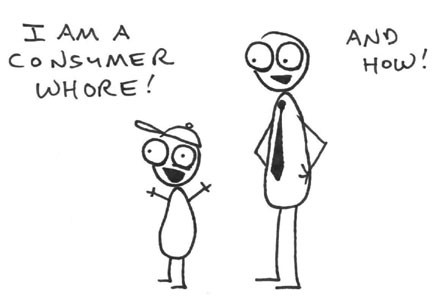
Not to be negative, but is anyone else a little disappointed they went with another Evil Cult themed adventure? I know all of my players (currently playing through the ToD storyline) rolled their eyes when they found out. I mean, the adventure sounds cool as hell, but the cult thing is becoming old really fast. I'll probably still buy the adventure, though, because I'm a consumerwhore.
What do you guys think about the cult thing?
I skipped ToD, so it's no big deal for me. I can see how maybe it would be annoying if it was the second time in a row, though. What would you have prefered it be instead?
pukunui wrote:
I don't see how they can do a full 1-20 adventure without using a cult (or similar organization).
let's brains strom, Kas is coming to Foregetten realm, and bring his army of undead. Unles you want to fight only undead, there will be a group of humanoid that will join Kas army in the hope to survive and be turn into vampire instead of being turn in wights. well those humanoid follower will be consider as a cult.
ok bad idea let's think again then
What is Kas come alone without a whole army and without a cult? then this would be a short adventure for character level 19-20, or even shorter being an expedition tier 4.
ok then somethign else.
the drow and the orc revolt and invade Waterdeep, ok we have to fight an army, what is the difference between a cult and a army? pretty similiar if you ask me
ok let's see something else:
a Political intrigue with long council and a lot of talking and few battle, where we have to side with one of the masked lord of waterdeep and help him win the debate and avoiding a bloodshed. This sound like the Council scene in the new star wars movie that everyone is complaining about.
so yeah fighting an army or a cult, all the same to me, fighting horde of fanatic believing in there leader who want to do somethign evil. Anything that go away from that idea would be too short for a huge adventure or sound like something that is only part of DnD.
I like the "evil cult" aspect - it's a quick way to have a coherent antagonistic force, so that the campaign doesn't have to rely upon things that end up feeling disjointed, contrived, or entirely unrelated.
I mean, I would rather the campaigns constantly use the "evil cult" trope and continue to have a consistent story as to what is going on and why the party cares about it than have to insert my own connecting tissue so that multiple unrelated adventures appear to be related, or to lose out on the "meat" of the adventure because more pages were spent providing "maybe this scene, or maybe that one, or maybe you could link these events by..." advice - since when I am running a purchased campaign it is because I am not in the mood to be doing the writing to such a degree.
...campaigns that I make up from whole cloth, however, I have the luxury of being able to have a different style than "there is a cult, they have plots, you should stop them" because their is no feeling of having paid for materials that never got used, and there is no part of the adventure that was already written but then I had to re-write it to make it work.
Maybe I'm just more tolerant of the fact that something need not be original in order to be entertaining? I mean, the cliches are cliches for a reason.
I agree that the cliches are cliches for a reason! That's why I had no problem with the Cult of the Dragon (which has a rich history in FR) be the main antagonist in the Tyranny of Dragons storyline. I guess my biggest gripe is not that they chose a cult at all, but that they decided to do two of them back-to-back. D&D has decades of published adventures and there have been many many good ones that don't revolve around a cult.
The cult of the dragon and the cults of the element eye are fundementally different in character. The cult of the Dragon had no interest at all in clandestine activity or hiding their adgenda for a start.
DMStevenH wrote:
In HotDQ maybe. In RoT they're pretty open about their cackling supervillainy.
DMStevenH wrote:
Ramzour wrote:
AaronOfBarbaria wrote:
Once is happenstance. Twice is coincidence. Three is a conspiracy. - chapter intro from Goldfinger (James Bond).
By the fourth time you will drink the cool aid.
Call of Cthulhu is full of evil cults.
My suggestion is to do "evil but with gray zones" cults like the factions from "World of Darkness" where the opposite groups may be antiheroes or antivillains.
I personally like the stance Dragonlance took in respect to the knighthoods in the Age of Mortals.... The Solamnic and Nerakan Knighthoods formed an uneasy truce thanks largely in part to their shared martyrdom in the Chaos War, wherein both sides fought side by side against the aspect of Chaos (who even in his aspect, was more powerful than all the other gods).
After the war, they both shared mutual respect for each other and an uneasy truce which lasted the better part of 4 decades - before Takhisis (aka. Tiamat) and her protege Mina screwed it up with the War of Souls. I believe they have gone back to their uneasy truce post-WoS.
The cults in PotA are more like factions. And at least there is more intrigue and dynamic action in and amongst these factions.
I heard some immediate complaints on the Tome Show when the announcement for this adventure came about. One of the guys on their Round Table podcast brought up that the use of "cultists" seemed repetitive. I agreed when they brought that up, that it does seem repetitive. But of course the question becomes, what else do you use? And for me, why can't you simply define a cult as something else?
Is an evil army the same as a cult? The term "cult" does seem to lose value when it's constantly used. But this is d&d, terms like that are bound to become worn out. IMO they could really just abandon using the term "cult" altogether, even if it is just that. Bad guys are bad guys, at least when you first meet them. They're cultists, terrorists, "the enemy", witches, villains, etc. And that's normally part of the propaganda used to rally people to fight. It makes the goal simple and direct. Stop the bad guy. That's what you need in d&d, a bad guy. Someone to easily define as the enemy. To someone who has the book I'll ask: do you think the cultists can be defined otherwise? I don't have the book, so I don't know if the bad guys in this one actually worship fringe deities. Elemental beings don't necessarily seem like deities to me, but I could see an argument that they're similar enough.
In the end, I don't think it matters that there is going to be another bad cult in the realms. I do think it was a little too soon for ANOTHER cult to gain so much power. I'd want to get the hell out of the realms if I lived there. Ultimately I think it would be good to start defining many, many other descriptions for bad guys that can readily be used, instead of resorting to the already played out term "cult".
All that said, I must confess that in my own campaign I am also using a cult. But in my defense, I started this campaign as soon as the PHB came out, and I had planned the campaign well before the launch of the new edition! Pre-Tyranny-Apocolyose. When I saw they were also using cultists in Tyranny at the time, I did become a little disappointed, but hey, what can you do? 
AaronOfBarbaria wrote:
Cults, while seemingly becoming a cliche', are convenient. They're disposable, can pop up just about anywhere and after all is done? Vanish and be forgotten.
Unlike say, an evil empire.
I guess an evil outsider can also be convenient but.. their minions tend to be called cultists anyway! Of course, how we/they theme and present a/the 'cult' is the real trick. A gang of thieves hell bent on ruining the economy of the land could be described as a 'cult'. Likewise, the servants of a powerful monster called be referred to as cultists.
I guess my main gripe is when 'cult/cultists' equates to 'robes, chanting, shadowy goings on.' 'Convinient' has become 'lazy'.
''We're not a cult! We're a.. collective!''
I would recommend staying away from many AD&D adventures then. Cults....cults everywhere.
Ramzour wrote:
Sands666 wrote:
Thanks for the feedback everyone!
I will say that I think people are using the term "cult" in the wrong way. A cult is a group of religious zealots who devote themselves to a particular deity (or similar being of incredible power). I don't think that definition can be reasonably applied to just any old group of bad guys. An evil warlord's army isn't a cult.
But I think Sands666 brings up a good point. The term "cult" has been overused and its actual meaning seems to have been lost. Now it's used as a catch-all term for "group of bad guys working together towards a sinister goal". Just like the word "awesome" becomes less meaningful when overused and no longer means "to fill one with awe". (Though I wholeheartedly admit that "awesome" is one of my favorite words to use).
Rhenny also makes a good point. Perhaps these 4 Elemental Evil cults are better described as "Factions". But then again, "faction" doesn't have the same vibe as "cult", does it? Calling them Factions implies that they could be right about things and that their goals aren't necessarily sinister. The term cultist on the other hand is more viceral and, let's be honest, there has never been a good cult. All cults are evil, by popular definition.
So where does that leave us? Obviously the term cult is a great motivator. The Heroes must stop the cult because cults = bad. But I do think calling any old group of bad guys a cult is kind of lazy.
Ramzour wrote:
The problem is that the word cult has changed over time to take on a very negative connotation in mainstream usage.
By definition, almost all RW religions started out as cults - which are defined (at the most basic level) as a loosely organized sect of individuals who venerate the same deity/idol/symbol/etc, and which share a very similar belief system.
From a purely historical perspective with no personal bias
A few ancient examples from the real world include the Cult of Osiris and Baast from Egypt, the numerous cults that sprang up in worship of one or more of the greek pantheon (cults which stood in stark contrast to the mainstream worship of the pantheon), and even Christianity in its infancy - which began as a multitude of small, yet passionate jewish cults - all of which followed the word-of-mouth teachings of Jesus (but in their own distinct way).
As a cult grows in popularity and membership, it tends to become more moderate in its ideology, with the more extreme ideals either being discarded, or forming splinter sects.
How Cults Evolve into Religions
While being as sensitive as possible so as not to offend people, Chrstianity is a good example of how this occurs. As it grew in popularity, the belief system solidified its core ideology, codified its texts (the council of Nicaea), and evolved from a Jewish cult into a religion with its own identity. At the same time, Christianity (as a whole) has formed hundreds of splinter sects and cults over its 2000 odd years, even after becoming a religion in its own right.
Some of these sects and cults were abandoned or destroyed violently (the Cathars come readily to mind), while others in turn grew in popularity - surviving to this day as the numerous Anglican, Protestant, and Catholic denominations.
Again, I use the term cult in its original context - devoid of negative connotation. Just because something is a cult, does not mean that it has sinister motivations. Believing all cults to be sinister is simply being lazy and judgemental.
How Cults Form
- As a rule, cults form when a faction splinters off an existing belief system (as is the case with Christianity splintering away from Judaism),
- When a new heretical belief system is formed in stark contrast and/or opposition to an existing belief system
- When two or more sects, and/or religions are blended together in a melting pot forming one (or more) amalgamated belief systems
- Or when a charismatic leader forms a cult of charisma.
In cases where the cult forms in stark contrast to one (or more) dominant religions and/or is the product of amalgamation - the dominant religion frequently takes a hostile view of the newly formed cult, seeing it as a threat to its own existence.
Using Christianity again as an example - it was the Roman Pagans who were the dominant religion in the area, and which took a very hostile view of the early christian cults (before it evolved into a religion), largely due to their veneration of someone they condemned as a criminal, and the perceived threat they posed to roman authority. In its infancy - the Jewish cults (as there was several dozen I am aware of) that would later merge to become the early Christian church were seen as little more than terrorists by the dominant pagan religion practiced in the Roman Empire.
Taking the premise back to D&D
There is nothing stopping someone from creating a Cult of Pelor, which has key fundamental differences in belief, worship, or practice from the main church. The main church may tolerate the cult, may consider it a viable alternative, condemn it as heretical, or may outright villify it - regardless of whether the cult is actually "evil" or simply "different".
Kalani wrote:
Kalani wrote:
Again, I state for the record
I was being 100% unbiased, and sensitive in my position. Despite this, Christianity is the most easily recognizable example I could think of to demonstrate:
- How cults form and evolve
- How cults are not inherrently sinister/evil by their nature, although they are frequently viewed with suspicion and/or hostility by the dominant religion(s).
I should also add, this process is ongoing with new cults, sects, and religions forming constantly to this day, but for obvious reasons I will refrain from listing modern examples of each. I will state for the record however, that I see examples of each in every extant belief system I know of.
pukunui wrote:
My reaction was the same when I heard about this AP. Really, another cult? *yawn* But other than that, this AP looks to be much better than HotDQ.
ssvegeta555 wrote:
Ramzour wrote:
MechaPilot wrote:
I suspect part of it is that, as others have pointed out "cult" really just means "small religious group" - and since the term has acquired a negative connotation, it has come to mean "small religious group antagonistic to the speaker".
Which means that pretty much every campaign that includes divine spellcasters of any kind will have to include a "cult" almost by definition.
And this leads to a more general bias you get in D&D towards spellcasting antagonists. For very good reasons, most high-level antagonists have access to magical powers, which means they're either a divine caster (and therefore a cultist by definition) or an arcane caster (in which case they're likely to have acolytes that look a lot like cultists from a distance).
It could be kind of cool to have a campaign in which the antagonists were dedicated atheists, but I suspect that might be a bit niche.
joeburgos wrote:
Macv12 wrote:
Also,
Kalani wrote:
arnwolf666 wrote:
Macv12 wrote:
arnwolf666 wrote:
MechaPilot wrote:
What else is there?
Usually any large event requires organisation.
What do you expect apart from a cult? Chartered accountants?
Come on, anyone who has read any Forgotten Realms has got to be asking for:
1. Zhentrim
2. Red Wizards of Thay
3. Drow
4. Shades
5. A Orc/Giant/Drow trilogy adventure.
Even Pirates are looking good around about now!
Shasarak wrote:
They used the Red Wizards in Ghosts of Dragonspear Castle too.
MechaPilot wrote: